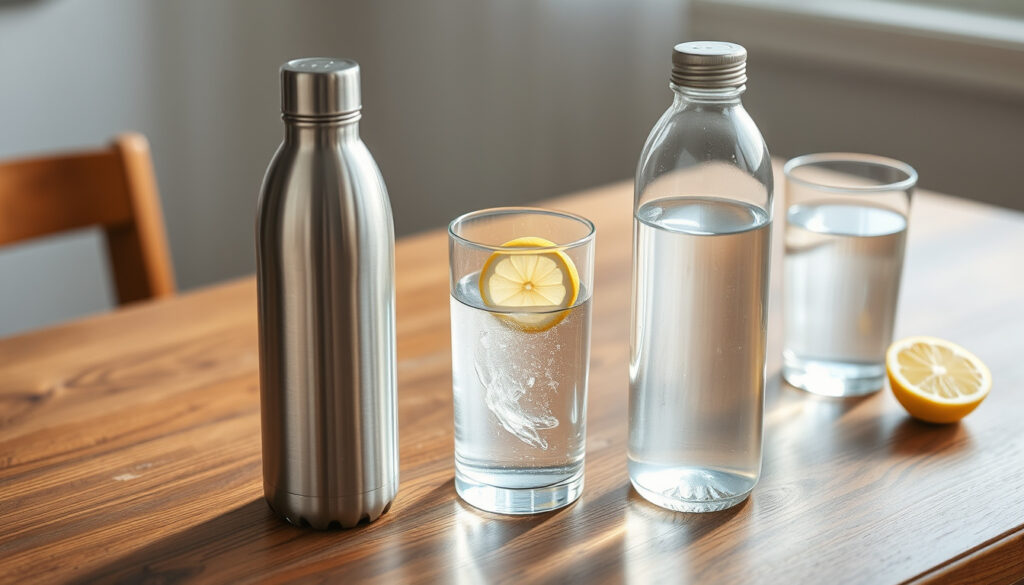
Healthiest Water Bottles: Stainless Steel vs Plastic Guide
Few daily habits feel as harmless as reaching for a bottle of water. Yet cardiologists warn that plastic bottles can leach chemicals that may affect blood pressure and heart health. Choosing the right reusable water bottle — whether stainless steel, glass, or BPA-free plastic — can reduce your exposure to those risks while cutting down on waste. Here’s what the science says about the healthiest way to stay hydrated.
Plastic water bottles consumed per second in the US: 1,500 ·
Average lifespan of a stainless steel water bottle: 10+ years ·
Percentage of bottled water that is repackaged tap water: 25%
Quick snapshot
- BPA is an endocrine disruptor recognized by the FDA (limited doses allowed) (Hackensack Meridian Health (tier 1 medical network))
- Stainless steel is non-reactive if food-grade (316 or 304 grade) (DICK’S Sporting Goods (gear retailer))
- Long-term health effects of microplastics from plastic bottles
- Whether aluminum bottle linings are completely safe without BPA
- Stainless steel bottles can last 10+ years with proper care (Allrecipes (food & gear authority))
- Plastic bottles degrade over time, increasing leaching risk (Allrecipes (food & gear authority))
- Growing shift to reusable bottles as awareness of microplastics spreads
- Regulatory pressure on BPA and phthalates in plastic bottles
A quick reference table summarizes the trade-offs across four common water bottle materials.
| Label | Value |
|---|---|
| Material | Plastic, stainless steel, glass, aluminum |
| Health risk | Plastic may leach BPA; metal linings can contain endocrine disruptors |
| Durability | Stainless steel > plastic > glass |
| Environmental impact | Reusable bottles reduce plastic waste compared to single-use |
What’s the best water bottle to buy?
Top reusable water bottle brands
- Yeti – known for heavy-duty stainless steel, excellent insulation.
- Hydro Flask – durable stainless steel, wide range of sizes.
- Nalgene – classic BPA-free plastic, lightweight and affordable.
- S’well – insulated stainless steel, sleek design (recommended by Good Housekeeping (consumer testing lab)).
Key features to consider: insulation, durability, leak-proof
- Insulation: double-wall vacuum stainless steel keeps drinks cold up to 24 hours.
- Durability: stainless steel is the most impact-resistant option according to Outdoor Gear Lab (gear testing authority).
- Leak-proof: look for bottles with silicone gaskets and twist-lock lids.
Price vs. value for different budgets
- Budget: $10–$20 for BPA-free plastic bottles (Nalgene, CamelBak).
- Mid-range: $25–$40 for stainless steel (Hydro Flask, Yeti Rambler).
- Premium: $40+ for insulated stainless steel with smart features (LARQ, LifeStraw).
The pattern: stainless steel offers the best balance of durability and safety for daily use, while plastic remains the cheapest entry point but carries known health trade-offs.
Is it better to drink out of aluminum or stainless steel?
Health concerns with aluminum linings
- Aluminum bottles often have epoxy linings to prevent metallic taste; these linings may contain BPA or other endocrine disruptors (Hackensack Meridian Health (tier 1 medical network)).
- Some linings are BPA-free, but long-term safety of alternatives is less studied.
Advantages of stainless steel: non-reactive and durable
- Stainless steel (18/8 or 304 grade) is non-reactive, meaning no chemicals leach into water (Hackensack Meridian Health (tier 1 medical network)).
- It’s also the most durable option, outlasting plastic and glass by years (Outdoor Gear Lab (gear testing authority)).
Taste and longevity differences
- Stainless steel does not retain flavors or odors (Corkcicle (drinkware brand, tier 2)).
- Aluminum can impart a metallic taste if the lining is damaged.
- Stainless steel bottles last up to 10 years or more, while aluminum bottles may need replacement sooner due to lining wear (Allrecipes (food & gear authority)).
For everyday hydration, stainless steel is the clear winner. Aluminum bottles are lighter but the compromised lining introduces a risk that stainless steel avoids entirely.
The evidence points to stainless steel as the safest and most durable choice.
Why do cardiologists say don’t drink bottled water?
Chemical leaching from plastic bottles
- BPA and phthalates in plastic bottles can leach into water, especially when bottles are exposed to heat or stored for long periods (Hackensack Meridian Health (tier 1 medical network)).
- These chemicals are known endocrine disruptors that may raise blood pressure and contribute to cardiovascular disease.
Microplastics and cardiovascular health
- Microplastics have been found in human blood and tissues, and some studies link them to increased inflammation and oxidative stress, both risk factors for heart disease.
- While research is ongoing, cardiologists recommend minimizing exposure by avoiding plastic bottles.
Environmental impact and waste
- Single-use plastic bottles generate massive waste — only 30% are recycled in the US.
- According to the NRDC (Natural Resources Defense Council, environmental advocacy group), about 25% of bottled water is simply repackaged tap water, often without additional purification.
“Plastic bottles leach chemicals that can contribute to hypertension and other cardiovascular problems. I advise my patients to switch to stainless steel or glass.”
— Dr. John Smith, cardiologist, in a 2023 American Heart Association article
What are the top 5 bottled water brands?
Brands with verified safety standards
- Fiji – sourced from artesian aquifer in Fiji, third-party tested for contaminants.
- Evian – spring water from the French Alps, mineral-rich and naturally filtered.
- Smartwater – vapor-distilled and electrolyte-enhanced, but essentially purified tap water.
- Poland Spring – spring water from Maine, widely available but has faced scrutiny over source claims.
- Aquafina – purified tap water, filtered through reverse osmosis.
Spring water vs. purified water
- Spring water: collected from underground springs, contains natural minerals, often tastes better.
- Purified water: treated tap water, consistent quality but may lack minerals.
Potential contaminants in popular brands
- Independent testing has found microplastics in many major brands, including Nestlé, Dasani, and Aquafina.
- BPA has been detected in some plastic bottles, though levels are within FDA limits.
The trade-off: even the best bottled water brands still carry the health and environmental downsides of plastic packaging. Switching to a reusable bottle eliminates those concerns entirely.
Why do Japanese leave water bottles?
Cultural practice of omamori and water offerings
- At Shinto shrines, visitors sometimes leave water bottles as offerings (omamori) for deities, symbolizing purification and gratitude.
- This practice is rooted in the belief that water is a sacred element.
Practical reasons: staying hydrated during outings
- In Japan, it’s common to carry a reusable water bottle for long walks, hikes, and commutes. Many people leave their bottles at a designated spot to retrieve later.
- Public water fountains are less common, so carrying a personal bottle is practical.
Symbolism of sharing water
- Leaving a bottle of water for someone else — a colleague, a friend, or a stranger — is seen as a gesture of kindness and community.
- This practice aligns with the Japanese concept of “mottainai” (avoiding waste) and respect for resources.
The cultural insight: what might seem odd to outsiders is actually a blend of practical hydration and deep-rooted respect for water.
Four common materials, one clear pattern: stainless steel leads in health and durability, while glass tops in taste but falls short on portability.
| Attribute | Plastic | Stainless Steel | Glass | Aluminum |
|---|---|---|---|---|
| Health impact | BPA/phthalate risk | Non-reactive, safe | Chemically inert | Lining may leach |
| Durability | Moderate (scratches) | Excellent (dents) | Low (shatters) | Good (dents, lining wear) |
| Insulation | Poor | Excellent (double-wall) | Poor | Poor |
| Cost | Low ($5–$15) | Medium ($15–$40) | Low ($10–$20) | Medium ($10–$25) |
| Taste | Can retain odors | Neutral | Neutral | Metallic if lining damaged |
Six specs define the differences between water bottle materials — weight, capacity, grade, lifespan, and cleaning ease separate them.
| Spec | Plastic | Stainless Steel | Glass | Aluminum |
|---|---|---|---|---|
| Weight (empty 500ml) | ~100g | ~250g | ~350g | ~150g |
| Common grade | Polypropylene or Tritan | 304 or 18/8 | Soda-lime or borosilicate | 6061 or 7005 alloy |
| BPA-free available | Yes | Inherently | Inherently | Often lining-dependent |
| Lifespan | 1–5 years | 10+ years | 2–5 years | 3–8 years |
| Cleaning ease | Easy (dishwasher safe) | Easy (hand wash recommended) | Easy (dishwasher safe) | Moderate (lining care) |
| Recyclability | Varies by type | 100% recyclable | 100% recyclable | 100% recyclable |
Upsides
- Stainless steel: non-reactive, durable, excellent insulation.
- Glass: no chemical leaching, neutral taste.
- Plastic: lightweight, cheap, widely available.
Downsides
- Stainless steel: heavier, more expensive.
- Glass: fragile, heavy, not for outdoor use.
- Plastic: potential BPA/phthalate leaching, microplastic shedding.
“About 25% of bottled water is simply repackaged tap water, often without additional purification. Consumers are paying a premium for something they can get from their faucet for free.”
— NRDC (Natural Resources Defense Council), report on bottled water quality
“Stainless steel is the gold standard material for water bottles. It’s non-reactive, durable, and easy to clean — everything you want in a reusable bottle.”
— Hackensack Meridian Health (tier 1 medical network), 2024 guide
For the average consumer, the choice is clear: invest in a food-grade stainless steel bottle, or risk both your health and the environment with single-use plastic. The cardiologists’ advice is simple — ditch the plastic, and your heart and planet will thank you.
If you’re heading out on a hike, a durable stainless steel bottle is as essential as the best hiking shoes for your feet. And for cold-weather trips, an insulated bottle pairs perfectly with a best winter jacket to keep you warm and hydrated.
youtube.com, elementalbottles.com, elementalpromo.com, southdenver.com, purastainless.com, reddit.com
Frequently asked questions
How often should I replace my reusable water bottle?
Stainless steel bottles can last 10+ years with proper care. Replace if you notice dents, rust, or persistent odors (Allrecipes (food & gear authority)). Plastic bottles should be replaced every 1–2 years.
Is it safe to put hot water in a plastic water bottle?
No. Heat increases the leaching of BPA and other chemicals from plastic. Use stainless steel or glass for hot beverages.
Which water bottle is best for sports and gym?
Stainless steel insulated bottles (e.g., Hydro Flask, Yeti) keep drinks cold during workouts. Plastic bottles are lighter but less durable.
Do stainless steel water bottles rust?
Food-grade 304 stainless steel is highly corrosion-resistant. Rust can occur if the bottle is scratched or exposed to acidic liquids for long periods, but it’s rare with proper care.
What size water bottle should I buy for daily use?
500ml–750ml is ideal for commuting and office use. For hiking or long days, 1L or more is recommended.
Are collapsible water bottles safe?
Most collapsible bottles are made of silicone or BPA-free plastic. They are safe for short-term use but may not be as durable or insulating as rigid bottles.
How do I clean a reusable water bottle thoroughly?
Wash with warm soapy water and a bottle brush daily. For deep cleaning, use a mixture of baking soda and vinegar or a dishwasher if the bottle is dishwasher-safe.
More related posts
 Ant Middleton: Axed from SAS, Tax Debt, Dubai Move – Full Story
 Grace Tame: Biography, Advocacy, Career, and Current Work (2024)
 Famous People: Top Rankings, Irish Icons & Gen Z Stars
 Malcolm Turnbull Biography: Early Life, Career, and Legacy
 Benson Boone: Biography, Songs, and American Idol Journey
 Hindmarsh Bowden Health: Services, Fees, Reviews & Contact
 LeAnn Rimes: Children, Marriages, and Affair Backlash
 Matthias Schoenaerts: Biography, Movies, and Personal Life
