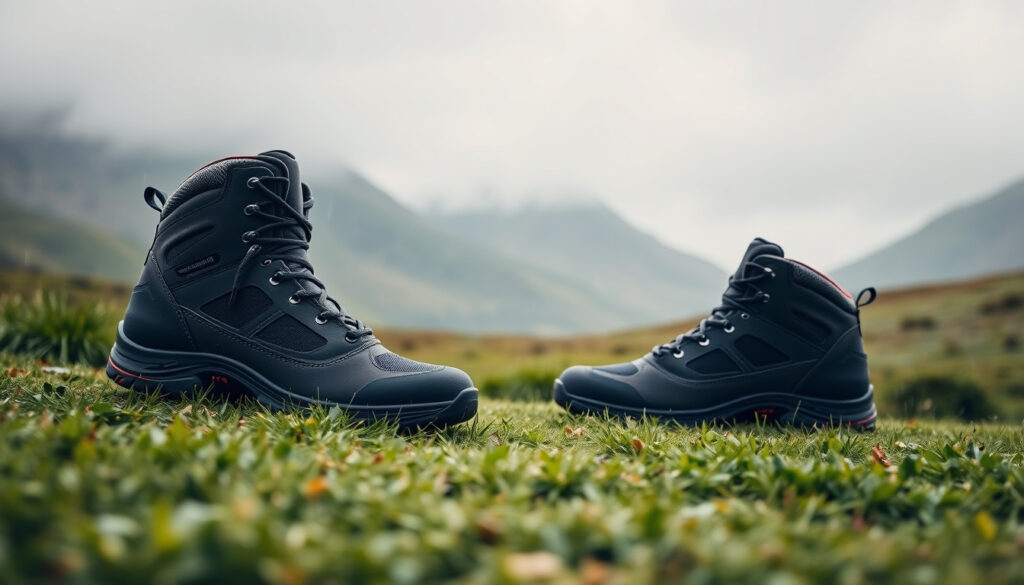
Best Hiking Shoes for Ireland: Waterproof & Lightweight
There’s a reason the phrase “four seasons in one day” was coined in Ireland — wet ground, sudden rain, and muddy trails are the norm, not the exception. For anyone heading out on Irish trails, finding a hiking shoe that keeps feet dry without feeling like a sauna is the real challenge. This guide breaks down what to look for in a waterproof shoe for 2025, with specific recommendations for women and men, and explains why breathability and grip matter just as much as the waterproof label.
Average price range: $80–$200 ·
Most common upper material: Leather, synthetic mesh ·
Standard waterproof membrane: Gore-Tex ·
Popular brands: Salomon, Merrell, Columbia, Skechers ·
Typical weight per shoe: 12–16 oz (men’s), 10–14 oz (women’s)
Quick snapshot
- Lightweight options available from Columbia and Salomon (53 Degrees North (Irish outdoor retailer))
- Narrower fit with more arch support typical for women’s models (53 Degrees North)
- Popular models: Columbia Newton Ridge and Salomon X Ultra 4 (53 Degrees North (Irish outdoor retailer))
- Wider toe box and stiffer soles for men’s models (Great Outdoors (Irish gear specialist))
- Top models: Adidas Terrex and Brooks Cascadia (Great Outdoors (Irish gear specialist))
- Heavier build for rocky terrain durability (Great Outdoors (Irish gear specialist))
- Gore-Tex lining provides reliable waterproofing (Outdoor Adventure Store (Irish hiking specialist))
- Trade-off: reduced breathability in warmer conditions (Outdoor Adventure Store (Irish hiking specialist))
- Best for wet climates like Ireland where rain is frequent (Outdoor Adventure Store (Irish hiking specialist))
- Skechers, Columbia, Adidas, and Great Outdoors are widely available (The Outdoor Shop (Irish retailer))
- Berghaus and Hi-Tec also known for quality in the Irish market (The Outdoor Shop (Irish retailer))
- Models with aggressive lugs perform better on muddy terrain (The Outdoor Shop (Irish retailer))
Five key facts to anchor your decision: price spans from casual to premium, uppers vary by terrain, and waterproofing is central to the Irish experience.
| Feature | Details |
|---|---|
| Average price | $80–$200 |
| Most common upper | Leather or synthetic mesh |
| Waterproof standard | Gore-Tex |
| Typical lifespan | 500–1000 miles depending on terrain |
| Best for Irish weather | Waterproof models with deep lugs |
The pattern: every factor points back to waterproofing as the non-negotiable baseline for Irish hiking.
What are the best hiking shoes for women?
Women’s hiking shoes are not just scaled-down men’s shoes — anatomical differences in heel width and arch support mean choosing a women-specific model can prevent blisters and fatigue on long trails. According to 53 Degrees North (Irish outdoor retailer), women’s models often feature narrower heels and more pronounced arch support compared to unisex designs.
Top women’s hiking shoe models from Skechers, Columbia, and Salomon
- Columbia Women’s Newton Ridge — A durable leather and mesh combination with Omni-Grip traction. Retail price around $100. According to OpenSeason.ie (Irish gear retailer), Columbia is a trusted brand for wet terrain in Ireland.
- Salomon X Ultra 4 Women’s — Lightweight at about 12 oz per shoe, with Gore-Tex waterproofing. The Quicklace system makes adjustments fast. Favored by hikers who transition between trail running and day hikes, reports The Trek (long-distance trail community).
- Skechers Trail Terrain — A budget-friendly waterproof option with a breathable mesh upper. Suitable for coastal paths and light trails.
Key features for women’s anatomy and fit
- Heel cup design is narrower to prevent slipping on descents
- Arch support is positioned closer to the midfoot for women’s foot shape
- Fit advice from Great Outdoors (Irish hiking experts): always try shoes with the socks you plan to hike in, and try at the end of the day when feet are slightly swollen
Weight and cushioning differences
Women’s hiking shoes typically weigh 10–14 oz per shoe compared to 12–16 oz for men’s. Lighter construction doesn’t mean less protection — modern midsoles use EVA foam and air cushions similar to premium running shoes. For well-maintained coastal paths in Ireland, lighter shoes are often sufficient, according to Outdoor Adventure Store (Irish specialist).
What are the best hiking shoes for men?
Men’s hiking shoes tend to prioritize durability and stability over weight savings. For Irish hikers tackling rocky mountain trails like Carrauntoohil, that trade-off makes sense — a stiffer sole provides better protection than a flexible light shoe. According to 53 Degrees North (Irish outdoor retailer), ankle support and grip are the top priorities for Irish hillwalkers.
“Ankle support and grip are the top priorities for Irish hillwalkers.” — 53 Degrees North
Top men’s hiking shoe models from Adidas, Brooks, and Merrell
- Adidas Terrex AX4 — Gore-Tex lining combined with a Continental rubber outsole for grip on wet rock. Retail around $130. The Terrex series is known for its trail-running-inspired low weight of about 13 oz.
- Brooks Cascadia 17 — More of a trail-running hybrid, but with enough stability for light hiking. Features a Ballistic Rock Shield for protection on sharp stones. Available at Irish retailers including The Outdoor Shop (Irish outdoor retailer).
- Merrell Moab 3 Waterproof — A classic leather hiking shoe with a Vibram outsole. Durable and supportive, with a retail price around $110. Merrell is one of the brands stocked by The Outdoor Shop.
Width options and stability features
Men’s models generally offer EEE width options for wider feet. The stiffer midsole found in men’s hiking shoes provides torsional stability on uneven ground, which is helpful when carrying a pack. For mountain terrain or boggy areas, more substantial boots with aggressive tread and waterproof protection are recommended, according to Outdoor Adventure Store.
Durability for rocky terrain
Leather uppers, as used in the Merrell Moab 3, offer the longest lifespan — often 800–1000 miles — compared to 500–700 miles for synthetic mesh shoes. However, synthetic models like the Adidas Terrex AX4 dry faster after wet Irish crossings. OpenSeason.ie (Irish retailer) notes that both leather and synthetic options are viable depending on whether durability or weight is the priority.
Are hiking shoes waterproof and do you need them?
The short answer: yes, most hiking shoes labeled for outdoor use offer a waterproof membrane, and for Irish conditions they are effectively non-negotiable. Vagabond Tours of Ireland (Irish tour operator) explicitly calls waterproof hiking boots and a rain jacket the two non-negotiable items for comfortable hiking.
“Waterproof hiking boots and a rain jacket are the two non-negotiable items for comfortable hiking.” — Vagabond Tours of Ireland
How waterproof membranes work (Gore-Tex, eVent)
Waterproof membranes are a thin layer bonded between the outer fabric and inner lining. Gore-Tex is the best-known, using a PTFE membrane with pores small enough to block liquid water while allowing water vapor to escape. According to Outdoor Adventure Store, Gore-Tex offers reliable protection but does reduce airflow compared with non-waterproof footwear. Alternative membranes like eVent or proprietary brand membranes are often available at lower price points.
Breathability trade-offs
The catch: waterproof shoes trap heat and moisture from foot sweat. On a warm, dry day, a non-waterproof shoe keeps feet cooler. But on Irish trails — where rain can arrive without warning — waterproof protection is essential rather than optional, according to Outdoor Adventure Store. Decathlon IE (sporting goods retailer) describes waterproof hiking shoes as designed specifically to keep feet dry and comfortable in Ireland’s rainy climate.
“Waterproof membranes are essential — not a luxury — for comfortable hiking in Ireland.” — Outdoor Adventure Store
When waterproof is essential vs. when to avoid
Essential: any hike where rain is forecast (most Irish hikes), stream crossings, muddy trails, winter conditions. Avoid waterproofing only for hot, dry summer walks on well-drained paths — but those days are rare in Ireland. If you only buy one hiking shoe for Ireland, make it waterproof, recommends Great Outdoors (Irish outdoor experts).
Upsides of waterproof shoes
- Keep feet dry in rain and stream crossings
- Essential for Ireland’s frequent wet conditions
Downsides of waterproof shoes
- Reduced breathability can cause clamminess
- Heavier and less flexible than non-waterproof models
Which Salomon hiking shoes are best for different terrains?
Salomon dominates the hiking shoe market for a reason: its Quicklace system, Contagrip outsole, and variety of cushioning levels make it a one-brand solution for everything from coastal trail runs to mountain scrambles. For Irish hikers, the X Ultra 4 is the Swiss Army knife — most terrain capable without the weight of a full boot.
Salomon X Ultra vs. Quest vs. Outline series
| Model | Best for | Waterproof | Weight (per shoe) | Key feature |
|---|---|---|---|---|
| Salomon X Ultra 4 GTX | Light hiking, trail running, mixed terrain | Gore-Tex | 12–13 oz | Quicklace system, agile |
| Salomon Quest 4 GTX | Mountain hiking, heavy pack | Gore-Tex | 16–17 oz | Ankle support, stiffer chassis |
| Salomon Outline GTX | Fast hiking, long days | Gore-Tex | 10–11 oz | Minimal drop, lightweight |
What this means: the X Ultra 4 is the recommended all-rounder for most Irish trails, while the Quest 4 is better for boggy mountain ascents where ankle support matters.
Terrain-specific features
- X Ultra 4: Contagrip MA outsole designed for mixed terrain; EnergyCell midsole for shock absorption. Favored for trail running and light hiking, per The Trek (long-distance trail community).
- Quest 4: Higher cuff for ankle support; deep lug outsole for loose ground. Suitable for rough terrain, per Outdoor Adventure Store.
- Outline: Lower profile and lesser tread depth — better for groomed trails, less ideal for mud.
Salomon Quicklace system and fit
The Quicklace system is a single-pull design that eliminates traditional lacing loops. It cinches evenly across the foot but can create pressure points if overtightened. Try them on with hiking socks to get the fit right — Great Outdoors advises against buying shoes based on appearance alone.
How to choose the best hiking shoes for Irish weather?
Every Irish hiker faces the same paradox: a shoe that’s completely waterproof can leave feet clammy after hours of effort. The compromise is finding a shoe with a breathable waterproof membrane like Gore-Tex and pairing it with moisture-wicking socks. According to Outdoor Adventure Store, waterproof membranes are essential — not a luxury — for comfortable hiking in Ireland.
Considerations for wet, muddy trails
Ireland’s trails vary from coastal cliffs to peat bogs. Shoes with deep lugs — specifically Vibram or Contagrip outsoles with 4–5 mm tread depth — perform better on muddy ground. 53 Degrees North recommends Vibram soles or deep-lug outsoles for traction on varied surfaces. Leather uppers offer durability but retain water when soaked; synthetic mesh dries faster but may wear sooner.
Waterproof vs. water-resistant: what works in Ireland
Water-resistant treatments (DWR coatings) wear off after a few hours of rain. For Ireland, a sealed waterproof membrane is the only reliable choice.
Top brands available in Ireland
- Skechers – budget-friendly waterproof models like Trail Terrain.
- Columbia – trusted for wet terrain, Newton Ridge is a popular model.
- Adidas – Terrex series with Continental rubber outsole.
- Great Outdoors – Irish retailer stocking multiple brands with expert advice.
- Determine your primary terrain: coastal paths, mountain trails, or mixed.
- Check for a sealed waterproof membrane (Gore-Tex or equivalent).
- Look for deep lugs (4–5 mm) for mud and wet grass.
- Try shoes at the end of the day with hiking socks.
- Balance weight vs. durability: mesh for speed, leather for longevity.
The pattern: waterproofing, grip, and proper fit are the three pillars for any hiking shoe in Ireland.
Related reading: Ski Jacket Guide · Ski Jacket Guide
thetalesoftinyboots.com, facebook.com, reddit.com, youtube.com, facebook.com
For those tackling the damp trails, choosing the right pair of best hiking shoes for Ireland can make all the difference in comfort and safety.
Frequently Asked Questions
Can hiking shoes be used for everyday walking?
Yes, many hiking shoes are comfortable enough for daily wear, especially lightweight models. However, the stiffer sole and tread may feel less flexible on pavement. For casual use, consider a hybrid shoe like the Skechers Trail Terrain.
What is the difference between a hiking shoe and a trail running shoe?
Hiking shoes offer more ankle support, stiffer soles, and deeper tread for rugged terrain. Trail running shoes are lighter, more flexible, and designed for speed on maintained paths. For Irish hikes with mud and rocks, hiking shoes are generally preferred.
How should hiking shoes fit?
They should feel snug in the heel, with about a thumb’s width of space at the toe. Always try them with the socks you plan to hike in, and at the end of the day when feet are slightly swollen, as recommended by Great Outdoors.
Do I need hiking shoes with ankle support?
Not always. Low-cut hiking shoes offer more ankle mobility and are fine for well-maintained coastal paths. For rocky mountain terrain or when carrying a heavy pack, mid- or high-cut boots provide the ankle stability recommended by 53 Degrees North.
How do I clean and maintain hiking shoes?
Remove dirt and mud after each hike. Use a soft brush and mild soap, avoid heat. For Gore-Tex shoes, periodically reapply a DWR spray to maintain water beading. Let them air dry naturally, never on a radiator.
Are expensive hiking shoes worth the money?
Higher price often correlates with better materials, durability, and waterproofing technology. For frequent hikers, an investment in a quality brand like Salomon or Merrell can pay off over time. Budget options like Skechers work for occasional use.
What socks should I wear with hiking shoes?
Merino wool or synthetic blend socks that are moisture-wicking and cushioned. Avoid cotton, which retains moisture and can cause blisters. Pairing with waterproof shoes helps keep feet dry, as noted by Outdoor Adventure Store.
For any hiker in Ireland, a sealed waterproof membrane is the only reliable choice for staying comfortable on the trails. Combine that with proper fit and deep lugs, and you’re set for the unpredictable Irish weather.
More related posts
 Now You See Me 3 – Release Date, Cast and Streaming Guide
 Gladys Berejiklian: Biography, Career, ICAC Inquiry & Current Role
 Daryl Braithwaite: Career, Hits, Twin Brother & Retirement
 Life Insurance Australia: Costs, Guide & Providers
 Craig David: Wife, Children, Celibacy, and Career Updates
 333 Angel Number Meaning: Love, Manifestation & More
 Chris Williamson: Love Island, Modern Wisdom, Net Worth
 Arsenal F.C. vs Bayern Munich Lineups – Confirmed XIs and Tactical Breakdown
