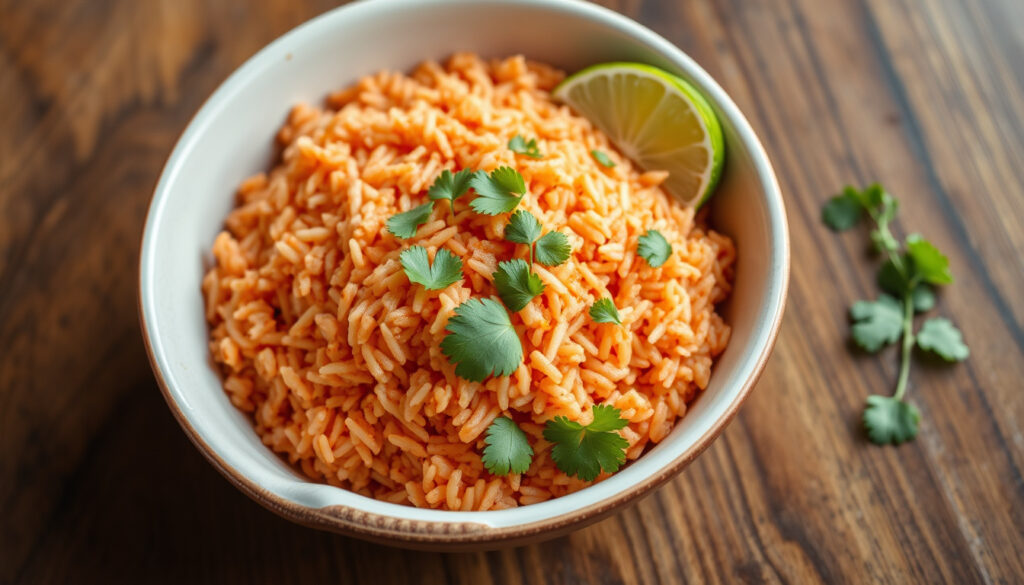
Mexican Rice Recipe: Easy Authentic Restaurant Style
Restaurant-quality Mexican rice (Arroz Rojo) is within reach at home. The secret isn’t a complex ingredient list — it’s three techniques: toasting the rice until golden, using a rich tomato base, and letting it steam undisturbed. Total active kitchen time is under 5 minutes, and the whole dish is done in less than 30 minutes.
Prep Time: 5 minutes · Cook Time: 22 minutes · Total Time: less than 30 minutes · Servings: 4-6 · Main Ingredients: 1 cup rice, 2 cups water or broth
Quick snapshot
- Toasting rice in oil creates that signature nutty flavor (Just a Taste)
- 1 cup of uncooked rice yields 4–6 servings (YouTube Restaurant Style Mexican Rice)
- Simmering time ranges from 15 to 22 minutes depending on the recipe (Yellow Bliss Road)
- Exact calorie counts without full nutrition data
- Which regional variant (Guadalajara vs. Central Mexico) represents “authentic”
- Prep takes 5 minutes; cook takes 20–22 minutes; rest 5–10 minutes (Yellow Bliss Road)
- Total time under 30 minutes for restaurant-style rice (Just a Taste)
- Try the step-by-step method below with pantry staples
- Experiment with fire-roasted tomatoes for deeper flavor
Below is a specifications overview for Mexican rice preparation, covering difficulty level, essential techniques, and ingredient options.
| Attribute | Details |
|---|---|
| Difficulty | Easy |
| Key Technique | Rice toasting |
| Base Liquid | Chicken broth or water |
| Tomato Source | Diced or fire-roasted |
| Oil Types | Olive, vegetable, canola, corn, avocado |
| Simmer Time | 15–22 minutes |
| Rest Time | 5–10 minutes |
What ingredients do I need for Mexican rice?
The ingredient list is refreshingly short — you likely have most of this in your pantry right now. The core ratio is simple: 1 part rice to 2 parts liquid, with tomato and aromatics doing the heavy flavor lifting. That 1 cup of uncooked rice translates to 4–6 generous servings, which means you’re rarely cooking for leftovers with this recipe.
Core staples
- Long-grain white rice — 1 cup, rinsed until water runs clear (Thai Caliente recommends this step for traditional texture)
- Liquid — 2 cups total: chicken broth, water, or a combination. Broth wins for depth.
- Tomato product — 4–8 oz of tomato sauce, diced tomatoes, or fire-roasted tomatoes per cup of rice (Yellow Bliss Road)
- Aromatics — onion and garlic, sautéed before adding rice
- Fat — 2 tablespoons oil (olive, vegetable, corn, or avocado all work)
- Caldo de Tomate or chicken bouillon — a key flavor multiplier noted by multiple sources (Yellow Bliss Road)
Optional add-ins
- Cumin (½–1 teaspoon per cup rice) adds earthy warmth (Downshiftology)
- Bell peppers or jalapeño for extra color and subtle heat
- Peas or carrots added in the last 5 minutes of cooking
- Fresh cilantro as a garnish
The trade-off: keeping it simple means the quality of your broth and the toasting step matter more. Richly flavored broth can compensate for fewer additions; a bland broth means the finished rice needs rescuing.
Brown rice is not recommended — the longer cook time throws off the tomato-to-rice ratio balance that makes this dish work (Downshiftology).
The implication: ingredient quality matters more when the list is short, so allocate your attention to broth and toasting technique.
What gives Mexican rice its flavor?
Three elements carry most of the flavor load: the tomato base, the aromatics, and the broth. None of them are exotic or hard to find — it’s the combination that makes the difference.
Key spices and aromatics
- Garlic and onion are sautéed with the rice in restaurant-style versions (I Heart Naptime)
- Cumin appears in nearly every modern recipe at ½–1 teaspoon per cup of rice (Downshiftology)
- Caldo de Tomate (tomato bouillon) is a secret weapon — it deepens the tomato flavor without adding bulk (Yellow Bliss Road)
Tomato base secrets
The tomato product is what gives Mexican rice its signature reddish-orange color and much of its flavor. Multiple sources confirm 4–8 ounces per cup of rice in easy recipes, with the lower end being more forgiving for beginners (Yellow Bliss Road). If you’re using a full can of diced tomatoes, reduce the broth by ½ cup to compensate for the extra liquid (I Heart Naptime).
Why this matters: tomato sauce vs. diced tomatoes vs. fire-roasted tomatoes produce noticeably different results. Fire-roasted versions add a subtle smokiness that’s worth seeking out if you’re after authenticity.
Chicken broth with a pinch of bouillon is preferred over plain water — the sodium and collagen from quality broth carry the tomato flavor more effectively into each grain.
What’s the secret to authentic Mexican rice?
Forget complicated techniques. The “authentic” label comes down to two non-negotiable steps that most home cooks skip: rinsing the rice and toasting it in fat before adding liquid.
Rinsing and toasting rice
Rice must be rinsed until the water runs clear before cooking — this removes excess starch that would otherwise make the grains stick together (Thai Caliente). Then comes the step that separates restaurant results from home attempts: toasting.
“Toast rice 2 minutes until golden before adding liquids” — this is how you get that nutty, almost popcorn-like depth that makes restaurant rice addictive (Downshiftology). The toasting happens in hot oil over medium-high heat, stirring occasionally, until the rice turns slightly golden and smells fragrant. This step makes such a difference in both flavor and texture that serious cooks never skip it.
Blending tomatoes
For the most authentic Arroz Rojo, Thai Caliente recommends blending fresh tomatoes with onion and garlic to create a smooth sauce base rather than using canned products (Thai Caliente). Restaurant-style methods from YouTube tutorials take this further: puree tomato paste with onion, garlic, and ¼ cup water before adding to the browned rice (YouTube Restaurant Style Mexican Rice).
The toast-then-simper method works because the hot oil briefly cooks the outside of each grain before steam softens the inside. Skip the toasting and you get mushy, pale rice with flat flavor — edible, but not the experience you’re after.
Why does Mexican restaurant rice taste better?
The gap between your pot and the restaurant version narrows when you know what’s actually happening on that line. It’s not magic — it’s technique choices made consistently.
Broth choice
Restaurants almost never cook rice in plain water. Chicken broth — especially with a boost from Knorr caldo de pollo or a similar tomato bouillon — adds layers of savory depth that water simply can’t provide (YouTube Restaurant Style Mexican Rice). Some recipes call for caldo de tomate specifically, which amplifies the tomato notes alongside the chicken flavor.
Cooking technique
Restaurant kitchens sauté the aromatics first, then toast the rice in that same fat until golden — this isn’t optional padding, it’s foundational. The rice simmers covered over low heat, undisturbed, for the entire cooking time (YouTube Restaurant Style Mexican Rice). “Do not lift lid during simmering to trap steam” — this is repeated across nearly every instructional source because opening the lid lets steam escape, which changes the moisture-to-heat ratio and results in unevenly cooked grains.
The pattern across multiple recipes: high initial heat to boil, then reduced to low for a 15–22 minute simmer, followed by a 5–10 minute rest with the lid still on (Yellow Bliss Road). Just a Taste specifies an undisturbed 13–15 minute simmer for even cooking.
Your stove’s output varies from restaurant equipment. If the rice isn’t done in 22 minutes, leave it covered for another 3–5 minutes. The resting period is when the grains firm up and the moisture equalizes — don’t rush it.
The pattern: restaurants prioritize consistent technique over precise timing, which is why the “don’t lift the lid” rule appears across nearly every source.
What’s the difference in Mexican rice and Spanish rice?
The names get used interchangeably in American restaurants, but they represent distinct traditions with meaningful ingredient differences.
Regional origins
Mexican rice (Arroz Rojo) comes from Mexican culinary tradition — it’s tomato-based, colored by tomato products, and seasoned with cumin, garlic, and sometimes onion. Spanish rice, by contrast, pulls from Spanish paella tradition, which means saffron is often the primary color and flavor agent. The two dishes share rice as a base but diverge significantly from there. If you’re looking for a simple way to make this dish, check out this easy Mexican rice recipe at Descale your Nespresso Vertuo.
Ingredient variations
Traditional Arroz Rojo uses fresh blended tomatoes, while many Tex-Mex adaptations substitute chili powder and garlic salt for the more straightforward tomato-and-cumin profile (Seeded at the Table). Spanish rice may include peas, bell peppers, or other vegetables that rarely appear in Mexican preparations.
Regional variants within Mexico also exist. Guadalajara-style Mexican rice reportedly uses less tomato than Central Mexico preparations — a diner recalled a beloved 1970s restaurant from that region serving rice that was “not much tomato at all” (YouTube Comments), though this represents a minority approach.
The implication: what you think of as “authentic” depends partly on which region or tradition informed the recipe. Neither is wrong — they’re different expressions of the same rice-to-tomato ratio principle.
More tomato means deeper color and brighter acidity. Less tomato lets the rice’s nutty toasting flavor come forward more prominently. Both approaches produce delicious rice — it’s a matter of which flavor profile you’re chasing.
How to make perfect Mexican rice (step by step)
Five recipes, three methods, and one core principle: don’t skip the toasting step. Here’s the streamlined path that balances authenticity with home kitchen reality.
- Rinse the rice. Place 1 cup long-grain white rice in a fine-mesh strainer and rinse under cold water until the water runs clear. This removes starch and prevents clumping (Thai Caliente).
- Sauté aromatics. Heat 2 tablespoons oil in a 2-quart saucepan over medium heat. Add ½ cup diced onion and cook 2–3 minutes until softened. Add 2 cloves minced garlic and cook 30 seconds until fragrant.
- Toast the rice. Add the rinsed rice to the pot. Stir to coat each grain in oil. Cook 3–5 minutes, stirring occasionally, until the rice turns light golden and smells nutty (Downshiftology). This step is non-negotiable for restaurant-quality results.
- Add tomato and liquid. Pour in ½ cup tomato sauce or blended tomatoes. Stir to combine with the rice. Add 1½ cups chicken broth (or 2 cups water plus 1 teaspoon caldo de pollo or Knorr caldo de pollo) (I Heart Naptime). Add ½ teaspoon cumin if desired.
- Simmer covered. Bring to a boil over high heat, then reduce to low. Cover tightly and simmer 20 minutes without lifting the lid (Yellow Bliss Road). Some recipes specify 15 minutes — the extra 5 minutes ensures fully tender grains.
- Rest and fluff. Remove from heat. Let stand covered for 5–10 minutes. Fluff with a fork before serving. Garnish with fresh cilantro if desired.
The resting phase feels like wasting time, but it’s actually cooking: residual heat and steam finish softening the rice’s center while the exterior firms up. Rushing this step produces a layer of mushy grains at the bottom.
The catch: the resting period is when the grains firm up and moisture equalizes throughout the pot — resist the urge to check early.
“Toasting the rice in hot oil is what gives Mexican rice that signature nutty flavor and fluffy texture.”
“This step makes such a difference in both flavor and texture, so I never skip it.”
— Downshiftology
Related reading: Leonardo’s Pizza Palace Carlton Menu · Best Cafes in San Francisco
Frequently asked questions
Is Mexican rice safe for diabetics?
Mexican rice is primarily carbohydrates from white rice, which has a high glycemic index. Diabetics should account for the carb content in their meal planning. Brown rice is not recommended as a substitute here due to the longer cook time that disrupts the recipe’s balance. Using cauliflower “rice” could be a lower-carb alternative for those managing blood sugar.
Is Mexican rice healthy?
Mexican rice provides carbohydrates and some micronutrients from tomatoes (notably lycopene) and aromatics. It’s relatively low in fat and moderate in sodium if you control the broth and bouillon. Nutritional data without full ingredient breakdowns varies, so checking specific ingredients is advisable.
What other spices flavor Mexican-style rice?
Beyond the core cumin, you can add chili powder for Tex-Mex versions, garlic salt, or a pinch of cayenne for heat. Some recipes include smoked paprika for depth. The key is balancing any additions against the tomato base rather than overpowering it.
What goes in authentic Mexican rice?
Authentic Mexican rice (Arroz Rojo) centers on long-grain white rice, tomato products (fresh, canned, or fire-roasted), onion, garlic, and cumin. Chicken broth or water with bouillon provides the liquid. Oil for toasting is essential. Fresh cilantro is a common garnish but not mandatory.
Can I make Mexican rice with beans?
Yes — add cooked black beans or pinto beans in the last 5 minutes of simmering, or stir them in after cooking for a heartier dish. The rice-to-bean ratio of about 1 cup rice to ½ cup beans works well. This variation suits vegetarian Mexican rice when using vegetable broth.
How to make veg Mexican rice recipe?
Swap chicken broth for vegetable broth, skip any meat-based bouillon (or use a vegetable bouillon cube), and add extra vegetables like bell peppers, peas, or carrots. The cooking method remains identical — the liquid swap is the only change needed.
Is Mexican rice recipe easy for beginners?
Absolutely. The hardest part — remembering not to lift the lid during simmering — is simpler than it sounds. The steps are basic: rinse, sauté, toast, add liquid, simmer, rest. If you’ve made white rice before, you can make this. The toasting step is the one thing beginners often skip, which is why the results vary.
For home cooks chasing that restaurant quality, the path is clear: toast the rice until golden, use broth instead of water, and keep the lid on. Skipping any of these means trading that nutty depth for convenience — which might be worth it on a weeknight, but once you’ve tasted the real thing, the compromise feels noticeable.
More related posts
 Hyperdome Shopping Centre: Stores, Hours & Ownership
 McKinley Richardson: OnlyFans $43M, Jack Doherty Breakup
 Tesla Model Y Price Ireland: €50,527 & Comparisons
 Tony Soprano: Real Mobster, Controversial Ending, Legacy
 Georgie Purcell: Age, Partner, Political Career, Biography
 Octavia Spencer: Biography, Awards, Movies, and Personal Life
 Root Canal Treatment – Procedure, Pain, Cost and Recovery
 Craig Jones: Biography, Record, and Career Highlights
