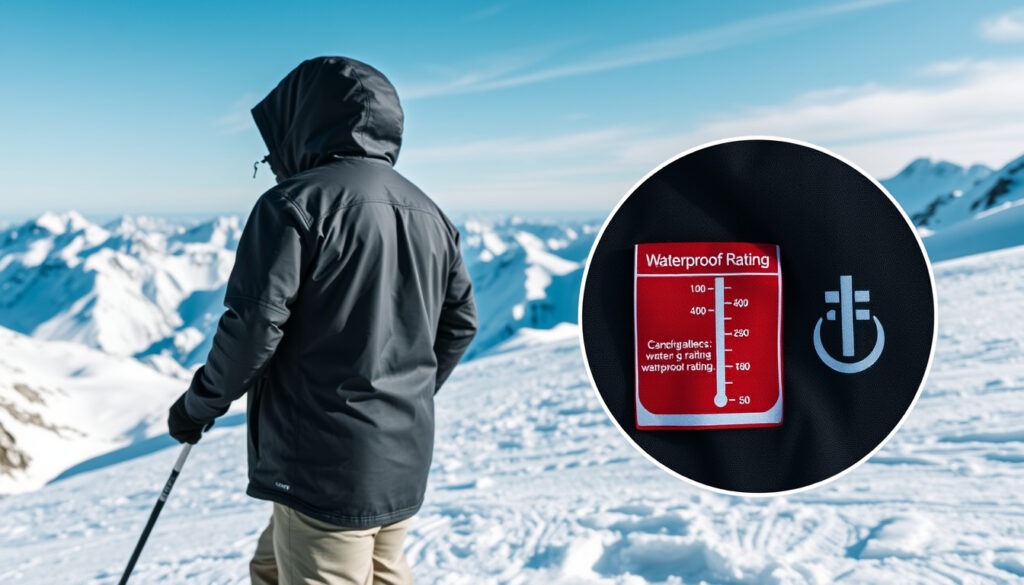
Ski Jacket Guide: Fit, Warmth & Waterproof Ratings
Anyone who’s ever pulled on a ski jacket that didn’t breathe knows the feeling: clammy, cold, and counting the minutes until lunch. A good jacket does more than keep you dry—it manages your temperature across changing conditions and activity levels.
Common waterproof ratings: 10,000mm to 20,000mm ·
Insulation types: Down and synthetic ·
Average price range: $200–$600 ·
Breathability ratings: 10,000g to 20,000g/m²/24h ·
Typical ski jacket weight: 1–3 lbs (0.45–1.36 kg)
Quick snapshot
- Ski jackets are designed for active movement and layering (Men’s Journal gear team)
- Snow jackets often prioritize casual style over performance (Men’s Journal)
- Key ski features: powder skirt, vent zips, helmet hood (Men’s Journal)
- Down insulation: high warmth-to-weight, loses insulating when wet (Outdoor Gear Lab)
- Synthetic insulation: more affordable, works when wet (Outdoor Gear Lab)
- Layering is essential; jacket alone may not be enough for extreme cold (Men’s Journal)
- 10,000mm rating: good for light snow and short days (Men’s Journal)
- 20,000mm rating: handles heavy snow and aggressive skiing (Men’s Journal)
- Breathability equal to waterproof is crucial for comfort (Outdoor Gear Lab)
- Room for a mid layer, not too loose (Men’s Journal)
- Powder skirt, internal pass pocket, and helmet‑compatible hood (Men’s Journal)
- Vent zips under arms regulate temperature (Men’s Journal)
Five core specs define any ski jacket. Here’s how they break down across entry‑level and premium tiers:
| Spec | Entry / Budget | Premium |
|---|---|---|
| Waterproof rating | 10,000mm hydrostatic head | 20,000mm hydrostatic head |
| Breathability (MVTR) | 10,000 g/m²/24h | 20,000 g/m²/24h |
| Insulation fill | 80–120g synthetic or 600 fill down | 150–200g synthetic or 800–900 fill down |
| Price range | $150–$300 | $400–$800 |
| Weight | ~2.5 lbs | ~1.5 lbs |
| DWR coating | Standard | Premium (longer lasting) |
What’s the difference between a snow jacket and a ski jacket?
How does a winter jacket differ from a ski jacket?
- Ski jackets are engineered for active sport: they include vent zips, powder skirts, and helmet‑compatible hoods. Winter coats typically prioritize static warmth.
- A ski jacket balances insulation with breathability; a winter coat often uses heavy insulation without ventilation.
- According to the Men’s Journal gear team (outdoor equipment testers), ski jackets like the Patagonia PowSlayer Shell are designed for “active movement and layering.”
Can I wear a ski jacket as a winter coat?
Yes, with trade‑offs. A shell ski jacket lacks insulation, so you’ll need a thick mid layer and base layer for standing around in the city. Insulated ski jackets (e.g., Columbia Platinum Peak II 3L Shell, named best budget ski jacket by Men’s Journal) can double as winter coats, but their powder skirt and helmet hood may feel awkward off the slopes.
Buyers who want one jacket for resort and city may prefer an insulated ski jacket with a removable powder skirt. But performance skiers will get better breathability from a shell + separate mid layer.
The pattern: ski jackets sacrifice a bit of insulation and clean styling for features that matter when you’re active. For most skiers, that’s a good trade.
What is the best ski jacket to buy?
How do I identify the best ski jacket for my needs?
Start by matching the jacket type to your skiing style: shell for high‑output backcountry or spring days; insulated for resort days below freezing. Key categories from the Men’s Journal 2025–26 guide:
- Best overall: Patagonia PowSlayer Shell
- Best budget: Columbia Platinum Peak II 3L Shell
- Best for stormy weather: Arc’teryx Rush
- Best sidecountry: Norrøna Lofoten Gore‑Tex Down 800
What are the top-rated ski jackets of 2026?
In addition to the Men’s Journal picks, Ski Magazine’s 2026 men’s test rated the Kühl The Defiant Shell as Editors’ Choice, and Outdoor Gear Lab continues to recommend the Helly Hansen Alpha LifaLoft for extreme cold. The table above shows the typical performance tiers.
Step‑by‑step: Choosing your ski jacket
- Define your primary terrain (resort, backcountry, or both).
- Pick an insulation type: down for warmth‑to‑weight, synthetic for wet conditions.
- Select a waterproof rating: 10,000mm for occasional snow, 20,000mm for heavy snow.
- Check breathability: aim for MVTR at least 15,000g if you ski hard.
- Try on with a mid layer – check arm lift and waist coverage.
The Ski Magazine 2026 men’s test (gear lab with 475+ days on snow) rated the Kühl The Defiant Shell as its Editors’ Choice, praising its balance of protection and mobility.
A jacket that fits your primary terrain and layering system will perform better than any single “best” list pick. The top models above all share Gore‑Tex or equivalent membranes and full seam taping.
The implication: focusing on fit and features over award stickers leads to better real-world performance.
Are ski jackets really warm?
How warm is a ski jacket compared to a winter coat?
A ski jacket’s warmth comes from its insulation and its ability to trap heat while venting sweat. Down jackets (e.g., Patagonia Grade VII Down, 800‑fill) offer high warmth‑to‑weight, but lose insulation when wet. Synthetic jackets (e.g., Outdoor Research Cloudchaser 3L) maintain warmth in damp conditions. For resort skiing in moderate cold, an insulated jacket with 120g synthetic or 600‑fill down is sufficient.
Is minus 20 too cold to ski with a regular ski jacket?
It depends on layering. At -20°C, most single ski jackets won’t cut it alone. A shell with a heavyweight down mid layer and a thermal base layer can work. According to Outdoor Gear Lab (independent gear reviewers), testers rely on the Helly Hansen Alpha LifaLoft for extreme cold because it combines synthetic insulation with a wind‑proof membrane. Still, below -20°C, consider an expedition‑grade jacket like the Mammut Eiger Nordwand Pro Down In Hooded.
“Down insulation provides excellent warmth for its weight, but once it gets wet it’s essentially useless. Synthetic fills maintain insulation even when damp.” – Outdoor Gear Lab testing team
The catch: at extreme cold, activity level matters more than the jacket alone. A high‑output skier may actually overheat in a heavily insulated jacket. The trade‑off is between static warmth and breathability.
Should a ski jacket be tight or loose?
Should ski jackets be thick or thin?
- Thickness relates to insulation: a thin shell layers well; a thick insulated jacket may be warm alone but limits layering flexibility.
- A ski jacket should be roomy enough for a mid layer but not so loose that it catches wind. Perform the arm lift test: raise your arms straight up; the hem should not ride above your waist.
How should a ski jacket fit for layering?
The ideal fit leaves one to two inches of space around the chest and shoulders when worn over a fleece mid layer. The powder skirt should sit at your waist, not your hips. Men’s Journal testers note that the Stio Objective Pro (best freeride jacket) has a “relaxed but not baggy” cut that works for aggressive skiing.
A jacket that’s too tight restricts movement and traps sweat; one that’s too loose allows cold air to flush your warm layers. Aim for the middle: snug enough to seal out drafts, but with full range of motion.
The pattern: a properly fitted jacket balances mobility and weather protection.
Is it worth buying an expensive ski jacket?
Do you really need a super expensive jacket for skiing?
Price correlates with membrane quality (e.g., Gore‑Tex Pro vs. proprietary 2‑layer), seam taping, and durability. A $150 jacket from a store brand may keep you dry for two seasons; a $600 Arc’teryx Rush can last a decade with proper care. For occasional skiers (1–2 trips per year), a mid‑priced jacket (Columbia Platinum Peak II at ~$250) provides adequate protection. For frequent or backcountry skiers, premium fabrics like Gore‑Tex Pro offer better breathability and lighter weight.
What do you get with a higher price tag?
Upsides
- Lighter, more packable materials
- Better breathability (20,000g MVTR vs. 10,000g)
- Durable water repellent (DWR) that lasts longer
- Features: RECCO reflector, visor wipe, internal pass pocket
Downsides
- Much higher upfront cost
- Expensive membranes may be overkill for resort skiing
- Some premium features (RECCO) are unused by many skiers
According to Ski Magazine’s annual test, the best jackets in their test cost $400–$700, and testers reported noticeable performance gains above $300 in seam taping and fabric feel. For the budget‑conscious, the Columbia Platinum Peak II (Men’s Journal best budget pick) offers solid 10,000mm waterproofing at a fraction of the price.
How different is 10,000 mm and 20,000 mm in ski jacket?
What do waterproof and breathability ratings mean?
Waterproof rating (hydrostatic head) measures how much water pressure a fabric withstands before leaking. 10,000mm means a 10‑meter column of water – sufficient for light snow and a few hours of wet snow. 20,000mm handles heavy, persistent wet snow and longer exposure. Breathability (MVTR) measures how much moisture vapor passes through per square meter in 24 hours. 10,000g is adequate for moderate output; 20,000g suits high‑output skiing.
How much waterproofing do I need for skiing?
For resort skiing in dry powder, 10,000mm is enough. For frequent storms, tree skiing, or spring slush, step up to 20,000mm. Men’s Journal notes that the Arc’teryx Rush (20,000mm) is its top pick for stormy weather because the higher rating resists wet‑out longer. Keep in mind that DWR treatment and seam taping also affect real‑world waterproofness.
“In our head‑to‑head testing, jackets with 20,000mm rating shed heavy wet snow nearly twice as long before showing any moisture on the inside compared to 10,000mm jackets.” – Outdoor Gear Lab reviewers
The difference is noticeable but not night‑and‑day for a typical resort skier. The real gain is in breathability: 20,000g MVRT means you stay drier from sweat, which is the leading cause of cold while skiing.
Clarity check
Confirmed facts
- Ski jackets include distinctive design features (powder skirt, helmet hood) not found in typical winter coats (Men’s Journal).
- Waterproof ratings correlate with fabric performance under controlled test conditions (Outdoor Gear Lab).
- Down insulation loses insulating capacity when wet; synthetic does not (Outdoor Gear Lab).
What’s unclear
- The exact warmth of a ski jacket in real‑world -20°C conditions depends heavily on layering and activity level.
- Whether an expensive jacket is “worth it” is subjective and depends on frequency of use and personal priorities.
- The real-world difference between 10,000mm and 20,000mm is noticeable but not night-and-day for a typical resort skier, with breathability being the more critical factor.
“The best ski jacket for you is the one that fits your body, your terrain, and your budget – not the one with the highest price tag.” – Men’s Journal gear editor
The evidence shows that real‑world performance is shaped as much by fit and layering as by any spec number. For occasional skiers, a $200 jacket with 10,000mm waterproofing and a synthetic fill will serve well. For committed skiers, investing in a $500+ shell with a high‑breathability membrane and a separate down mid layer offers the most flexibility.
Frequently asked questions
Can I wear a ski jacket for snowboarding?
Yes – most ski jackets work for snowboarding. Snowboarders may prefer a slightly looser fit and longer back length for bending and sitting on the chairlift.
Do ski jackets have hoods that fit over a helmet?
Most technical ski jackets feature helmet‑compatible hoods with adjustable cinch straps. Always check the hood size before buying if you wear a helmet.
Are ski jackets machine washable?
Yes, but use a mild detergent designed for technical fabrics, wash on a gentle cycle, and tumble dry low to reactivate the DWR coating.
What is a RECCO reflector on a ski jacket?
RECCO is a small reflector sewn into the jacket that helps search teams locate an avalanche victim. It is not a transmitter – it reflects a signal from a detector.
Do ski jackets have a powder skirt?
Most ski jackets include a powder skirt – a stretchable band inside the hem that seals against snow. Some models allow you to snap it in place or remove it.
How long do ski jackets typically last?
With proper care, a quality ski jacket lasts 5–10 years. Frequent washing and exposure to sweat can degrade the DWR earlier.
Are ski jackets windproof?
Yes – most ski jackets are windproof by design. The membrane (e.g., Gore‑Tex) blocks wind while allowing moisture to escape.
Should I buy a shell jacket or an insulated ski jacket?
Choose a shell if you ski hard and layer often. Choose an insulated jacket if you prefer one‑piece warmth for resort skiing in cold temperatures.
More related posts
 Code of Conduct: Definition, Principles, and Examples (5, 6, 7)
 St George Internet Banking – Login Register Security Guide
 Lois Boisson: Gender Controversy and Deodorant Incident
 Car Hire Sydney: Cheap Deals from $27/Day Airport & City
 Butter Chicken Sauce: Ingredients, Recipe, and Common Mistakes
 Pierce the Veil: Genre, Controversy, Tour & LGBTQ Stance
 Hyperdome Shopping Centre: Stores, Hours & Ownership
 Barton General Practice – UK Locations Contacts Guide
