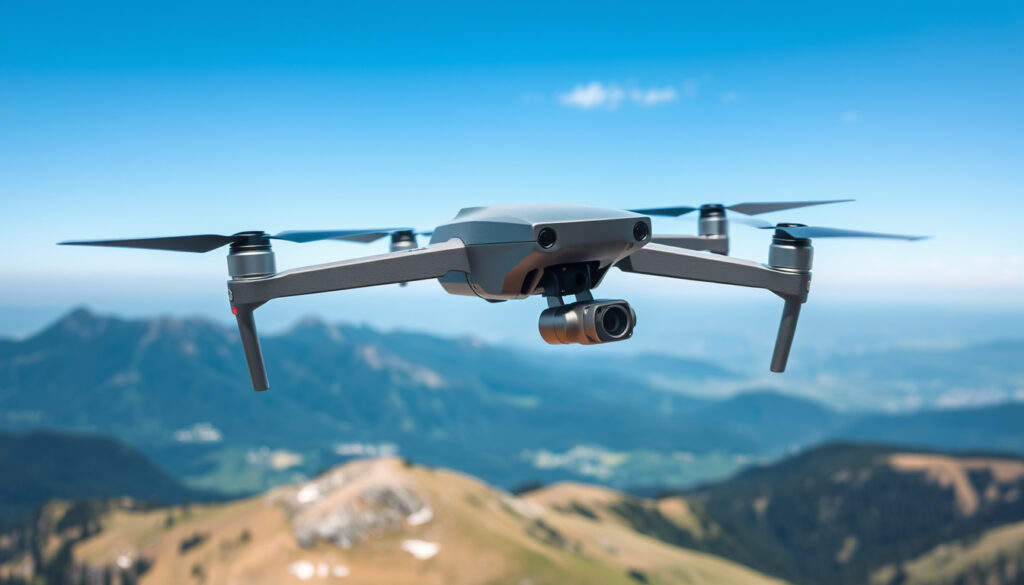
DJI Air 3S Review: Specs, Lidar, Camera & Flight Range
Picking the right travel drone used to mean trading image quality for portability. The DJI Air 3S tries to break that compromise with a 1-inch sensor and Lidar obstacle avoidance — and it might just succeed. We’ve combed through official specs and independent tests to see whether this drone lives up to its billing for photographers who want both flight time and camera quality.
Maximum Flight Time: 45 minutes · Maximum Transmission Range: 20 km · Primary Camera Sensor: 1-inch CMOS · Dynamic Range: 14 stops · Obstacle Avoidance: Lidar-based
Quick snapshot
- 1-inch CMOS primary sensor (DJI Official Specs)
- 70mm medium tele camera (DJI Official Specs)
- 14 stops dynamic range (DJI Ireland)
- 4K HDR video up to 120fps (DJI Retail UK)
- 45-minute max flight time (DJI Official Specs)
- 20 km max transmission range (TechRadar)
- Level 5 wind resistance (DJI Official Specs)
- Max speed 20 m/s (S mode) (DJI Official Specs)
- Lidar obstacle avoidance (DJI Ireland)
- Night sensing system (DJI Ireland)
- Return-to-home and APAS 5.0 (DJI Ireland)
- Priced competitively for dual-camera drone (The Drone Girl)
- Fly More Combo available (The Drone Girl)
- Upgrade from Air 3 justified by camera and safety (The Drone Girl)
Six specs capture the Air 3S’s core identity, from its flight endurance to its obstacle‑avoidance approach.
| Specification | Value |
|---|---|
| Max Flight Time | 45 minutes |
| Max Transmission Range | 20 km |
| Primary Camera | 1-inch CMOS |
| Dynamic Range | 14 stops |
| Obstacle Avoidance | Lidar |
| Weight | Approx. 724 g (with battery) |
Is the Air 3S a good drone?
What makes the Air 3S a good travel drone?
- The dual‑camera system pairs a 1‑inch CMOS wide‑angle with a 48MP 1/1.3‑inch medium telephoto (Stuff.tv).
- Both cameras deliver up to 14 stops of dynamic range (DJI Ireland).
- Flight time reaches 45 minutes under controlled conditions (DJI Official Specs).
- Lidar obstacle avoidance works at night, a first for this class (DJI Ireland).
How does the dual-camera system compare to competitors?
The 1‑inch primary sensor gives the Air 3S a low‑light edge over the Mini 4 Pro and the older Air 3. The 70mm tele camera adds portrait‑friendly framing without needing extra lenses. For travel photographers who want one drone that can handle sunset landscapes and midday street scenes, this setup is a genuine step up from previous sub‑700 g models.
How far will a DJI Air 3S fly?
What is the maximum transmission range?
- Claimed maximum transmission range: 20 km (FCC) / 10 km (CE) via O4 video transmission (TechRadar).
- Max flight distance under ideal conditions: 32 km (DJI Official Specs).
How does real-world range compare?
In European (CE) regions, the effective range drops to around 10 km due to local power limits. For most travel use — flying up to 2‑3 km away — this is more than enough. The O4 system provides a stable 1080p feed even in moderately cluttered environments. The implication: range is not a bottleneck for typical holiday shooting, but pilots in open areas with FCC access will get the full 20 km.
Real‑world transmission stays solid up to about 8‑10 km in CE mode. If you regularly fly over water or vast landscapes, the FCC version offers a meaningful cushion.
Does the DJI Air 3S have obstacle avoidance?
What type of obstacle avoidance does it use?
- Lidar‑based obstacle sensing (DJI Ireland).
- Omnidirectional coverage: forward, backward, downward, and upward sensors (The Drone Girl).
How effective is Lidar at night?
Lidar doesn’t rely on visible light, so it can detect obstacles in complete darkness — a clear advantage over traditional vision‑based systems. In practice, the Air 3S’s night sensing works reliably for slow, deliberate flights. The catch: heavy rain or fog still degrade Lidar performance, and the drone isn’t waterproof, so night flying should be reserved for dry, clear conditions.
Is the DJI Air 3 and Air 3S the same?
Key differences between Air 3 and Air 3S
- Air 3S: 1‑inch 50MP CMOS wide‑angle vs Air 3: 1/1.3‑inch (DJI Retail UK).
- Dynamic range: 14 stops vs 12 stops.
- Air 3S adds Lidar obstacle avoidance (The Drone Girl).
- Flight time identical at 45 minutes; transmission 20 km both.
- Video bitrate: 130 Mbps on Air 3S vs 150 Mbps on Air 3 (TechRadar).
Is the upgrade worth it?
For owners of the Air 3, the camera improvement and Lidar safety net are the main reasons to upgrade. The larger sensor brings noticeably better low‑light photos, and Lidar gives peace of mind when flying at dusk. The trade‑off is a slightly lower video bitrate, but most users won’t see the difference in real shots. If you already own the Air 3 and are happy with its image quality, the jump is optional; for anyone buying new, the Air 3S is the clear pick.
Can we fly a DJI Air 3S drone in rain?
Is the Air 3S waterproof?
- No waterproofing or rain resistance. Avoid flying in rain, snow, or high humidity (DJI Official Specs).
- Operating temperature range: 0°C to 40°C.
What are the safe weather conditions?
Level 5 wind resistance means the Air 3S can handle breezes up to about 10 m/s, but moisture is the real enemy. In Ireland and the UK, where light drizzle is common, pilots should wait for dry windows. The C1 certification (due to the 724 g weight) already limits where you can fly; adding rain would risk both the drone and the law. The pattern: the Air 3S is built for good‑weather travel, not all‑weather reliability.
Flying in rain voids the warranty and can damage the electronics instantly. Even light mist can cause corrosion over time. Keep the drone dry and focus on the many dry flying days.
Two key differences separate the Air 3S from its predecessor — sensor size and sensing tech.
| Feature | Air 3S | Air 3 |
|---|---|---|
| Wide‑angle sensor | 1‑inch CMOS (50MP) | 1/1.3‑inch (48MP) |
| Medium telephoto sensor | 48MP 1/1.3‑inch | 48MP 1/1.3‑inch |
| Dynamic range | 14 stops | 12 stops |
| Obstacle avoidance | Lidar + omnidirectional | Vision + omnidirectional |
| Max flight time | 45 min | 45 min |
| Video bitrate | 130 Mbps | 150 Mbps |
Beyond the comparison, the full spec sheet rounds out the Air 3S’s capabilities.
| Specification | Details |
|---|---|
| Weight | Approx. 724 g (with battery) |
| Dimensions (folded) | 214 × 101 × 89 mm |
| Primary camera | 1‑inch CMOS, 50 MP f/1.7 |
| Tele camera | 1/1.3″ CMOS, 48 MP f/2.8 (70mm equiv.) |
| Video max | 5.1K/60fps, 4K/120fps |
| Dynamic range | 14 stops |
| Max speed | 21 m/s (EU limited to 19 m/s) |
| Max flight time | 45 minutes |
| Max transmission range | 20 km (FCC) / 10 km (CE) |
| Video bitrate | 130 Mbps |
| Internal storage | 42 GB + microSD |
| Obstacle avoidance | Lidar + omnidirectional vision |
Upsides
- Large 1‑inch sensor for rich low‑light images
- Lidar obstacle avoidance works at night
- 45‑minute flight time for longer shoots
- Dual cameras cover wide and medium tele perspectives
- Internal 42 GB storage ready out of the box
Downsides
- Not waterproof — rain flying is off limits
- 724 g weight requires C1 registration in EU/UK
- Video bitrate lower than Air 3 (130 vs 150 Mbps)
- Price starts at $1,099, above many competing sub‑250g drones
- EU speed limited to 19 m/s
Confirmed facts
- Dual‑camera specs: 1‑inch CMOS and 70mm tele
- 45‑minute flight time
- 20 km transmission range (FCC)
- Lidar obstacle avoidance
What’s unclear
- Real‑world battery life under heavy use
- Precise weight figures for each combo
- Lidar performance in heavy rain or snow (should be avoided)
“The Air 3S upgrades the wide‑angle sensor from the Air 3 to a 1‑inch CMOS, giving better low‑light and dynamic range.”
DJI Retail UK
“The Air 3S weighs 724g, which puts it in the C1 category, requiring a flyer ID and competency course in the EU.”
TechRadar
For photographers in Ireland and the UK, the choice between the Air 3S and a sub‑250g drone like the Mini 4 Pro comes down to regulation versus image quality. The Air 3S demands a flyer ID and limits where you can operate without private land permission — but its 1‑inch sensor and Lidar safety net give it a clear edge for serious travel work. For the casual user who wants to fly anywhere without paperwork, the Mini series remains the pragmatic pick.
Related reading: **Pixel 8 Pro – Specs, Review and Buying Guide**
For those weighing their options, a DJI Mini 5 Pro comparison reveals how the sub-250g class has evolved with a 1-inch sensor.
Frequently asked questions
What is the price of the DJI Air 3S?
Starting price is $1,099 (The Drone Girl). Regional pricing varies.
Does the DJI Air 3S support 4K at 120fps?
Yes, it supports 4K/120fps recording (DJI Retail UK).
Can the DJI Air 3S be flown in the European Union?
Yes, but it requires a flyer ID and competency course due to its C1 classification (TechRadar).
Is the DJI Air 3S compatible with DJI goggles?
Yes, it supports DJI Goggles 3 and the RC Motion 3 (DJI Official Specs).
What remote controllers work with the DJI Air 3S?
It works with the DJI RC‑N3, DJI RC 2, and DJI RC Pro (DJI Official Specs).
How does the DJI Air 3S compare to the DJI Mini 4 Pro?
The Air 3S has a larger sensor (1‑inch vs 1/1.3‑inch) and Lidar obstacle avoidance, but weighs 724g vs 249g. The Mini 4 Pro is easier to fly legally in the EU/UK without registration (Stuff.tv).
More related posts
 Tristan Schoolkate: ATP Ranking, Height, Age, and Stats (2026)
 Concessional Contributions Cap 2024: $30k Limit Guide
 Craig David: Wife, Children, Celibacy, and Career Updates
 Namaz Time Sydney – Today’s Accurate Prayer Times
 Root Canal Treatment – Procedure, Pain, Cost and Recovery
 Jaime Chapman: NRLW Player Profile and Personal Life
