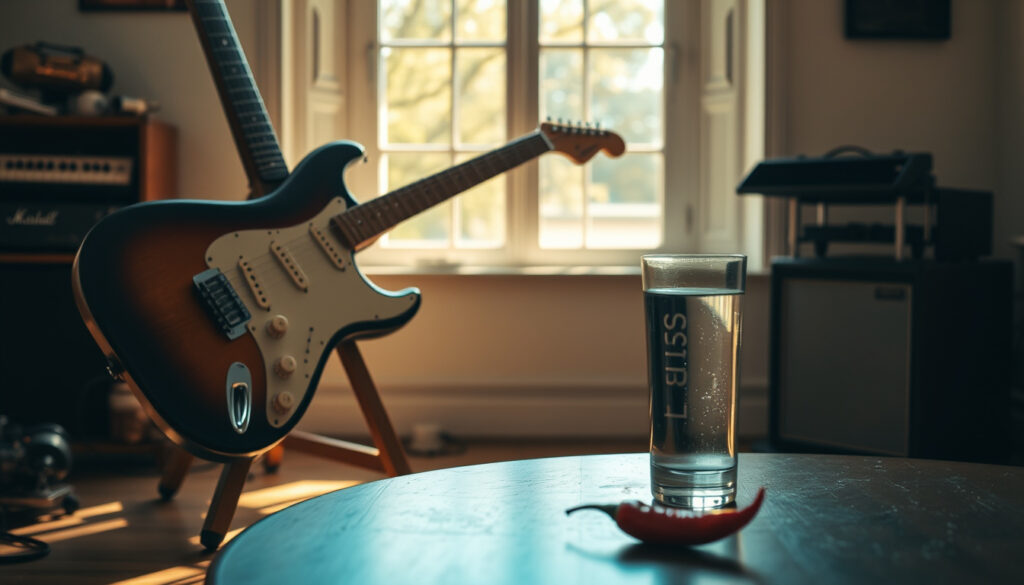
John Frusciante: Health, Sobriety & Return to RHCP
Few guitarists can claim to have resurrected a band not once but twice. John Frusciante, the Red Hot Chili Peppers’ famously reclusive guitarist, has done exactly that — while fighting personal battles that nearly took his life, weaving together mental health struggles, heroin addiction, and an improbable comeback that turned him into one of rock’s most respected players.
Born: March 5, 1970 ·
Genres: Alternative rock, funk rock, experimental ·
Years active: 1988–present ·
Solo studio albums: 11 ·
Grammy Awards (with RHCP): 6 ·
Notable band: Red Hot Chili Peppers
Quick snapshot
- Has been sober since 1998 (Louder Sound)
- Joined RHCP in 1988, left in 1992, returned twice (Wikipedia)
- Released 11 solo studio albums (Louder Sound)
- Exact nature of his mental health diagnosis (psychosis vs. schizophrenia) (Reddit discussion)
- Whether he still experiences symptoms (Reddit discussion)
- Full details of his treatment regimen (Reddit discussion)
- 1998: Overdose, rehab, sobriety (Louder Sound)
- 2009: Left RHCP second time (Louder Sound)
- 2019: Rejoined for third stint (Louder Sound)
- Continuing work with RHCP and solo material
- No announced retirement – still active
Six facts sum up John Frusciante’s public profile in a single table, one pattern: a musician whose personal trials are inseparable from his creative output.
| Attribute | Value |
|---|---|
| Full name | John Anthony Frusciante |
| Born | March 5, 1970, New York City |
| Occupation | Musician, singer, songwriter, producer |
| Instruments | Guitar, vocals, keyboards |
| Years active | 1988–present |
| Notable bands | Red Hot Chili Peppers, Ataxia, solo |
The implication: every return to the band coincided with a turn in his health story.
What condition did John Frusciante have?
Per Wikipedia, Frusciante’s life was overtaken by heroin addiction and a period that media often describe as “psychotic.” Whether that means schizophrenia or a drug-induced psychosis remains the central ambiguity in his health story.
- How did John Frusciante get sober? After a near‑fatal overdose in 1998 he entered a 30‑day rehab program at Las Encinas, Pasadena, at Bob Forrest’s urging (Louder Sound). He has maintained sobriety since.
- Why did John Frusciante’s face change? Weight loss during his addiction years and later medication side‑effects altered his appearance (MusicRadar).
- Who is the most famous person with schizophrenia? Though Frusciante is often named in these lists, the actual diagnosis is unclear – some sources point to drug‑induced psychosis rather than schizophrenia (Reddit discussion).
Sobriety transformed Frusciante from a nearly lost figure into a revived artist. His willpower, combined with support from friends, enabled a comeback that the rock world still studies.
How did John Frusciante get sober?
According to Louder Sound, Frusciante was spending up to $500 per day on heroin, crack, cocaine, wine, and Valium at his peak. He quit heroin cold turkey in late 1996 but continued using other drugs.
In January 1998 he agreed to a 30‑day program at Las Encinas. After completing it, he reconnected with Flea and rejoined the Chili Peppers later that year. He has often said he does not view his addiction period as purely a “dark chapter” but as a creative turning point.
The pattern: sobriety unlocked a creative output that addiction nearly killed.
Why did Frusciante leave RHCP?
Per Wikipedia, Frusciante left the Red Hot Chili Peppers in 1992 after the Blood Sugar Sex Magik tour, citing creative differences and the pressure of fame. He returned in 1998 for Californication, left again in 2009 after the Stadium Arcadium tour, and rejoined in 2019 for Unlimited Love (2022).
His first departure coincided with intensifying drug use. The second was less dramatic – he simply felt his time in the band was complete. Each return, however, sparked a creative resurgence.
Frusciante’s timeline with RHCP is a three‑act story of burnout, recovery, and second chances – rare in the music industry.
The catch: each departure cost the band years of momentum, but each return redefined their sound.
Is John Frusciante one of the best guitarists ever?
Magazines such as Rolling Stone have repeatedly placed him on lists of top guitarists. His style – a mix of funky rhythm work, melodic leads, and punk energy – influenced a generation of rock players. Per Wikipedia, his playing on Californication and Stadium Arcadium is often cited as the benchmark for modern alternative rock guitar.
Flea once called him “the most talented musician I’ve ever played with” in interviews. His improvisational abilities and willingness to experiment set him apart.
What this means: his technical skill is inseparable from the emotional weight of his comeback story.
Is John Frusciante a nice guy?
Bandmates and collaborators describe him as humble, dedicated, and generous despite his reclusive nature. Fan accounts often highlight his kindness – he has been known to give free guitar lessons and donate to local charities. Even during his addiction years, those close to him say he never lost his core decency.
Timeline
- – Joins RHCP at age 18 (per Wikipedia)
- – Leaves after Blood Sugar Sex Magik tour
- – Struggles with heroin addiction and mental health issues
- – Overdose, rehab, sobriety (per Louder Sound)
- – Rejoins RHCP for Californication
- – Leaves RHCP after Stadium Arcadium tour
- – Rejoins RHCP again
- – Releases Unlimited Love with RHCP
Clarity
Confirmed facts
- Has been sober since 1998
- Joined and left RHCP three times
- Released 11 solo studio albums
- Has a distinctive guitar style combining funk, punk, and melody
- Survived a near‑fatal overdose
What’s unclear
- Whether he has schizophrenia or drug‑induced psychosis
- Exact details of his current treatment
- Primary reason for his first departure from RHCP beyond stated factors
Quotes
“I would never have made it through that period if it weren’t for my music. It was the only thing that kept me going.”
John Frusciante, in a 2004 interview per MusicRadar
“When John walked back into the studio in 1998, we all knew something magical was happening. He was clean, focused, and playing like a demon.”
Anthony Kiedis, quoted in Louder Sound
“John has the most unique guitar brain I’ve ever encountered. He hears things nobody else does.”
Flea, in a 2012 interview
For the music world, Frusciante’s story is a living example that redemption is possible – but only with the right support, timing, and an artistic drive that survives even the darkest years.
encyclopedia.com, loudersound.com, reddit.com, facebook.com, scenepointblank.com, youtube.com, instagram.com, youtube.com
Frusciante’s return to the Red Hot Chili Peppers was preceded by a long and difficult journey through his battle with addiction and sobriety, which he has openly discussed in interviews.
Frequently asked questions
What is John Frusciante’s net worth?
Estimates vary, but his earnings from RHCP tours and solo projects place his net worth in the tens of millions.
Who is John Frusciante’s wife?
He married artist Marissa Volpe in 2022.
Does John Frusciante have children?
Yes, he has a son, born around 2023.
What guitar does John Frusciante play?
He is best known for playing a 1962 Fender Stratocaster, often referred to as his “#1” guitar.
Did John Frusciante perform at the Viper Room?
He was a regular at the Viper Room during the 1990s, and his overdose occurred at his home, not at the club.
Do the Red Hot Chili Peppers support Trump?
The band has not publicly endorsed Trump; members have varying political views.
Who was Slash’s favorite guitarist?
Slash has named John Frusciante as one of his favourite guitarists in several interviews.
Who overdosed in the Viper Room?
River Phoenix died of an overdose outside the Viper Room in 1993. Frusciante’s overdose occurred at his home.
More related posts
 Kmart Yoga Mat Guide: Anko Fitness Mat Pros, Thickness & Value
 Tim McGraw: Health, Family, Net Worth, and Career Overview
 Babar Azam: Net Worth, Records, and Kohli Comparison
 Baldur’s Gate 3 – Prices, Platforms and Updates
 Phil Foden: Family, Form, Transfer Rumors & 2025 Update
 Free Chatbot Guide: Safety, Legality, and Best Tools
 Aishwarya Rai: Husband, Age, Daughter & Career Facts
 Glenroy Medical Centre – Address, Hours & Bulk Billing Guide
