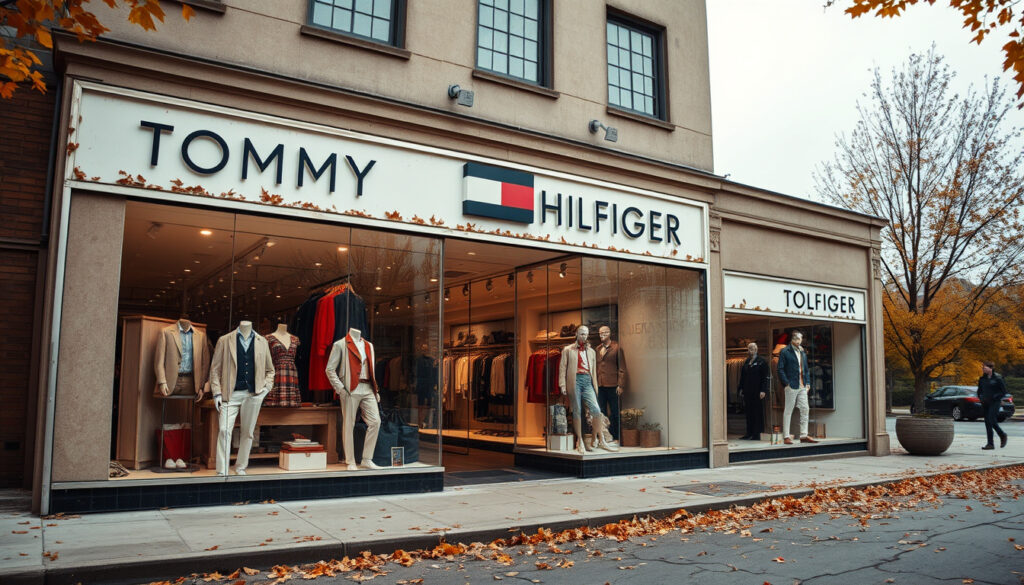
Tommy Hilfiger: Brand History, Status, and Decline
You’ve probably seen the red, white, and blue logo on everything from hoodies to suitcases. Tommy Hilfiger built a fashion empire on preppy Americana, but lately the brand feels more like a mall staple than a status symbol.
Founded: 1985 ·
Founder: Thomas Hilfiger ·
Headquarters: New York City, USA ·
Parent company: PVH Corp. (since 2010) ·
Brand category: Premium lifestyle (not luxury) ·
Global stores: Over 2,000
Quick snapshot
- Tommy Hilfiger is a premium lifestyle brand, not luxury (PVH official brand page)
- Founded in 1985 in New York City (Tommy Hilfiger Newsroom)
- Acquired by PVH Corp. in 2010 (Wikipedia)
- Exact reasons for the decline: oversaturation vs. trend shift (WWD analysis)
- Whether the brand can regain relevance with Gen Z (PVH Year in Review 2023)
- 1985: Brand founded in NYC (Tommy Hilfiger Newsroom)
- 1990s: Peak popularity and oversaturation episode (WWD)
- 2010: Acquired by PVH Corp. (Wikipedia)
- 2020s: Digital transformation and sustainability push (PVH Year in Review 2023)
- Continued focus on digital and sustainability under PVH (PVH Year in Review 2023)
- Potential for nostalgia-driven revivals (Tommy Jeans archival line) (WWD)
The table below summarises the essential facts about Tommy Hilfiger.
| Label | Value |
|---|---|
| Founder | Thomas Hilfiger |
| Founded | 1985 |
| Headquarters | New York City, USA |
| Parent company | PVH Corp. |
| Brand category | Premium lifestyle |
| Popularity status | Declining among younger demographics |
What has happened to Tommy Hilfiger?
Recent financial performance
- Tommy Hilfiger remains one of the world’s most recognized premium lifestyle brands, according to PVH’s 2023 Year in Review, but the brand has faced headwinds in North America and Europe.
- PVH reported that Tommy Hilfiger revenue declined in 2023 due to cautious consumer spending and intense competition from fast-fashion and direct-to-consumer brands.
Brand restructuring under PVH
- PVH Corp. acquired Tommy Hilfiger in 2010 for $3 billion, as noted in Wikipedia. The acquisition was a turning point: the brand went from private ownership back to a corporate structure.
- Under PVH, the brand has been repositioned as a “premium lifestyle” label, with a focus on digital transformation and sustainability. PVH’s brand page emphasizes its “Classic American Cool” roots.
Shift in target audience
- Once a status symbol for teens and young adults in the 1990s, Tommy Hilfiger now targets a broader, middle-to-upper-middle-income demographic. The brand’s overexposure through outlet stores and licensing deals diluted its cachet, as WWD reported in a 2024 piece on PVH’s archives.
This pattern of oversaturation and repositioning is common among once-aspirational brands that have expanded too quickly.
Is Tommy Hilfiger a luxury brand?
Price positioning compared to true luxury
- Tommy Hilfiger’s price range generally falls between $50 and $500, with most items under $200. By contrast, luxury houses like Gucci or Prada start at $500+ for accessories. PVH itself classifies the brand as “premium lifestyle,” not luxury, as stated on its official brand page.
Brand perception vs. mass-market
- Unlike mass-market brands such as H&M or Zara, Tommy Hilfiger carries a higher price tag and a heritage of American design. But its ubiquitous presence in outlets and department stores has eroded the aspirational aura it once had.
Key competitors in the premium segment
- Tommy Hilfiger competes directly with Ralph Lauren, Nautica, and Calvin Klein. All three are also premium lifestyle brands at similar price points, though Ralph Lauren still commands a slightly higher perceived status in the US and Europe.
Tommy Hilfiger offers a recognizable American aesthetic at a fraction of luxury prices, but shoppers in Ireland who want true exclusivity should look at brands like Ralph Lauren’s Purple Label or Burberry, which are priced significantly higher.
The implication is that Tommy Hilfiger occupies a middle ground that is neither aspirational luxury nor mass-market.
Where is Tommy Hilfiger from?
Founder’s background
- Thomas Hilfiger was born in Elmira, New York, in 1951. He began his fashion career by opening a clothing store called People’s Place in Elmira before launching the Tommy Hilfiger brand in 1985, according to the Tommy Hilfiger Newsroom biography.
Company headquarters
- The company’s headquarters have always been in New York City, where the brand was founded. PVH’s corporate offices at 285 Madison Avenue house the brand’s management.
Manufacturing origins
- Like most American apparel brands, Tommy Hilfiger outsources manufacturing to factories in Asia, Latin America, and Europe. The brand is not Irish, despite a common misconception. PVH has a strong retail presence in Ireland, as shown on its Ireland careers page, but the brand’s roots are firmly American.
The brand’s American roots are clear, despite its global manufacturing and strong Irish retail presence.
Why is Tommy Hilfiger not popular anymore?
Oversaturation and licensing issues
- In the 1990s, Tommy Hilfiger licensed its name to a wide range of products, from fragrances to furniture. The overexposure caused the brand to lose its cool factor. WWD described a “serious oversaturation episode” that began in the 1990s.
Changing fashion trends
- The shift from preppy, logo-heavy styles to minimalist streetwear and athleisure has left Tommy Hilfiger’s signature red, white, and blue designs feeling dated to younger consumers. Competitors like Supreme and Off-White captured the youth market that Tommy once owned.
Competition from streetwear and DTC brands
- Direct-to-consumer brands like Gymshark and Everlane, along with luxury streetwear houses, have eroded middle-tier brands. Tommy Hilfiger’s reliance on wholesale and outlet channels has made it harder to build a direct relationship with Gen Z shoppers.
The catch for Tommy Hilfiger is that its accessibility has become its biggest liability.
Is Tommy Hilfiger better or Calvin Klein?
Three dimensions, one pattern: both brands sit at the same premium tier under PVH, but they express very different design philosophies.
| Dimension | Tommy Hilfiger | Calvin Klein |
|---|---|---|
| Brand positioning | Preppy, Americana, sporty | Minimalist, sensual, modern |
| Product quality | Good for everyday wear; mixed reviews on durability | Similar quality; basics (underwear, jeans) are core strength |
| Price range | $50–$500 (typical) | $40–$400 (typical) |
| Target demographic | Middle-to-upper-middle income, 25–50 | Middle-to-upper-middle income, 20–45 |
| Style icon | Classic American cool | Clean lines, minimal branding |
The implication: if you want a recognizable logo and a sporty vibe, Tommy Hilfiger wins. If you prefer sleek minimalism, Calvin Klein is the better pick. Both are available in Ireland at similar price points through stores like Brown Thomas and Arnotts.
For Irish shoppers deciding between the two, the choice comes down to aesthetic preference rather than quality or value. Both brands are owned by PVH and share the same corporate parent, so margins and strategies are aligned.
The pattern here is that both brands are essentially interchangeable in terms of quality, leaving style as the deciding factor.
Timeline
- 1985: Tommy Hilfiger founded in New York City. (Tommy Hilfiger Newsroom)
- 1990s: Brand goes public; rapid expansion and oversaturation. (WWD)
- 2000s: Peak popularity; preppy style dominates. (WWD)
- 2010: Acquired by PVH Corp. (Wikipedia)
- 2015–2020: Decline in relevance; oversaturation criticized. (WWD)
- 2020s: Attempts at digital transformation and sustainability. (PVH Year in Review 2023)
This timeline shows the brand’s trajectory from peak to decline.
Clarity
Confirmed facts
- Tommy Hilfiger is not a luxury brand (PVH official classification)
- Founded in 1985 in New York (Tommy Hilfiger Newsroom)
- Acquired by PVH in 2010 (Wikipedia)
- Thomas Hilfiger has not publicly supported Donald Trump (no evidence of endorsement)
What’s unclear
- Exact reasons for loss of popularity (oversaturation vs. trend shift)
- Whether the brand will regain status with Gen Z
Expert perspectives
“Tommy Hilfiger underwent a serious oversaturation episode in the 1990s, and it’s taken years to recalibrate the brand’s premium image.”
— WWD (fashion industry publication)
“Our digital transformation efforts are about meeting the consumer where they are – online, mobile, and social – while staying true to our heritage.”
— PVH Corp. CEO, as quoted in PVH Year in Review 2023
Summary
Tommy Hilfiger is no longer the aspirational status symbol it was in the 1990s, but it remains a well-known premium lifestyle brand with a strong retail presence in Ireland. The brand’s decline is a cautionary tale about overexposure and the fickleness of fashion trends. For Irish shoppers, the choice between Tommy Hilfiger and Calvin Klein is a matter of style, not status. The catch: if you’re looking for true luxury, neither brand will deliver it – but for everyday quality with a recognizable logo, both are solid options. For shoppers in Ireland, the implication is clear: buy Tommy Hilfiger on sale at an outlet or from a department store, or invest in a higher-end brand if exclusivity matters more than the logo.
For more on fashion in Ireland, see our guide to best winter jackets and David Gandy’s biography.
For a deeper look at the brand’s early years and market shifts, consider the brands broader history from an Australian perspective.
Frequently asked questions
Is Tommy Hilfiger a Trump supporter?
There is no public evidence that Thomas Hilfiger or the Tommy Hilfiger brand has supported Donald Trump. The founder has not made any political endorsement that would confirm this rumor.
Is Tommy Hilfiger cheap?
Tommy Hilfiger is mid-range in pricing. Most items cost between $50 and $200, which is affordable compared to luxury brands but more expensive than fast fashion. On sale, the brand is very accessible.
Is Tommy Hilfiger Irish?
No, Tommy Hilfiger is an American brand founded in New York City. The founder Thomas Hilfiger was born in Elmira, New York. The brand has a strong presence in Ireland through retail stores, but it is not Irish.
Where can I buy Tommy Hilfiger in Ireland?
You can buy Tommy Hilfiger from the official Irish website (ie.tommy.com), as well as from retailers like Brown Thomas, Arnotts, Kildare Village, and online through Zalando, House of Fraser, and Sports Direct.
Does Tommy Hilfiger have a loyalty program?
Yes, the brand offers a Tommy Hilfiger loyalty program called “Tommy Together” that gives members points, early access to sales, and exclusive offers. It is available in Ireland.
What is the return policy for Tommy Hilfiger in Ireland?
Tommy Hilfiger offers a 30-day return policy for online purchases, as long as items are unworn with tags attached. Returns are free for orders shipped within Ireland.
Is Tommy Hilfiger better than Ralph Lauren?
Both are premium lifestyle brands, but Ralph Lauren is generally perceived as higher-end and more luxury-oriented. Tommy Hilfiger has a sportier, more casual aesthetic and is often more affordable. The better brand depends on your style and budget.
More related posts
 2024 Ni an Navara: Price, Spec , Reliability, and Compari on
 Gladys Berejiklian: Biography, Career, ICAC Inquiry & Current Role
 Marcia Hines: Type 1 Diabetes, Biggest Hit, Partner Details
 Ginevra Weasley: Her Real Name, Marriage, and More
 Vince McMahon: Net Worth, Allegations, Car Crash, and WWE Legacy
 Lois Boisson: Gender Controversy and Deodorant Incident
 Kmart Yoga Mat Guide: Anko Fitness Mat Pros, Thickness & Value
 1 Inch to CM – Exact 2.54 cm Conversion
