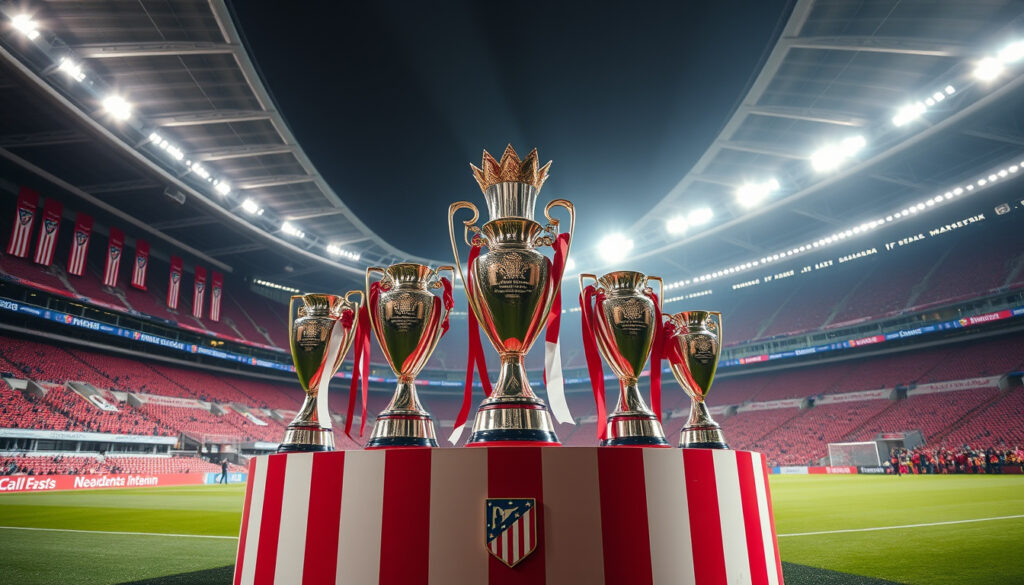
Atlético de Madrid – History Trophies and Simeone Era
Club Atlético de Madrid stands as one of Spain’s most storied football institutions, tracing its origins to April 26, 1903, when three Basque students established it as a youth branch of Athletic Bilbao in the Spanish capital. Today, the club operates under the designation Club Atlético de Madrid, S.A.D. and has evolved into a sporting powerhouse with a distinctive red-and-white kit that has become synonymous with competitive resilience across European football.
Known affectionately as Los Colchoneros among their devoted fanbase, Atlético de Madrid has cultivated a reputation for punching above its weight against wealthier rivals. The club has claimed domestic supremacy on nine occasions through La Liga titles and has accumulated ten Copa del Rey victories, establishing itself as the second most successful club in Spanish football history behind their city adversaries, Real Madrid.
From their current home at the Wanda Metropolitano to their legendary tactical approach under long-serving manager Diego Simeone, Atlético de Madrid represents a unique blend of tradition, ambition, and competitive fire that continues to captivate audiences across La Liga and European competitions alike.
What is Atlético de Madrid?
- The club began with blue-and-white shirts inspired by Blackburn Rovers before switching to red-and-white in 1912, influenced by Southampton’s kit design
- Atlético de Madrid has spent 89 of their 94 top-flight seasons in La Liga, demonstrating remarkable consistency at Spanish football’s highest level
- The rivalry with Real Madrid, known as the Madrid Derby, represents one of football’s most intense city rivalries
- The club reached three UEFA Champions League finals under Diego Simeone’s leadership
- Operating as a sociedad anónima deportiva, the club balances financial pragmatism with sporting ambition
- Average attendance exceeds 70,000 spectators, reflecting passionate supporter culture
- Combined with domestic and European honors, the trophy cabinet demonstrates sustained competitiveness across multiple decades
| Category | Achievement |
|---|---|
| La Liga Titles | 9 (first won in 1940) |
| Copa del Rey | 10 (first won in 1959) |
| UEFA Europa League | 2 titles |
| UEFA Super Cup | 2 titles |
| Cup Winners’ Cup | 1 (1962) |
| Intercontinental Cup | 1 (1974) |
| Champions League Finals | 3 appearances |
| Top-Flight Seasons | 89 of 94 total |
Who Leads Atlético de Madrid?
The Manager: Diego Simeone
Diego Simeone has overseen a transformative period for Atlético de Madrid since taking the managerial reins in 2011. The Argentine coach has guided the club through its most consistent era of competitive success, accumulating multiple domestic and European titles while establishing a tactical identity centered on defensive solidity and disciplined counter-attacking football. His tenure has included three UEFA Champions League final appearances, demonstrating the club’s capacity to compete at football’s highest level despite operating with comparatively modest resources against wealthier opponents.
Simeone’s extended contract running through 2027 underscores the mutual commitment between coach and club, reflecting a partnership that has redefined Atlético’s ambitions since 2011.
Club Ownership Structure
Atlético de Madrid operates as a sociedad anónima deportiva, a corporate structure specific to Spanish sports organizations that combines public company elements with sporting mission requirements. This organizational format allows the club to maintain competitive operations while adhering to Spanish regulations governing professional sports enterprises. The structure has enabled sustained investment in player recruitment and infrastructure development, including the club’s modern Wanda Metropolitano stadium.
Atlético de Madrid History and Trophies
Origins and Early Development
The club emerged from modest beginnings when three Basque students studying in Madrid established Athletic Club de Madrid as an official youth affiliate of Athletic Bilbao on April 26, 1903. This connection to Athletic Bilbao shaped the club’s early identity, including the adoption of blue-and-white shirts mirroring Athletic Bilbao’s original kit colors. The relationship with the Basque institution continued for nearly two decades before Atlético achieved formal independence around 1921.
The club entered La Liga upon its establishment in 1929 as one of the competition’s founding members, cementing its position among Spanish football’s elite institutions from the very beginning of professional organized football in Spain. This foundational status has been reflected in the club’s remarkable retention of top-flight status throughout subsequent decades.
Post-War Success and Identity Formation
The post-Civil War period brought dramatic change when Atlético merged with Aviación Nacional in 1939 to form Athletic Aviación de Madrid. This union proved extraordinarily successful, producing back-to-back La Liga championships in 1940 and 1941. The merger with the military aviation club brought resources and organizational strength that translated into immediate domestic dominance. Following a name reversion to Club Atlético de Madrid in 1947, the club continued building its identity as a competitive force in Spanish football.
European Ambitions and Trophy Collection
The 1950s through 1970s marked Atlético’s emergence as a genuine European power. The first Copa del Rey victory arrived in 1959, followed by continental success that included winning the Cup Winners’ Cup in 1962 and the Intercontinental Cup in 1974. These achievements established Atlético among Europe’s respected clubs while intensifying the rivalry with Real Madrid that had developed throughout the mid-twentieth century.
The club’s major honors span domestic competitions (La Liga and Copa del Rey), continental tournaments (Europa League, Cup Winners’ Cup), and international titles (UEFA Super Cup, Intercontinental Cup), demonstrating breadth of achievement across football’s trophy categories.
Latest Atlético de Madrid News and Form
Atlético de Madrid continues competing among La Liga’s leading positions, maintaining the club’s historical pattern of top-flight relevance that has seen them participate in 89 of their 94 possible seasons at Spanish football’s highest level. The current squad combines experienced internationals with promising young talent, reflecting the club’s ongoing strategy of balancing competitive performance with sustainable squad development under Simeone’s technical direction.
Comprehensive 2024 squad statistics and league position details were not available at the time of compilation. Readers seeking real-time match results and transfer developments should consult La Liga’s official Atlético de Madrid page for the most current information.
Competition Across Multiple Fronts
Beyond domestic league obligations, Atlético remains active across Copa del Rey and UEFA Champions League competitions when qualification is achieved. The club’s consistent participation in multiple tournaments throughout recent seasons reflects the sustained competitive level established during the Simeone era. European campaigns have included memorable performances against elite opponents, though final victory in the Champions League has remained elusive despite multiple final appearances.
Atlético de Madrid Through the Decades
- 1903: Founded as Athletic Club de Madrid by three Basque students as a youth branch of Athletic Bilbao
- 1912: Kit color change from blue-and-white to red-and-white, influenced by Southampton
- 1921: Formal independence from Athletic Bilbao established
- 1929: Founder member of La Liga upon competition’s inauguration
- 1939: Merger with Aviación Nacional to form Athletic Aviación de Madrid
- 1940-1941: Back-to-back La Liga titles under the merged entity
- 1947: Name reversion to Club Atlético de Madrid
- 1959: First Copa del Rey victory achieved
- 1962: UEFA Cup Winners’ Cup victory, first European trophy
- 1974: Intercontinental Cup victory representing global club supremacy
- 2011: Diego Simeone appointed manager, beginning transformative era
- 2017: Relocation to Wanda Metropolitano stadium
- 2024: Continued competitive presence across La Liga and European competitions
What We Know and What Remains Unclear
Established Facts
- Diego Simeone has managed Atlético de Madrid since 2011
- The club operates as Club Atlético de Madrid, S.A.D.
- Wanda Metropolitano has been home since 2017
- The club was founded April 26, 1903
- Total of 9 La Liga titles and 10 Copa del Rey trophies
- Three Champions League final appearances under Simeone
- Primary rival is Real Madrid in the Madrid Derby
Unconfirmed Information
- Current 2024 squad composition details pending verification
- Precise Wanda Metropolitano capacity figure unavailable
- Current league position and recent match results not confirmed
- Specific ownership percentages and investor identities unclear
- Details regarding potential transfer activities require additional sources
The Madrid Derby and Atlético’s Place in Football
The rivalry between Atlético de Madrid and Real Madrid transcends ordinary sporting competition, representing one of football’s most intense city rivalries. The Madrid Derby has produced memorable encounters across domestic league matches, cup competitions, and European fixtures, with Atlético often positioned as the challenger against their wealthier neighbors. Throughout the mid-twentieth century, Atlético dominated this rivalry, accumulating titles while Real Madrid struggled to establish the legendary status that would later define the Blancos.
This competitive dynamic has shaped Atlético’s identity as an organization that values determination and tactical discipline over financial resources. The club’s continued ability to challenge Real Madrid, Barcelona, and other wealthy competitors demonstrates the effectiveness of their approach under Simeone’s leadership. The passionate fanbase, exceeding 70,000 average attendance, provides consistent support that reinforces Atlético’s position as a genuine footballing institution with deep roots in Spanish sporting culture.
What Sources Say
“Club Atlético de Madrid stands as one of Spanish football’s most decorated clubs, having spent 89 of their 94 possible seasons in the top flight.”
“Diego Simeone has led Atlético de Madrid through a transformative era since 2011, accumulating multiple titles and three Champions League final appearances.”
The Big Picture
Club Atlético de Madrid embodies a remarkable sporting journey from humble origins as a youth club to established status among Europe’s elite football institutions. With nine La Liga titles, ten Copa del Rey victories, and consistent Champions League contention, the Colchoneros have demonstrated that sustained competitive success need not depend exclusively on financial superiority. Diego Simeone’s extended tenure through 2027 suggests continuity remains central to the club’s future direction as they pursue additional honors across domestic and European competitions. The legacy of Atlético de Madrid continues being written with each passing season, driven by passionate supporters, tactical discipline, and an unwavering competitive spirit that defines the club’s character.
For readers interested in broader La Liga coverage, exploring Benfica vs Real Madrid provides additional context on Spanish football’s competitive landscape and the broader context in which Atlético operates.
Frequently Asked Questions
Who are Atlético de Madrid’s main rivals?
Atlético de Madrid’s primary rivalry is with Real Madrid in the Madrid Derby, one of football’s most intense city rivalries. Atlético also maintains competitive rivalries with Barcelona and other La Liga clubs.
What is Atlético de Madrid’s current league position?
Detailed 2024 league position data was unavailable at compilation time. The club maintains a consistent presence among La Liga’s top contenders, having spent 89 of their 94 possible top-flight seasons in Spanish football’s first division.
How many La Liga titles has Atlético de Madrid won?
Atlético de Madrid has won La Liga nine times, with the first championship coming in 1940. The club remains the second most successful team in Spanish football history behind Real Madrid.
What stadium does Atlético de Madrid use?
Atlético de Madrid plays home matches at the Wanda Metropolitano, which has served as the club’s stadium since 2017. The venue represents the club’s current base following departure from Estadio Metropolitano.
When was Atlético de Madrid founded?
The club was founded on April 26, 1903, by three Basque students in Madrid who initially established it as a youth branch of Athletic Bilbao under the name Athletic Club de Madrid.
How many Champions League finals has Atlético reached?
Atlético de Madrid has reached three UEFA Champions League finals under manager Diego Simeone. While the club has not won the competition, these final appearances demonstrate their status among European football’s elite clubs.
What does the nickname Colchoneros mean?
Colchoneros refers to Atlético de Madrid’s red-and-white striped shirts, which resemble the traditional mattress (colchón) ticking fabric common in Spain. The nickname has become synonymous with the club’s identity and supporter culture.
Who owns Atlético de Madrid?
The club operates as Club Atlético de Madrid, S.A.D. (sociedad anónima deportiva), a specific corporate structure for Spanish professional sports organizations. Detailed ownership percentages and investor identities were not specified in available sources.
More related posts
 1600 USD to AUD – Live Rate, Trends and Comparisons
 25 USD to AUD: Convert US Dollars to Australian Dollars
 Acer Nitro 5 Review: Is It a Good Gaming Laptop in 2024
 Sam Smith: Gender Identity, Partner, MS Rumors & Music
 Jadon Sancho: Salary, Ten Hag Fallout, and Aston Villa Future
 Neil Patrick Harris Amy Winehouse Cake – What Really Happened
 Burt Reynolds Cause of Death, Illness, and Final Days
 Leisel Jones: Life, Weight Loss & Radio Career
