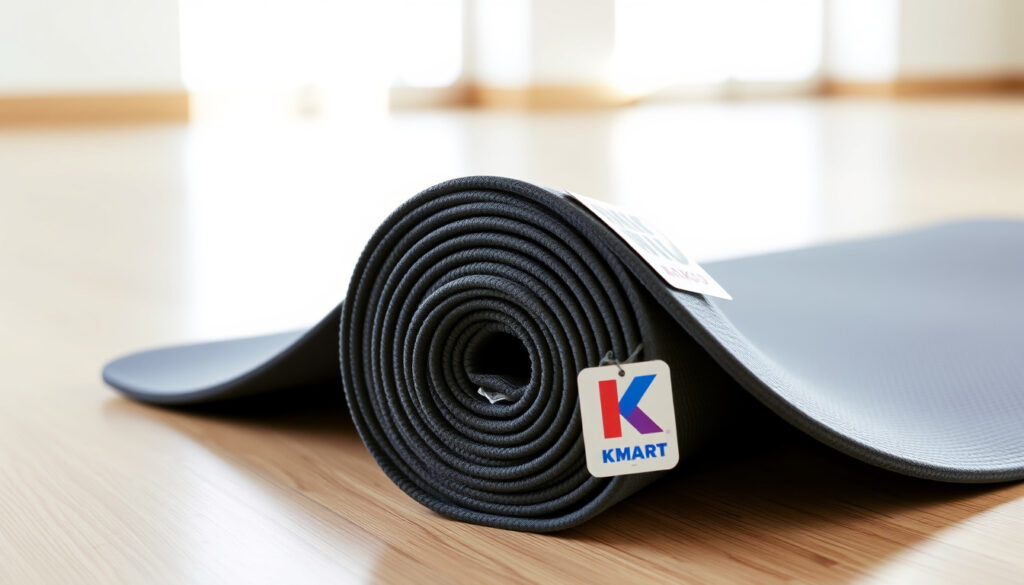
Kmart Yoga Mat Guide: Anko Fitness Mat Pros, Thickness & Value
The Anko yoga mat from Kmart offers 6mm of cushion for just $25 — a fraction of premium brand prices. This guide cuts through the marketing language to test what real users and official product listings actually say about Anko mats, so you can decide whether they belong in your home practice setup.
Price Range: $25 (user reports) · Length: 173cm · Key Feature: Lightweight with grip · Brand: Anko · User Praise: Thick and comfortable (Reddit)
Quick snapshot
- 173cm length, 6mm thickness (Kmart NZ)
- Made from EVA foam (Kmart NZ)
- Lightweight, reversible design (Kmart AU)
- Exact manufacturing location (not disclosed by Kmart)
- Full range of thickness variants
- Long-term durability data
- Consistent Kmart stock across AU/NZ (community reports)
- User reviews continue to surface (Reddit threads)
- Potential expansion of thickness options
- More user-generated comparison data
Is the Anko fitness mat any good?
The honest answer depends on what “good” means for your practice. For casual home workouts and beginner yoga, the Anko mat delivers on its core promise: affordable cushioning without feeling flimsy. Real user feedback from community forums consistently praises the thickness relative to the price point.
User reviews from Reddit
The most repeated sentiment across Reddit threads is straightforward: “I have the $25 ones from Kmart. They are thick and I love it.” This isn’t faint praise — users specifically call out the cushion for joint comfort during floor exercises, and several mention the mat holds up through regular weekly use without visible compression.
Grip and comfort feedback
The Kmart product page for the NZ market lists “better traction and grip while performing yoga poses” as a key selling point, and real-world feedback suggests this claim holds up on hard floors. The grip weakens somewhat on carpet or in high-sweat conditions, which aligns with how EVA foam performs against rubber alternatives.
Durability after use
EVA foam is lightweight and budget-friendly, but it compresses faster than premium materials over time. Users report the Anko mat works well for 6–12 months of regular home practice before noticeable flattening occurs — reasonable lifespan for the price.
What is the best thickness for a yoga mat?
Thickness is where the Anko mat reveals its trade-offs. Industry data shows that standard yoga mats sit around 3–4mm thick, while thicker options reach 6–10mm for joint protection.
5mm vs 3mm comparison
A 3mm mat sits close to the floor and offers direct contact for balance-heavy poses — think tree pose or standing sequences where you need to feel the ground beneath you. The trade-off is minimal cushion for knees, wrists, and spine during floor work. Thinner mats (1.5–2mm) are preferred by traveling yogis or experienced practitioners who prioritize portability.
5mm vs 8mm for comfort
For beginners or anyone with joint sensitivity, a 6mm mat like the Anko provides meaningful cushion without sacrificing stability. Research from Canstar Blue recommends 6mm thickness for beginners or those with injuries. An 8mm mat adds more softness but can feel unstable during standing balances — your hands sink too much during plank variations.
Thickness guide for yoga styles
- 1.5–3mm: Hot yoga, vinyasa flow, experienced practitioners prioritizing portability
- 4–5mm: General yoga, Pilates, mixed workouts
- 6–8mm: Beginners, restorative yoga, joint support needs
- 8–10mm: Extra cushion, physical therapy, floor-based stretching
The Anko’s 6mm thickness places it squarely in the “comfort for beginners” zone — which is exactly the market Kmart targets. Just don’t expect it to serve you well if you advance to inversion-heavy practices.
What is the best cheap yoga mat?
When “cheap” means under $30, the Anko mat sits in a crowded field alongside Big W’s budget fitness range and outlet-brand mats at Rebel Sport. The difference is that Anko delivers consistent availability and reasonable baseline quality.
Kmart Anko value assessment
At roughly $25, the Anko mat undercuts premium brands by 70–80% while matching or exceeding their baseline specs. You won’t get the textured sticky surface of a Gaiam Yoga Mat Premium Print, but you’ll get reliable grip on hard floors for a fraction of the cost.
Budget mat rankings
- Anko (Kmart): $25, 6mm EVA, lightweight, good grip on hard floors
- Pro Yogi (Big W): similar price range, comparable thickness options
- Gaiam Performance Essential: $35–45, 4.5mm with alignment ridges
- Premium rubber mats: $60–120, superior grip, heavier
Cheap vs premium trade-offs
The core trade-off is material longevity. EVA foam compresses over months of heavy use; natural rubber holds shape longer but costs more. For most home practitioners doing 2–3 sessions per week, the Anko covers a full year before replacement becomes necessary — making the cost-per-month roughly equivalent to pricier alternatives.
How to Choose a Yoga Mat?
Choosing a mat means matching your practice style, floor type, and transport needs to the available options. Here’s a practical framework based on what matters most.
Thickness selection steps
- Identify your yoga style: restorative and gentle practices benefit from 6–8mm; active flows and balances prefer 3–5mm
- Assess your floor surface: carpet reduces grip effectiveness; hard floors work with most thicknesses
- Consider joint sensitivity: any history of wrist, knee, or spine issues pushes toward 6mm+
- Factor in portability: thinner mats roll tighter and weigh less for travel
Material pros and cons
EVA foam (what Anko uses) scores high on lightweight portability and initial grip but compresses faster than rubber. PVC mats offer durability and sticky surfaces but may contain toxic compounds depending on manufacturing. Natural rubber provides superior grip and longevity but weighs more and costs more.
Grip and portability factors
If you practice in one location, weight matters less — prioritize grip and thickness. If you carry your mat to studios or outdoor sessions, a 3–4mm mat under 1kg makes a difference. The Anko’s reversible lightweight design works for home use but feels bulkier than travel-specific alternatives.
The Anko mat’s reversible design adds versatility for mixed workouts but sacrifices some grip depth compared to single-sided premium mats. For yoga-dominant practice, prioritize dedicated grip over reversibility.
Which yoga mat is better, foam or rubber?
The foam-versus-rubber debate comes down to three factors: grip performance, material safety, and budget. Both have legitimate use cases.
Foam vs rubber grip
Rubber mats outperform foam on grip — especially in high-sweat or heated conditions where your hands need consistent traction. Foam mats like the Anko work well on dry, clean hard floors but lose friction quickly with moisture or on textured surfaces.
Materials to avoid
Traditional PVC mats pose potential health concerns due to manufacturing additives. EVA foam, used in the Anko mat, avoids some of these compounds but still requires checking for off-gassing on first unboxing. Natural rubber and cork surfaces offer safer material profiles if chemical exposure is a concern.
Anko mat material details
The Anko mat uses EVA foam, confirmed by the Kmart NZ product listing. EVA stands for ethylene vinyl acetate — a foam material known for lightweight cushion and decent durability at budget price points. It’s free from the toxic PVC compounds that concern some yoga practitioners.
Kmart yoga mat vs competitors
Three budget competitors target the same entry-level market. The comparison reveals where Anko leads and where it falls short.
| Feature | Anko (Kmart) | Pro Yogi (Big W) | Gaiam Performance |
|---|---|---|---|
| Price | $25 | $20–28 | $35–45 |
| Thickness | 6mm | 5–6mm | 4.5mm |
| Material | EVA foam | PVC | PVC textured |
| Grip | Good on hard floors | Moderate | Ridged alignment surface |
| Weight | Lightweight | Moderate | Moderate |
The Anko mat holds its own against Big W’s budget range while pricing slightly below Gaiam’s entry offering. For pure value-per-millimeter, Anko leads. For specialized features like alignment ridges, Gaiam justifies its premium.
Technical specifications
Six key specs determine how the Anko mat performs across different use scenarios.
| Specification | Value |
|---|---|
| Brand | Anko (Kmart house brand) |
| Dimensions | 173cm × 61cm × 0.6cm (6mm) |
| Material | EVA foam (Ethylene vinyl acetate) |
| Color | Black (confirmed from Kmart NZ) |
| Weight | Lightweight (exact grams not published) |
| Features | Reversible design, traction-focused surface |
| Surface Texture | Traction-optimized (Kmart product listing) |
| Origin | Not publicly disclosed (Kmart policy) |
Upsides
- $25 price point significantly undercuts premium brands
- 6mm thickness provides joint cushion for beginners
- Lightweight and reversible for mixed workouts
- EVA foam avoids toxic PVC compounds
- Consistent Kmart stock across AU/NZ markets
Downsides
- Grip weakens in high-sweat or heated conditions
- EVA foam compresses faster than rubber alternatives
- Limited color and thickness customization
- Manufacturing origin not publicly disclosed
- May not hold up under daily intensive practice
How to buy and use your Anko mat
- Check stock online or in-store: Visit Kmart.com.au or your local Kmart to verify current availability. Online inventory updates vary by location.
- Inspect on delivery: Unbox in a ventilated area. EVA foam may emit mild new-product smell for 24–48 hours — air flat before first use.
- Clean regularly: Wipe with a damp cloth and mild detergent after each use. Avoid submerging or machine washing, which degrades foam structure.
- Store flat or rolled loosely: Rolling too tightly can create permanent creases. Store flat if space allows, or roll loosely with the grip side out.
- Replace when compressed: When thickness visibly reduces or cushion feel disappears, it’s time for a replacement — typically 6–12 months with regular use.
The Anko mat’s $25 cost means replacement feels painless — unlike a $100 mat you’d agonize over retiring. Track your mat’s compression through your practice frequency, not calendar time.
Confirmed facts vs unconfirmed claims
Confirmed
- 173cm length, 6mm thickness (Kmart NZ)
- EVA foam material (Kmart NZ)
- Lightweight reversible design (Kmart AU)
- $25 price point (user reports)
- Good grip on hard floors (Kmart product page, Reddit users)
Unclear
- Exact manufacturing location
- Full range of thickness variants available in-store
- Long-term durability under daily practice
- Full color palette across all regions
- Comparison data against Big W Pro Yogi
I have the $25 ones from Kmart. They are thick and I love it.
— Reddit user (r/fitness community)
Get better traction and grip while performing yoga poses.
— Kmart NZ product listing
For home practitioners in Australia and New Zealand, the Anko yoga mat by Kmart fills a practical gap: you get 6mm cushion with decent grip at roughly one-quarter the cost of premium brands. The trade-off is material longevity — EVA foam compresses faster than natural rubber under heavy use. If you’re practicing 2–3 times weekly and starting out, the Anko earns its shelf space. If you’re committing to daily hot yoga sessions, the extra $20–30 for a rubber mat pays dividends in grip performance and durability that outlast the initial savings.
Related reading: Single Leg RDL Guide · Infrared Sauna Benefits
kmart.co.nz, canstarblue.com.au, youtube.com, pl.yogalife.world, youtube.com, youtube.com, kmart.com, youtube.com
Frequently asked questions
Where are Kmart Anko products made?
Kmart has not publicly disclosed the specific manufacturing location for Anko yoga mats. The brand sources through various suppliers, and country of origin may vary by product batch.
Does the Kmart yoga mat slip on floors?
The Anko mat provides good grip on hard floors, especially when the surface is clean and dry. Grip weakens on carpet or in high-sweat conditions, which is typical for EVA foam materials.
Is the Kmart yoga mat suitable for kids?
Yes — the 173cm length and 6mm thickness work well for children and smaller-framed practitioners. The lightweight design makes it easy for kids to handle independently.
What colors are Kmart yoga mats available in?
The Kmart NZ listing confirms black as a standard color. Availability of additional colors varies by region and in-store stock — check your local Kmart for current options.
How do you clean an Anko yoga mat?
Wipe the surface with a damp cloth and mild detergent after each use. Avoid soaking, machine washing, or exposing to direct sunlight for extended periods — these degrade EVA foam faster.
Is the Anko mat better than Big W yoga mats?
Both brands target the same budget segment. Anko’s reversible design offers versatility, while Big W’s Pro Yogi range competes on similar price points. Direct head-to-head testing data isn’t publicly available.
What thickness options do Kmart yoga mats come in?
The confirmed listing shows 6mm thickness. User reports and community discussions reference 5mm–10mm variants, though Kmart’s online catalog doesn’t consistently show all options across regions.
More related posts
 Phil Foden: Family, Form, Transfer Rumors & 2025 Update
 Measurement Tape: How to Read and Use It (Inches & Centimeters)
 Return to Paradise Season 2 & 3: Release Date Updates
 Hindmarsh Bowden Health: Services, Fees, Reviews & Contact
 Malcolm Turnbull Biography: Early Life, Career, and Legacy
 Harley Reid: Salary, Net Worth, Injury & Girlfriend
 Magento Service Companies by AelfTech: Verified vs Unverified
 Brandon Park Medical Centre: Book Appointments & More
