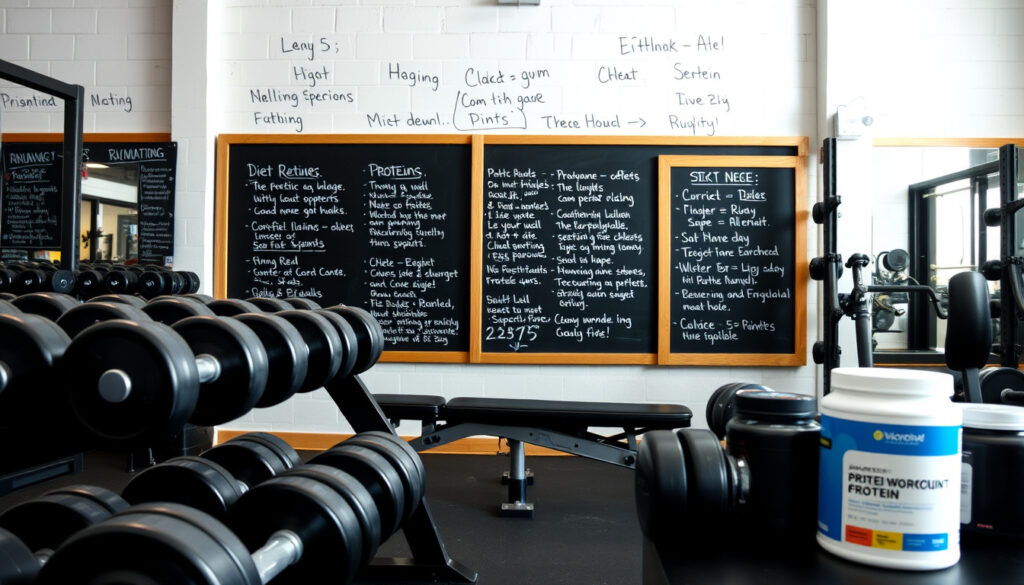
Dorian Yates Workout and Diet: Evidence-Mapped Blueprint
Few bodybuilders have left a mark on the sport quite like Dorian Yates. His Blood and Guts philosophy still shapes training today, with his 4‑day split and 6,500‑calorie off‑season diet powering six Mr. Olympia wins.
Training Split: 4-day rotation ·
Protein Intake: Over 400 g/day ·
Off-Season Calories: 6,500–7,000/day
Quick snapshot
- 4-day rotation: shoulders/triceps, back/rear delts, chest/biceps, legs/calves (Hunt Fitness – workout programming site)
- Each body part trained once every 6 days (Boostcamp – training app)
- Protein target ≥1.5 g per pound of body weight (Hunt Fitness)
- Off-season caloric peak: 6,500–7,000 kcal/day (Dorian Yates Nutrition (Facebook) – official brand page)
- Exact rep ranges for every exercise (reported as “one or two all-out sets” after warm-ups) (Boostcamp)
- Whether Yates currently still performs the same volume in his own training – 2026 interview suggests he now trains fasted and eats twice daily (YouTube – interview clip)
- Community variants of the diet differ on calorie and macro splits (3,200 kcal vs. contest plans) (Maistas Sportui – fitness blog)
- 2013 – Yates’ legs workout video shows working sets to failure (YouTube – training footage)
- 2026 – Public interview reveals current diet: 150–200 g protein/day, fasted training, two meals per day (YouTube – interview)
- Yates continues to influence bodybuilding through his Nutrition brand and social media – his current moderate eating approach may inspire a new wave of “less is more” training and dieting.
The facts below draw from multiple sources, including dedicated fitness programming sites, official brand posts, and video interviews spanning more than a decade. Here are the key numbers in one place.
| Fact | Value |
|---|---|
| Training frequency | Each body part once every 6 days (Boostcamp) |
| Training style | Low-volume, high-intensity (“Blood and Guts”) (Hunt Fitness) |
| Sets per exercise | 1–2 working sets after warm-ups (Boostcamp) |
| Protein target (peak) | ≥1.5 g per pound of body weight; over 400 g/day (Hunt Fitness) |
| Off-season calories | 6,500–7,000 kcal/day (Dorian Yates Nutrition (Facebook)) |
| Training time (contest plan) | 11 AM, with pre-workout meal at 7–8 AM and post-workout carb drink at 12 PM (Muscle & Fitness – fitness magazine) |
| Core foods (contest) | Oatmeal, egg whites, protein powder, chicken, potatoes/rice, steak (Muscle & Fitness) |
| Current protein (2026) | ~150–200 g/day (YouTube – interview) |
| Current meal frequency | 2 meals per day, often fasted until 1–2 PM (YouTube – interview) |
“Ever wondered what Dorian’s off-season diet was like? Here it is. At his heaviest, he consumed 6,500‑7,000 calories per day.” – Dorian Yates Nutrition (Facebook)
Bottom line: Yates built his physique on extreme volume and extreme calories, but his current approach has shifted to moderate protein and intermittent fasting. For lifters seeking mass, the old school template works – for longevity, the new model offers a sustainable alternative.
The Dorian Yates Training Philosophy
Yates’ system rejects the high-volume, multi-set dogma common in the 1990s. Instead, he championed a low-volume, high-intensity approach where every set is taken to momentary muscular failure. The goal was not pump volume but progressive overload on compound movements.
- Training each body part only once every 6 days allows full recovery (Boostcamp).
- Warm-up sets prepare the nervous system; only one or two working sets count (Hunt Fitness).
- A 2013 video of his leg session shows him grinding out reps to failure, confirming the intensity (YouTube – training footage).
Street lifters who try Yates’ method often overtrain because they do not push to true failure. The real discipline is knowing when to stop – one all-out set is enough if executed with maximum effort.
The implication: This approach demands mental toughness and perfect form, but it minimises wear and tear compared to 20+ set sessions. For natural lifters, the 6-day recovery cycle may actually be more effective than a standard 7-day week.
The 4-Day Split: A Detailed Breakdown
The classic Yates split rotates through four workouts, with a rest day after each session. The order matters – large compound movements come first to recruit the most muscle fibres.
| Day | Muscle groups | Key exercises (example) |
|---|---|---|
| Day 1 | Shoulders & Triceps | Seated dumbbell press, lateral raise, skull crushers |
| Day 2 | Back & Rear Delts | Deadlifts, bent-over rows, face pulls |
| Day 3 | Rest | – |
| Day 4 | Chest & Biceps | Incline press, flat press, barbell curls |
| Day 5 | Rest | – |
| Day 6 | Legs & Calves | Squats, leg press, standing calves |
| Day 7 | Rest | – |
(Based on the 4-day rotation described by Hunt Fitness and Boostcamp.)
Each session starts with a compound lift (e.g., deadlifts on back day) performed for one all-out set after warm-ups. Isolation moves then target specific heads. The total working sets per session rarely exceed 6–8.
Beginners who lack the mind-muscle connection may fail to reach true failure, making this split ineffective. Intermediate lifters with solid technique will gain the most from the low-volume intensity.
The catch: Without adequate recovery – sleep, nutrition, stress management – the 6-day cycle can backfire because the intensity taxes the central nervous system heavily.
The Dorian Yates Diet: Contest and Off-Season
Yates’ diet varied drastically between contest prep and off-season bulking. During his heaviest off-season, he consumed up to 7,000 calories per day, as reported by his official brand page (Dorian Yates Nutrition (Facebook)). Contest plans featured tighter macros and timed meals around the 11 AM training session.
| Phase | Calories | Protein | Carbs | Fats |
|---|---|---|---|---|
| Off-season (peak) | 6,500–7,000 kcal | 400+ g | High (variable) | Moderate |
| Contest (example) | ~3,200 kcal | 240 g | 440 g | 54 g |
“I now train fasted, eat two meals a day, and consume around 150‑200 grams of protein.” – Dorian Yates, 2026 interview (YouTube)
Bottom line: Yates’ peak diet was an extreme bulking protocol that required enormous discipline. For modern readers, the takeaway is not the raw calorie number but the principle of consistent protein timing and meal frequency.
Dorian Yates Today: How His Approach Has Evolved
In a 2026 interview, Yates revealed a drastically different current lifestyle. He now trains fasted, eats only two meals per day, and consumes around 150–200 grams of protein (YouTube – 2026 interview). This shift surprises fans who associate Yates with massive portions and heavy eating.
- His typical day: fast until 1–2 PM, then two large meals covering total protein needs.
- Training now occurs fasted, relying on fat adaptation rather than pre-workout carbs.
- He emphasizes that long-term health and digestive comfort drove the change.
Why this matters: If the six-time Mr. Olympia can thrive on a moderate diet, the necessity of extreme caloric surpluses for muscle building is called into question. Many modern bodybuilders are now adopting lower meal frequencies and intermittent fasting, validating the trend with Yates’ own testimony.
generationiron.com, scribd.com, youtube.com, instagram.com, ironstudiogym.co.za
The core principles of his low-volume, high-intensity training are further explored in Dorian Yates workout blueprint.
Frequently asked questions
What is the Dorian Yates workout split?
A 4-day rotation: shoulders/triceps, back/rear delts, chest/biceps, legs/calves, with rest days between sessions. Each body part trained every 6 days (Boostcamp).
How many sets per exercise did Dorian Yates do?
1–2 all-out working sets after thorough warm-ups. He rarely did more than 6–8 working sets per session (Hunt Fitness).
What was Dorian Yates’ daily protein intake?
At his peak, over 400 g per day, or at least 1.5 g per pound of body weight (Hunt Fitness).
What did Dorian Yates eat in a day (contest plan)?
Breakfast: oatmeal and egg whites; post-workout: carb drink; lunch: chicken and rice; dinner: steak and potatoes; plus protein shakes between meals (Muscle & Fitness).
Does Dorian Yates still train the same way?
No – as of 2026, he trains fasted, eats two meals a day, and consumes 150–200 g protein. He emphasizes health and digestive comfort over extreme bulking (YouTube – 2026 interview).
How many calories did Dorian Yates eat in the off-season?
At his heaviest, around 6,500–7,000 kcal per day (Dorian Yates Nutrition (Facebook)).
What is “Blood and Guts” training?
Yates’ signature high-intensity, low-volume bodybuilding approach. It emphasizes taking every working set to failure with maximum mental and physical effort (Hunt Fitness).
For anyone serious about bodybuilding, the Dorian Yates system offers a proven blueprint. The lesson is not to copy his numbers exactly but to understand the principles: intensity, recovery, and consistent nutrition. Whether you’re preparing for a competition or just building strength, the choice is clear: embrace the discipline, or stay where you are.
More related posts
 Ibrahim Traore: Biography, Popularity, Religion & More
 Capricorn Horoscope Today – Love, Career, Health Predictions
 Jake Paul Net Worth 2025: How Much Money Does He Really Have
 Ahmed al-Sharaa – Syria’s Interim President
 Chloe Lukasiak: Net Worth, Eye Surgery, Dance Moms Exit & More
 Kmart Yoga Mat Guide: Anko Fitness Mat Pros, Thickness & Value
 German Shepherd Ownership: Health, Temperament & Irish Law
 Life Insurance Australia: Costs, Guide & Providers
