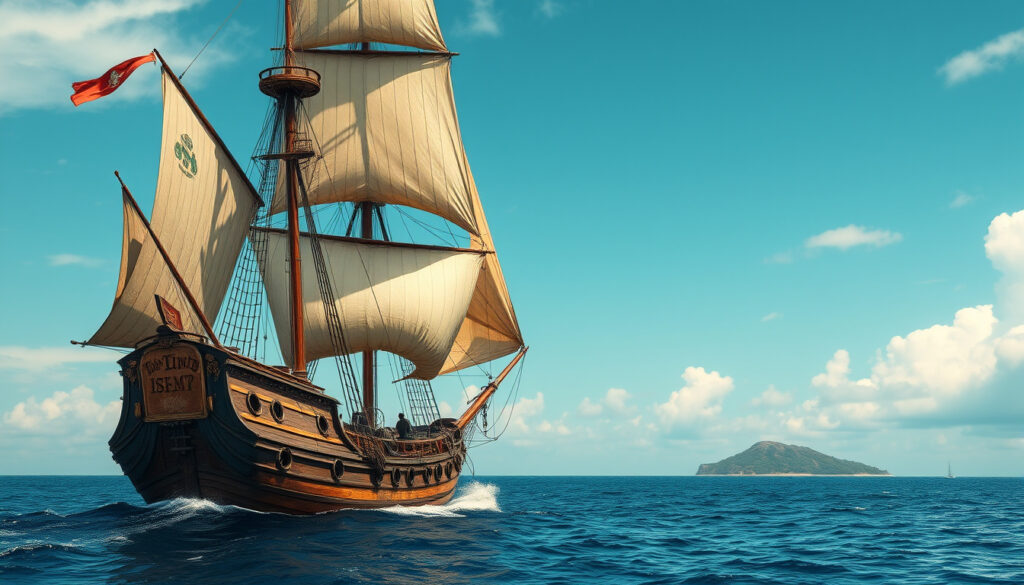
Captain James Cook: Voyages, Death, and Controversial Legacy
Few names in exploration carry as much weight — or as much controversy — as Captain James Cook. Over three Pacific voyages between 1768 and 1779, he mapped coastlines that were unknown to Europe, introduced anti-scurvy measures that saved countless lives, and eventually died in a skirmish on a Hawaiian beach.
Birth: 7 November 1728, Marton, Yorkshire, England ·
Death: 14 February 1779, Kealakekua Bay, Hawaii ·
Voyages: 3 (1768–1779) ·
Ships commanded: HMS Endeavour, HMS Resolution, HMS Discovery ·
Cause of death: Stab wound inflicted by Hawaiian warriors ·
Spouse: Elizabeth Batts (married 1762)
Quick snapshot
- Cook was born on 7 November 1728 (Britannica (authoritative encyclopedia))
- He died on 14 February 1779 from a stab wound (The National Archives (UK government archives))
- He led three Pacific voyages (Britannica)
- He introduced anti-scurvy measures that dramatically reduced crew mortality (EBSCO Research Starters (academic database))
- Exact words exchanged before his death (The National Archives)
- Whether Cook intended to take the Hawaiian chief hostage (The National Archives)
- His personal dietary compliance during voyages (EBSCO Research Starters)
- 1728: Born in Marton, Yorkshire (Australian National University (academic biography))
- 1768–1771: First voyage, HMS Endeavour (Britannica)
- 14 Feb 1779: Death at Kealakekua Bay (The National Archives)
- Historians continue to debate Cook’s legacy, with Indigenous perspectives gaining prominence (The National Archives)
- A reassessment of statues and place names is underway in Australia and New Zealand (National Library of Australia (government heritage institution))
The table below provides a quick reference for the key facts about Cook’s life and career.
| Attribute | Detail |
|---|---|
| Full name | Captain James Cook |
| Born | 7 November 1728, Marton, Yorkshire, England |
| Died | 14 February 1779, Kealakekua Bay, Hawaii |
| Spouse | Elizabeth Batts (m. 1762) |
| Children | 6 (all died before adulthood except one son) |
| Notable ship | HMS Endeavour |
| Voyages | 3 |
| Cause of death | Stab wound |
What was James Cook most famous for?
First voyage (1768–1771): HMS Endeavour and the transit of Venus
- Cook commanded HMS Endeavour on a mission to observe the transit of Venus from Tahiti (EBSCO Research Starters)
- After the observation, he opened sealed orders directing him to search for the undiscovered southern continent (Britannica)
- He circumnavigated New Zealand and produced the first European chart of the east coast of Australia (Britannica)
- He mapped the Great Barrier Reef (Nat Geo Kids (educational publisher))
The pattern: Cook’s first voyage transformed European knowledge of the Pacific, but it also set the stage for colonial claims. Why this matters: The charts he made remained in use for decades — yet the lands he mapped were already inhabited by peoples whose sovereignty he ignored.
Second voyage (1772–1775): Antarctic Circle and the Resolution
- Cook commanded HMS Resolution and crossed the Antarctic Circle, disproving the existence of a habitable southern continent (Australian National University)
- He visited Easter Island and the Marquesas (Britannica)
- He pioneered anti-scurvy measures — sauerkraut, citrus, fresh greens — and lost zero men to scurvy (EBSCO Research Starters)
The implication: Cook’s second voyage proved that systematic diet and hygiene could defeat scurvy, a breakthrough that reshaped naval medicine. The trade-off: His crews still suffered from other diseases, and his own health may have been compromised by intestinal parasites (Britannica).
Third voyage (1776–1779): Northwest Passage and death in Hawaii
- Cook aimed to find the Northwest Passage from the Pacific side (Australian National University)
- He became the first European to visit the Hawaiian Islands (Britannica Kids (educational resource))
- He was killed during a confrontation with Indigenous Hawaiians at Kealakekua Bay (The National Archives)
What was Cook’s cause of death?
Sequence of events on 14 February 1779 at Kealakekua Bay
- The confrontation began after Hawaiians took a small boat from Cook’s ship (The National Archives)
- Cook attempted to take the Hawaiian chief Kalaniʻōpuʻu hostage to recover the boat (Britannica)
- A large crowd gathered; Cook and his men were overwhelmed, and Cook was stabbed in the neck (The National Archives)
The pattern: Cook’s death is often cited as a tragic misunderstanding, but Hawaiian oral traditions describe it as a consequence of Cook violating kapu (sacred laws) — a direct challenge to Hawaiian authority (The National Archives). The catch: The exact words exchanged before the killing are unknown, leaving room for conflicting narratives.
Who was Cook killed by?
- Hawaiian warrior Kanaʻina is traditionally credited with the fatal blow (The National Archives)
- Multiple warriors participated; the precise identity remains debated (Britannica)
The implication: The killer’s identity matters less than the context — Cook’s death happened because his actions were seen as a serious breach of local customs.
What illness did James Cook have?
Scurvy: the scourge of long sea voyages
- Cook lost zero men to scurvy on his first voyage (EBSCO Research Starters)
- He enforced strict hygiene and diet protocols: sauerkraut, citrus, fresh greens, and frequent airing of the ship (EBSCO Research Starters)
- The Royal Society awarded him the Copley Gold Medal for his contributions to scurvy prevention (Wikipedia (community encyclopedia))
The paradox: Cook’s innovations were methodically documented but not universally adopted until decades later. Why this matters: His approach proved that a prepared ship could cross vast oceans without losing crews to deficiency diseases — a lesson that eventually saved thousands of lives.
Was Cook personally affected?
- Modern analysis suggests Cook himself may have suffered from intestinal parasites (Britannica)
- There is no evidence he contracted scurvy; his journals show he actively ate the preventive foods (EBSCO Research Starters)
The trade-off: While Cook’s crews were remarkably healthy overall, the physical demands of command and the tropical environments took a toll that we are only now beginning to understand.
What happened with James Cook?
Overview of the three Pacific voyages
- Cook circumnavigated New Zealand and charted its entire coast on the first voyage (Britannica)
- On the second voyage, he crossed the Antarctic Circle and disproved Terra Australis Incognita (Australian National University)
- On the third voyage, he explored the North Pacific and made the first European contact with Hawaii (Britannica Kids)
What this means: Cook’s voyages covered more of the Pacific than any previous European expedition. But the encounters with Indigenous peoples ranged from peaceful exchange to violent clash — and his journals remain a primary source for Pacific ethnography (EBSCO Research Starters).
Conflict with Hawaiian Islanders
- Cook first arrived in Hawaii in January 1778 and was treated with great ceremony (The National Archives)
- He left but returned a year later after a ship repair, when tensions had risen (Britannica)
- The theft of a boat and the attempt to take the chief hostage led to the fatal confrontation (The National Archives)
The catch: Hawaiians initially welcomed Cook as a god-like figure, but the relationship soured as the crew’s demands strained local resources — a pattern repeated across many Pacific encounters.
Legacy and historical reassessment
- Cook’s voyages were scientifically rigorous, documenting flora, fauna, and Indigenous cultures (EBSCO Research Starters)
- His claim of Australia’s east coast for Britain set the stage for colonization and dispossession of Aboriginal peoples (Britannica Kids)
- Today, Indigenous perspectives view Cook as a symbol of invasion, and statues and place names are being re-evaluated (National Library of Australia)
Cook the meticulous cartographer — perhaps the finest navigator of his era — is also Cook the agent of empire: the man whose charts enabled British colonization of Australia. The same journal that recorded Pacific stars also recorded land claims made without consent.
Who actually discovered Australia first?
Aboriginal habitation: at least 65,000 years before Europeans
- Aboriginal peoples are the original discoverers and custodians of Australia, with occupation stretching back at least 65,000 years (National Library of Australia)
- They had complex trade networks, languages, and land management systems across the continent (Britannica)
What this means: The question “Who discovered Australia?” is itself a colonial framing. The first humans to arrive were the ancestors of today’s Aboriginal Australians, millennia before any European ship approached the coastline.
Dutch navigators: Willem Janszoon and Abel Tasman
- Willem Janszoon made the first European sighting of Australia in 1606, landing on the Cape York Peninsula (Britannica)
- Abel Tasman circumnavigated and charted parts of the coast in 1644 (Britannica)
The pattern: Dutch navigators beat Cook to Australia by more than 160 years. But they found little to exploit and did not colonise.
Cook’s 1770 landing at Botany Bay
- Cook’s Endeavour landed at Botany Bay in April 1770 and charted the eastern coast (EBSCO Research Starters)
- He claimed the eastern coast for Great Britain and named it New South Wales, without treaty or consent from the people living there (Britannica Kids)
The trade-off: Cook’s claim of the eastern coast — following British legal doctrine that a land could be claimed if it was “uninhabited” or if inhabitants did not exercise “sovereignty” — directly disregarded Aboriginal possession. That act is the root of many modern land-rights disputes.
What did James Cook do bad?
Violence against Indigenous peoples in Hawaii and Polynesia
- Cook’s crew introduced venereal disease to Hawaii and Tahiti, devastating local populations (The National Archives)
- He condoned flogging and execution of sailors, and on occasion ordered the seizure of goods or persons (Britannica)
- In New Zealand, his crew killed Māori in several encounters, though Cook often tried to avoid bloodshed (New Zealand History (government history site))
The implication: Cook’s voyages were not peaceful scientific missions — they were armed expeditions with orders to claim lands by force if necessary. Why this matters: For Indigenous communities today, Cook is not a hero but a figure of invasion and disease.
Role in the dispossession of Aboriginal lands
- Cook’s claim of the east coast directly enabled the First Fleet’s arrival in 1788 (National Library of Australia)
- Aboriginal perspectives view Cook as a symbol of invasion, and many call for the removal of his statues (ABC News (Australian public broadcaster))
For Aboriginal Australians, the name “Cook” is not associated with discovery or enterprise but with the beginning of a dispossession that continues to echo in land claims, health gaps, and constitutional debates. Cook’s charts were maps of invasion.
How old was James Cook’s wife when she died?
Elizabeth Cook (née Batts): marriage and family
- Elizabeth Batts married James Cook on 21 December 1762 (Britannica)
- They had six children, but only one son (James Cook Jr) survived to adulthood (Monument Australia (heritage registry))
- Elizabeth outlived all but one of her children (Britannica)
What this means: The Cook family story is one of loss — a husband forever at sea, children who did not survive, and a widow who lived quietly for 56 years after her husband’s death.
Her life after Cook’s death
- Elizabeth Cook died on 13 May 1835 aged 93 (Britannica)
- She was buried in St Andrew the Great church, Cambridge (Monument Australia)
- She never remarried and lived on a modest pension from the Royal Navy (Britannica)
The pattern: Elizabeth Cook’s long widowhood — 93 years old, outliving her husband by more than half a century — is a quiet counterpoint to the dramatic life of her famous spouse.
Timeline of James Cook’s life
- 1728: James Cook born in Marton, Yorkshire (Britannica)
- 1755: Enlisted in the Royal Navy (Australian National University)
- 1768–1771: First voyage: HMS Endeavour, transit of Venus, charting of New Zealand and eastern Australia (Britannica)
- 1772–1775: Second voyage: Antarctic Circle, further Pacific exploration (Britannica)
- 1776–1779: Third voyage: search for Northwest Passage, arrival in Hawaii (Australian National University)
- 14 February 1779: Killed at Kealakekua Bay, Hawaii (The National Archives)
- 1835: Death of Elizabeth Cook, his widow (Britannica)
Confirmed facts
- Cook was born on 7 November 1728 (Britannica)
- He died on 14 February 1779 from a stab wound (The National Archives)
- He led three Pacific voyages (Britannica)
- He introduced anti-scurvy measures that dramatically reduced crew mortality (EBSCO Research Starters)
What’s unclear
- Exact words exchanged before his death (The National Archives)
- Whether Cook intended to take the Hawaiian chief hostage (The National Archives)
- His personal dietary compliance during voyages (EBSCO Research Starters)
Quotes and perspectives
“I was in possession of the east coast of New Holland…”
— James Cook, journal entry, 1770 – as recorded by Britannica
“Cook’s death is often seen as a consequence of his violation of kapu — the sacred order of Hawaiian society.”
— Hawaiian oral tradition, cited by The National Archives
“She lived a quiet life after his death, never remarrying, and died at the age of 93.”
— Monument Australia, reflecting on Elizabeth Cook’s life, Monument Australia
For Australians — both Indigenous and non-Indigenous — the figure of James Cook remains deeply contested. He was a brilliant navigator who expanded European knowledge of the world and pioneered measures that saved lives at sea. But he also claimed lands that were already inhabited, set in motion a colonisation that dispossessed Aboriginal peoples, and left a legacy that cannot be separated from violence. The choice is not between celebration and condemnation, but between recognising Cook’s achievements and acknowledging the costs — and for a nation still grappling with its colonial history, that reckoning is only just beginning.
biographi.ca, twinkl.com, reddit.com, youtube.com, youtube.com
Frequently asked questions
Did James Cook have any children?
Yes, James Cook and his wife Elizabeth had six children. Only one son, James Cook Jr, survived to adulthood. The others died in childhood or young adulthood (Britannica).
What ships did James Cook command?
Cook commanded HMS Endeavour on his first voyage, HMS Resolution on his second and third voyages, and HMS Discovery on his third voyage (Britannica).
Where did James Cook grow up?
Cook grew up in Marton, Yorkshire, England. He was apprenticed to a haberdasher at age 18 in the coastal town of Whitby, where he first learned seafaring (Australian National University).
How long did James Cook’s voyages last?
Cook’s first voyage lasted 3 years (1768–1771), his second voyage 3 years (1772–1775), and his third voyage 3 years (1776–1779). He spent nearly a decade at sea across the three expeditions (Britannica).
What did James Cook map?
Cook produced the first detailed European charts of New Zealand, the eastern coast of Australia, and many Pacific islands including Hawaii. He also mapped the coast of Newfoundland earlier in his career (Britannica).
Why did Cook’s crew not get scurvy?
Cook enforced a strict diet including sauerkraut, citrus fruits, and fresh greens. He also insisted on frequent ventilation and cleanliness. On his first voyage, he lost zero men to scurvy (EBSCO Research Starters).
Was James Cook knighted?
No, James Cook was never knighted. He was promoted to post-captain in the Royal Navy but died before receiving a knighthood (Britannica).
More related posts
 Leonardo’s Pizza Palace Carlton: Menu, Reviews, Booking Guide
 Joel Osteen: Pastor, Net Worth, and Criticism in 2025
 Fetty Wap: What Happened? Prison, Baby Mamas & 1738
 Costa Rica Travel Guide: Safety, Cost, and Tips for 2025
 Clint Eastwood in 2026: Age, Health, Movies, and Political Views
 Harry Connick Jr.: Biography, Net Worth & Personal Life
 Josh Hutcherson: Height, Girlfriend, and LGBTQ Speculation Explained
