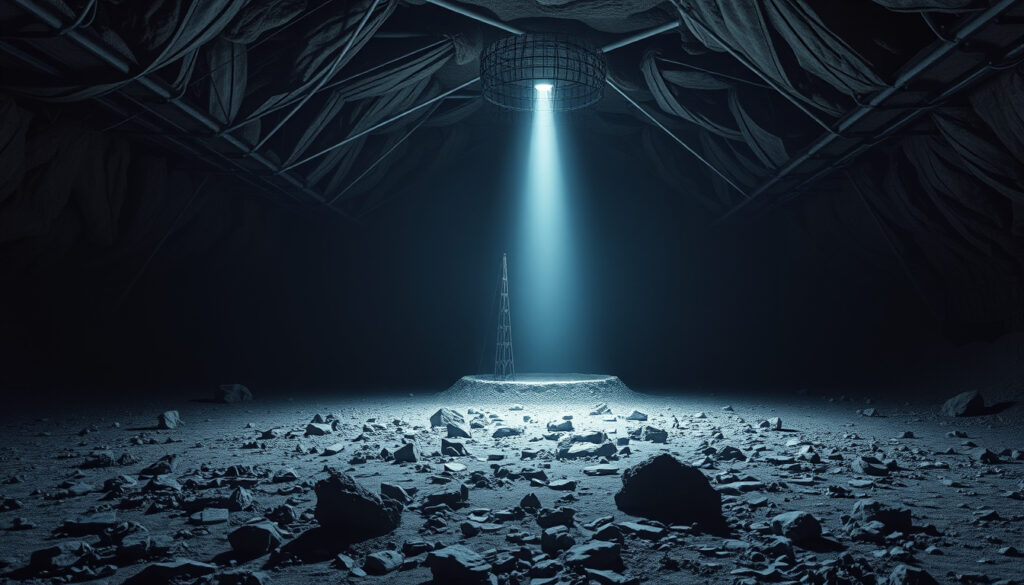
I Who Have Never Known Men: Plot, BookTok Buzz & Review
There’s something almost paradoxical about a novel published in 1995 suddenly becoming a bestseller three decades later. Yet that’s exactly what’s happened with Jacqueline Harpman’s I Who Have Never Known Men, a slim feminist dystopia that spent years in obscurity before finding its audience on BookTok. Readers drawn in by viral videos are discovering a story that feels both alien and uncomfortably familiar—one that lingers long after the final page. For anyone curious about what the buzz is really about, here’s where to start.
Author: Jacqueline Harpman · Publication Year: 1995 · Genre: Science Fiction · Modern Revival: BookTok · Setting: Post-Apocalyptic Underground
Quick snapshot
- French original published 1995, English translation by Ros Schwartz (LG Jenkins)
- Forty women imprisoned underground by silent armed guards (Goodreads)
- New introduction by Sophie Mackintosh in recent editions (Esta Pinto)
- Exact page count varies by edition and isn’t prominently listed on major retailers (What is Quinn Reading)
- No confirmed movie or TV adaptation currently in development (What is Quinn Reading)
- Broader sales figures and streaming metrics unavailable (What is Quinn Reading)
- 1995: Original French publication (LG Jenkins)
- Recent English edition with Sophie Mackintosh intro drove visibility (LG Jenkins)
- 2024–2025: BookTok viral phase transformed it into a bestseller (Wrong Questions Blog)
- Continued critical attention as more readers discover it (Reads with Alicia)
- Potential for more mainstream reviews from major publications (Reads with Alicia)
- Possible expanded edition or companion content (Reads with Alicia)
The key facts table below consolidates verified details about the novel’s premise, characters, and publication history.
| Fact | Detail |
|---|---|
| Author | Jacqueline Harpman |
| Genre | Science Fiction |
| Pages | Varies by edition |
| Narrator | Unnamed young woman |
| Prisoners | 39 women + 1 young girl = 40 total (Goodreads) |
| Guards | Silent armed men |
| Imprisonment | Approximately 12 years |
| Narrator’s fate | Survives alone as lone woman on planet |
| Translator | Ros Schwartz (Wrong Questions Blog) |
| Introduction by | Sophie Mackintosh (Booker-longlisted author) (Esta Pinto) |
What is I Who Have Never Known Men about?
The novel centers on forty women held captive in an underground facility by silent, armed male guards who monitor them around the clock and enforce submission through whips and tasers. Unlike typical dystopian fiction, there’s no revolutionary government or zombie apocalypse—instead, the story follows an unnamed narrator (called “the child”) who was born inside the cage and has never encountered men before. The narrative unfolds as a post-apocalyptic memoir, told in retrospective first person by the sole survivor.
Author and Publication Details
Jacqueline Harpman was a Belgian-Jewish writer who fled the Nazis as a child, and critics have noted how her personal history of survival informs the novel’s exploration of captivity and endurance. The original French edition appeared in 1995, remaining relatively obscure until recent years. The English translation by Ros Schwartz (a distinguished literary translator) brought the work to a much wider audience, and the newest editions feature an introduction by Sophie Mackintosh, herself a Booker Prize-longlisted author, lending the work additional literary credibility.
Core Premise
What makes the premise striking is how thoroughly it subverts expectations. Rather than focusing on escape plans or resistance movements, the novel spends considerable time examining the psychological texture of captivity—how the women form bonds, how they cope with surveillance that never relaxes, and how the narrator grows from an outsider into someone capable of leading the eventual escape. The guards never speak, never explain why the women are imprisoned, and never deviate from their routine, creating a that operates through sheer consistency rather than active cruelty.
The implication is clear: Harpman crafted a thought experiment about what happens when women exist entirely outside patriarchal structures, whether by force or by circumstance.
What is the plot summary of the book?
The narrative divides into two distinct phases: the imprisonment underground and the journey across a post-apocalyptic wasteland above. During roughly twelve years of captivity, older women recall fragments of a vague apocalyptic event that preceded their capture, while the young narrator knows nothing of life beyond the cage. She bonds with older prisoners, experiences her first heartbreak, and gradually becomes someone the others rely on when circumstances finally allow escape.
The Underground Cage
Life inside the cage is defined by rigid routine and constant monitoring. The guards provide food, medicine, and basic necessities but communicate only through threats, using tasers against women who dare to touch one another, sing, or exercise. The narrator, raised without knowledge of men or the outside world, observes her companions with a mixture of curiosity and empathy. Older women share stories and teach skills, creating a fragile community under impossible conditions. When a female prisoner dies and older women mourn by singing, guards immediately use force—not just to suppress the behavior but to remind the women of their total vulnerability.
The Escape and Journey
A siren sounds one day, and the guards evacuate rapidly, abandoning the keys and leaving an eleven-minute window for escape. The narrator seizes this opportunity, unlocking the cage and leading forty women to the surface. What they find is a world of absolute desolation: empty cities, roads with no traffic, bodies decomposing in fields. The group travels for twenty-six days before finding identical cabins, each containing the corpses of dead women. In another cabin, they discover a cage filled with dead men, deepening the mystery of what catastrophe befell humanity. Over two years of wandering, they encounter mass graves and dwindling numbers. Ultimately, the narrator continues alone when other survivors either die or choose to turn back. She concludes her account as the apparent last woman on an emptied planet.
The pattern that emerges is less about plot mechanics and more about what people become when stripped of everything familiar.
Why is I Who Have Never Known Men suddenly popular?
The novel became a BookTok sensation, a phrase that accurately describes its trajectory from forgotten backlist title to runaway bestseller after viral videos algorithmically pushed it into mainstream visibility. The mechanics are straightforward: a platform driven by passionate readers generating video content created a surge of interest that retailers couldn’t ignore, and suddenly Harpman’s three-decade-old work appeared on recommendation lists everywhere.
BookTok Influence
BookTok and Bookstagram communities have demonstrated consistent power to resurrect overlooked books, but what makes this revival notable is how completely the novel fits the platform’s appetite for dystopian narratives with emotional depth. Rather than action-driven survival stories, the novel offers something quieter and more unsettling—scenes of intimacy between prisoners, moments of philosophical reflection, and an ending that refuses easy resolution. Influencers who championed it reported strong engagement from viewers who immediately connected with its themes of isolation and female solidarity.
Recent Reviews
The New Yorker featured the work in its literary coverage, and critics writing for established publications have increasingly cite it as a counterpoint to more conventional dystopias. Readers on Goodreads and personal blogs have generated thousands of reviews describing it as “haunting,” “stripped down,” and “deeply unsettling”—qualities that, paradoxically, make it more compelling to audiences hungry for fiction that challenges rather than comforts.
The BookTok revival demonstrates how social platforms can reshape literary taste independent of traditional gatekeepers, surfacing work that deserves wider attention but lacked the marketing machinery to reach it.
Is I Who Have Never Known Men disturbing?
Yes, though not in the ways horror or thriller readers might expect. The novel contains no graphic violence, no villain speeches, and no extended scenes of torture—yet readers consistently describe it as one of the most emotionally destabilizing books they’ve encountered. The discomfort comes from its refusal to provide the usual narrative compensations: no triumphant rebellion, no satisfying romance, no clear villain to blame. Instead, it asks readers to sit with ambiguity, loss, and the possibility that survival itself may be a form of haunting.
Themes of Isolation
The core themes revolve around loneliness and solitude, explored through a narrator who has never experienced connection outside the cage and who ultimately discovers that freedom doesn’t automatically deliver belonging. The novel’s most disturbing implication is perhaps the idea that human connection, not oppression, is what gives life meaning—and that a world emptied of others cannot be survived with dignity, only endurance. Female friendship during imprisonment emerges as a lifeline, yet the story suggests that even profound intimacy cannot ultimately protect against cosmic isolation.
Reader Reactions
Reddit discussions frequently characterize it as “quietly devastating” and “the kind of book that sits in your chest for weeks.” One Goodreads reviewer noted that it felt like “a short novel that somehow contains an entire lifetime of grief.” These reactions align with the work’s intent: Harpman crafted something that operates on emotional rather than narrative logic, where accumulated moments of small beauty and profound loss accumulate into a weight that readers carry afterward.
The novel offers no catharsis. Readers expecting resolution will find instead that the ending amplifies rather than resolves the unease, which is precisely why it stays with people—but also why it’s not for everyone.
Is I Who Have Never Known Men about the Holocaust?
Some readers have interpreted the novel through a Holocaust lens, connecting Harpman’s biography (she fled the Nazis as a child) with the imprisoned women’s situation. This reading isn’t unreasonable—cages, guards, systematic dehumanization, and mass graves naturally evoke historical atrocities. However, treating the novel as an allegory for the Holocaust risks flattening its broader meditation on gendered oppression and human resilience. While some readers interpret the novel through a Holocaust lens, others might be interested to learn that Star Wars Old Republic still playable. Star Wars Old Republic still playable
Common Theories
The interpretation circulates primarily in online discussions where readers compare notes about themes and possible meanings. People who know Harpman’s background bring that knowledge to the text, finding resonances between her personal history and the fictional scenario. Some reviewers explicitly connect the guards’ silent monitoring to institutional mechanisms of control, and the women’s inability to understand why they’re imprisoned to historical experiences of persecution without explanation.
Actual Interpretation
Harpman wrote speculative fiction rather than historical allegory, transforming lived trauma into a framework for exploring questions about femininity, community, and what humans require to find life meaningful. The novel works precisely because it refuses to specify a particular catastrophe—the vagueness allows readers to project their own associations, whether those involve historical persecution, contemporary oppression, or more personal experiences of confinement. Rather than asking readers to recognize a known horror, Harpman constructed something new: a scenario where the cage metaphor applies to real-world restrictions without being limited to any single context.
What this means: Harpman deliberately left the catastrophe unnamed so the cage could stand in for any system of control, making the book resonate across contexts without being reducible to any one allegory.
“Harpman makes clear is that humanity will never lose its deep desire for meaning.”
— LG Jenkins, reviewer
“Just finished I Who Have Never Known Men by Jacqueline Harpman, and I can’t stop thinking about it. It’s haunting, stripped down, and deeply unsettling.”
— My Sister’s Keeper, blogger
Related reading: Gender Neutral Names · Best Muscle Cars for Men
While BookTok amplifies its disturbing sci-fi allure, British Bulletins genre breakdown unpacks the novel’s genre specifics, key quotes, and reader reviews alongside the plot.
Frequently asked questions
What genre is I Who Have Never Known Men?
The work is science fiction, specifically a post-apocalyptic dystopia that subverts conventional genre tropes by focusing on internal experience and existential reflection rather than action-driven survival or government conspiracy narratives. It reads more like literary fiction than typical genre fare.
How many pages is I Who Have Never Known Men?
Page count varies by edition and publisher, but it’s a relatively short work—most readers describe it as a novella rather than a full novel. The exact count isn’t prominently listed on major retailer sites, making it difficult to cite a universal figure.
What are popular quotes from I Who Have Never Known Men?
The novel is known for its spare, philosophical prose. Key passages focus on the narrator’s reflections on never knowing men and her observations about how the women cope with captivity. Reviews frequently cite moments of intimacy between prisoners and the narrator’s final solitary reflections as the most memorable passages.
Is there a movie adaptation of I Who Have Never Known Men?
No confirmed movie or television adaptation is currently in development as of early 2025. The novel’s recent popularity surge may generate interest from studios, but nothing has been announced.
What do theories say about I Who Have Never Known Men?
Reader interpretations focus on themes of female solidarity, the cage as metaphor for real-world restrictions, and connections to the author’s Holocaust experience. Some see it as commentary on patriarchy, others as existential meditation on meaning and survival. The ambiguity is deliberate—Harpman refused to specify a single interpretation.
Where can I buy I Who Have Never Known Men?
The English translation is available through major booksellers including Amazon, Barnes & Noble, and independent bookstores. The most recent editions feature an introduction by Sophie Mackintosh and are widely stocked following the BookTok revival.
What are Goodreads ratings for I Who Have Never Known Men?
The novel holds a strong rating on Goodreads, with thousands of reviews reflecting its recent surge in popularity. Readers consistently praise its emotional impact and distinctive voice, though some note that the sparse prose style may not appeal to everyone.
More related posts
 Measurement Tape: How to Read and Use It (Inches & Centimeters)
 Gaten Matarazzo: Dustin Henderson Actor’s Age, Condition
 John Frusciante: Health, Sobriety & Return to RHCP
 Fetty Wap: What Happened? Prison, Baby Mamas & 1738
 Helen of Troy: The Story, Myth, and Archaeological Truth
 Robson Green: Relationships, Career, and Personal Life
 Sophie Ellis-Bextor: Biography, Family, Accident, and Latest News
 Simu Liu: From Accountant to Marvel Hero and the Gosling Incident
