Best Muscle Cars for Men 2024 – Top Rankings and Buyer’s Guide
The American muscle car remains an enduring symbol of automotive power and cultural identity. For men seeking raw performance, unmistakable presence, and driving experiences that transcend ordinary transportation, the market still offers compelling options despite significant industry shifts toward electrification and crossover dominance.
Gone are the days when muscle cars occupied every other driveway in suburban America. The Dodge Challenger and Charger concluded their production runs in 2023, marking the end of an era for traditionally styled performance machines. Yet the segment persists through models like the redesigned Ford Mustang, which represents the last conventional muscle car available in new form. Understanding which machines deliver the strongest combination of power, value, and practicality requires examining current offerings alongside the changing landscape of American performance vehicles.
What Are the Best Muscle Cars for Men?
The Ford Mustang leads contemporary muscle car rankings for several compelling reasons. Starting at $34,635, the 2026 Mustang offers accessibility that competitors cannot match while delivering performance credentials serious enough for track days and daily commutes alike. Multiple trim levels cater to diverse preferences, from the efficient EcoBoost to the thunderous V8 variants that continue the pony car legacy.
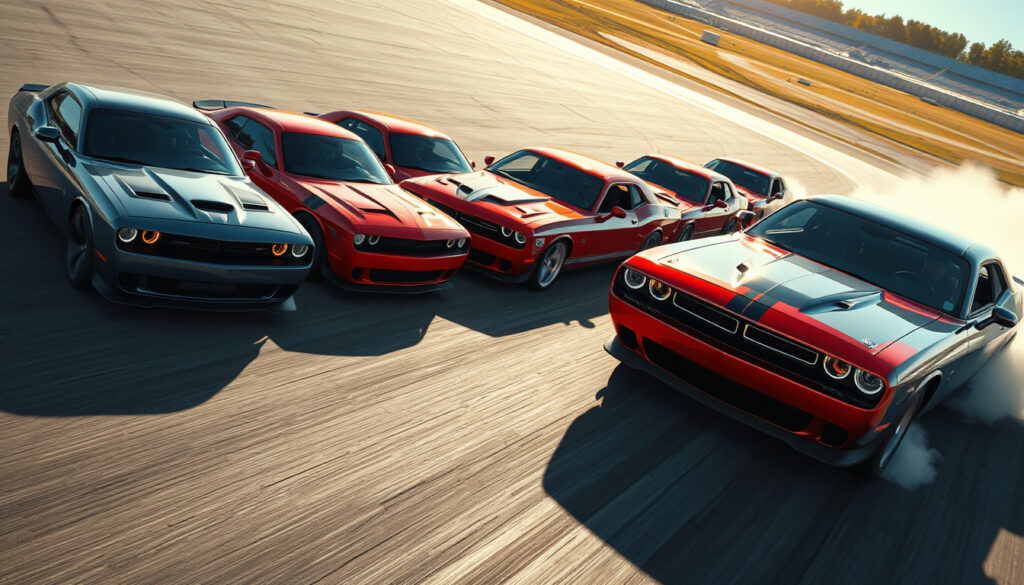
The Dodge Challenger SRT Hellcat represents the pinnacle of traditional muscle car philosophy. Its supercharged 6.2-liter HEMI V8 produces 717 horsepower, delivering acceleration that rivals supercars at a fraction of the cost. The Challenger’s retro-inspired styling and spacious interior make it equally suitable for weekend cruises and highway pulls.
- The 2026 Ford Mustang GT produces 480 horsepower from its 5.0-liter V8 with standard six-speed manual transmission, combining driver engagement with modern reliability
- The Dodge Demon 170, though no longer in production, achieved 1,025 horsepower through its supercharged 6.2-liter engine, making it the most powerful production muscle car ever built
- The 2026 Dodge Charger SRT Hellcat Redeye delivers 797 horsepower, earning the title of fastest production gas-powered sedan globally
- The Ford Mustang Dark Horse variant offers 500 horsepower from a specially tuned V8, designed specifically for track performance
- The Chevrolet Camaro SS balances muscle car fundamentals with precise handling and composed ride quality, appealing to drivers who value all-around capability
- Industry trends indicate that electrification will increasingly influence muscle car development, with traditional V8 options becoming rarer and more precious
- The 2023 model year marked the final production of the Dodge Challenger and Charger, creating strong demand for remaining new inventory and supporting used values
| Model | Horsepower | Price Range | 0-60 mph |
|---|---|---|---|
| Ford Mustang GT | 480 hp | $34,635+ | ~4.0 seconds |
| Chevrolet Camaro SS | 455 hp | $42,995+ | ~4.0 seconds |
| Dodge Charger R/T | 370 hp | $51,990 | ~4.7 seconds |
| Dodge Challenger SRT Hellcat | 717 hp | ~$60,000 | ~3.5 seconds |
| Dodge Charger SRT Hellcat Redeye | 797 hp | $63,985 | ~3.6 seconds |
| Ford Mustang Dark Horse | 500 hp | $59,565+ | ~3.9 seconds |
What Is the Fastest Muscle Car?
Speed defines the muscle car experience, and manufacturers have pushed engineering boundaries to deliver increasingly capable machines. The Dodge Charger SRT Hellcat Redeye currently holds the title of fastest production gas-powered sedan in the world, generating 797 horsepower from its supercharged 6.2-liter V8. This four-door muscle car achieves acceleration numbers that embarrass many dedicated sports cars while maintaining everyday usability.
Horsepower Champions in the Muscle Car Segment
The horsepower arms race reached its peak with the final generation of Dodge muscle cars. The SRT Hellcat Redeye’s 797 horsepower figure represents remarkable engineering achievement, enabled by the twin-snout supercharger feeding the proven HEMI architecture. Below this range, the standard Hellcat Challenger and Charger produce 717 horsepower, while the R/T Scat Pack variants offer 485 horsepower from their 6.4-liter naturally aspirated HEMI engines.
The 2026 BMW M4 Competition xDrive delivers comparable straight-line performance with near-supercar capability. While technically a sports coupe rather than a traditional muscle car, it demonstrates that European performance machines now rival American muscle in raw acceleration.
What Muscle Cars Offer Near-Supercar Performance?
Several production muscle cars now deliver performance figures that rival dedicated supercars from previous generations. The Car and Driver rankings highlight how the current Mustang lineup, particularly the Dark Horse variant, combines accessible pricing with track-ready capabilities that were unthinkable for production vehicles two decades ago.
The manual transmission option in the BMW M4 and Ford Mustang GT appeals to purists seeking engagement alongside performance. These vehicles demonstrate that muscle cars have evolved beyond straight-line acceleration to become genuinely capable sports machines when properly equipped.
What Are the Top Muscle Cars Under 50k?
Budget constraints shape many purchasing decisions, and the used muscle car market offers compelling opportunities for buyers who cannot justify new-car prices. Understanding where value exists requires examining both current showroom offerings and the expanding pre-owned landscape following Dodge’s production shutdown.
New Muscle Cars Within Budget
The 2026 Ford Mustang represents the most accessible new muscle car option, with base prices starting at $34,635. This entry point brings the EcoBoost four-cylinder variant, which prioritizes efficiency while offering respectable performance through its turbocharged engine. However, enthusiasts typically gravitate toward the V8 Mustang GT, which requires stepping up to the $40,000+ range for meaningful performance upgrades over the base model.
Used Muscle Car Value Analysis
The used market has become increasingly attractive as new muscle car options have dwindled. Current market analysis indicates that 2024 Mustang GT models command approximately $43,000-$45,000 on the used market, offering modern amenities, advanced safety features, and high-tech infotainment systems alongside proven V8 performance.
Used 2023 Dodge Challenger Scat Packs represent exceptional value at approximately $42,000-$45,000. These vehicles deliver 455 horsepower from their 6.4-liter HEMI engines while providing the classic muscle car experience that defines the segment. As remaining new inventory depletes, pre-owned values for these models may appreciate.
Affordable Alternatives Worth Considering
Beyond traditional pony cars, unconventional options offer muscle car thrills at various price points. The Dodge Durango SRT brings 475 horsepower to an SUV package, while the SRT Hellcat variant of the Durango produces an astonishing 710 horsepower. These vehicles sacrifice some handling dynamics for practical family transportation and towing capability.
The Ford F-150 Raptor R occupies another niche entirely, combining off-road capability with a supercharged 5.2-liter V8 producing 720 horsepower and 640 lb-ft of torque. While not a traditional muscle car, it delivers comparable straight-line performance with genuine truck utility.
How Do Muscle Cars Compare in Performance?
Distinguishing between muscle cars and sports cars requires understanding their fundamental philosophies. Traditional muscle cars prioritize straight-line acceleration and accessible power delivery, typically through rear-wheel drive configurations with V8 engines. Sports cars tend toward balanced handling, lightweight construction, and precision steering response, often featuring smaller displacement engines supplemented by turbocharging or hybridization.
Where Muscle Cars Excel
Muscle cars dominate in several key areas that appeal specifically to male buyers seeking particular driving experiences. Raw power delivery remains the primary advantage, with large-displacement V8 engines providing immediate throttle response and linear power curves that modern turbocharged engines struggle to match in terms of character. The exhaust notes produced by these engines contribute significantly to the emotional connection between driver and machine.
Interior presence and road presence distinguish muscle cars from more discrete sports car alternatives. The wide body styles, aggressive front fascias, and bold color options available for models like the Challenger and Mustang communicate confidence and capability to other drivers and pedestrians alike.
The 2023 model year marked the final production of the Dodge Challenger and Charger, making new examples increasingly scarce. Buyers interested in these vehicles should act decisively when locating remaining inventory at dealerships, as supply continues to dwindle.
Performance Trade-offs to Consider
The TrueCar analysis reveals that muscle cars typically sacrifice fuel efficiency, interior refinement, and handling precision compared to premium sports alternatives. The BMW M4, for instance, delivers comparable straight-line speed with superior chassis dynamics and daily comfort, though at substantially higher price points and with less distinctive character.
The Chevrolet Camaro occupies a middle ground, offering solid construction with precise handling and balanced ride quality that appeals to drivers who value all-around capability over raw muscle car character. The available comparisons highlight this distinction, positioning the Camaro as the choice for drivers who want muscle car aesthetics without accepting their typical compromises.
The Evolution of Muscle Cars: A Timeline
Understanding the current muscle car landscape requires appreciation for how the segment has evolved over six decades of continuous production and development.
- 1964-1973: The golden era of muscle cars begins with the Pontiac GTO and continues through legendary models like the Chevrolet Chevelle SS, Plymouth Barracuda, and original Ford Mustang. These vehicles established the template: midsize bodies housing massive V8 engines at accessible prices.
- 1974-1982: Insurance crises, emissions regulations, and fuel shortages decimated the muscle car segment. Displacement dropped dramatically, with performance replaced by efficiency as manufacturers struggled to meet new requirements.
- 1983-2004: The segment gradually revived through fox-body Mustangs, third-generation Camaros, and the introduction of performance trucks. However, true muscle car spirit remained dormant until later redesigns brought updated performance credentials.
- 2005-Present: The fourth-generation Mustang launched a renaissance for American muscle, culminating in the modern era of high-horsepower machines like the SRT Hellcat and GT350 Mustang that redefined expectations for production performance.
- 2024-2026: The Ford Mustang represents the last conventional muscle car in new form, as the Dodge Challenger and Charger conclude their production runs and electrification begins influencing performance vehicle development across the industry.
What Is Certain and Uncertain About Current Muscle Cars?
Navigating the muscle car market requires distinguishing between verified specifications and information that remains subject to change or uncertainty.
| Established Information | Information Requiring Verification |
|---|---|
| Ford Mustang GT produces 480 hp from 5.0L V8 | Exact pricing for future model year updates |
| Dodge Hellcat Redeye delivers 797 hp | Reliability ratings for high-mileage used examples |
| Challenger and Charger production ended in 2023 | Potential future electric muscle car specifications |
| Mustang Dark Horse produces 500 hp | Availability of remaining new 2023 Challenger inventory |
| Dodge Demon 170 produced 1,025 hp | Long-term appreciation potential for discontinued models |
| 2026 Charger pricing: $51,990-$63,985 | Impact of tariff changes on imported performance vehicles |
Why Do Men Prefer Muscle Cars?
The appeal of muscle cars to male buyers extends beyond rational performance metrics into territory involving identity, emotion, and cultural connection. These vehicles represent automotive achievement in its most elemental form: large engines producing substantial power through mechanical simplicity and brute force rather than technological complexity.
The visceral experience of driving a muscle car engages multiple senses in ways that modern performance vehicles often cannot match. The rumble of a V8 engine at idle, the crackle on deceleration, and the immediate surge of acceleration create an emotional package that transcends objective measurement. This emotional connection explains why many enthusiasts maintain strong preferences for naturally aspirated engines over turbocharged alternatives that may deliver superior specifications.
Practical considerations also favor muscle cars for male buyers seeking versatile vehicles. The rear seat and trunk space available in models like the Challenger and Charger exceed what dedicated sports cars offer, making these vehicles suitable for family transportation alongside weekend entertainment. The Ford F-150 Raptor R demonstrates how this thinking extends beyond traditional car segments, with buyers prioritizing capability and presence alongside performance.
Expert Sources and Industry Commentary
The automotive journalism community has extensively covered the muscle car segment, providing valuable perspective for prospective buyers.
“The 2026 Ford Mustang ranks as the best overall muscle car option, combining performance, affordability, and practicality.” — Car and Driver Rankings
The Car and Driver feature coverage emphasizes how the current Mustang generation successfully bridges traditional muscle car values with modern expectations for technology, safety, and refinement. The redesign incorporated feedback from enthusiasts while addressing criticisms of previous generations.
“The BMW M4 Competition xDrive provides near-supercar performance with year-round capability, demonstrating that modern performance vehicles need not sacrifice daily usability.” — TrueCar Muscle Car Analysis
MotorTrend and Kelley Blue Book provide additional context for pricing and value analysis, helping buyers understand market positioning and long-term ownership considerations. These resources prove particularly valuable for used car purchases where condition and pricing vary significantly.
Summary: Choosing Your Muscle Car
The muscle car segment has reached a pivotal moment in its history. With Dodge’s withdrawal from the traditional muscle car market, the Ford Mustang stands as the sole remaining conventionally powered contender in the segment. This scarcity actually strengthens the case for purchasing now, as remaining inventory of discontinued Dodge products will only diminish while demand from enthusiasts remains strong.
For buyers prioritizing maximum horsepower and iconic American styling, the Dodge Challenger SRT Hellcat remains the definitive choice if available. Those seeking daily usability and modern features should focus on the Ford Mustang GT and its variants, which offer the complete muscle car experience without significant compromises. The Chevrolet Camaro SS continues to appeal to drivers who value handling precision alongside straight-line capability, though its future remains uncertain following general market shifts.
Budget-conscious buyers should explore the used market, where well-maintained examples of recent muscle cars offer exceptional value. The combination of modern reliability, advanced safety features, and accessible pricing makes entering the muscle car lifestyle more achievable than ever, even as new options contract. For additional perspective on vehicle ownership experiences, see this Best Cafes in San Francisco guide to understanding how local communities shape consumer preferences.
Frequently Asked Questions
Muscle cars vs sports cars: what’s the difference?
Muscle cars prioritize raw power and straight-line acceleration through large V8 engines, typically featuring rear-wheel drive and aggressive styling. Sports cars emphasize handling balance, lightweight construction, and driving precision, often using smaller displacement engines with advanced technology. The BMW M4 represents a convergence point where these philosophies overlap significantly.
What is the best muscle car for daily driving?
The 2026 Ford Mustang GT offers the best balance of daily usability and muscle car character. Its comfortable ride, modern infotainment, and reasonable fuel economy make it practical for commuting while delivering authentic V8 performance on demand. The Charger R/T provides similar practicality with four-door convenience.
Are muscle cars reliable for long-term ownership?
Modern muscle cars from established manufacturers demonstrate strong reliability when properly maintained. The Ford Coyote V8 has proven particularly durable across hundreds of thousands of miles in various applications. Dodge’s HEMI engines also have solid track records, though high-performance variants may require more attentive maintenance.
What is the fastest muscle car available today?
The Dodge Charger SRT Hellcat Redeye holds the title of fastest production gas-powered sedan, completing 0-60 mph in approximately 3.6 seconds with its 797-horsepower supercharged V8. The Challenger SRT Hellcat offers similar performance in a two-door configuration.
Can you still buy a new Dodge Challenger or Charger?
Dodge ceased production of the Challenger and Charger in 2023, making these models unavailable as new vehicles. However, remaining new inventory may still exist at dealerships. Buyers seeking these vehicles should contact local dealerships to inquire about available units.
What muscle cars are available under $40,000?
New muscle cars under $40,000 include the base Ford Mustang starting at $34,635 with its turbocharged four-cylinder engine. The used market offers significantly more value, with 2024 Mustang GT models around $43,000-$45,000 and similar-era Challenger Scat Packs available at comparable prices.
What is the most powerful muscle car ever made?
The Dodge Demon 170 produced 1,025 horsepower from its supercharged 6.2-liter HEMI engine, making it the most powerful production muscle car ever created. Limited to 3,300 units for the 2023 model year, these vehicles have become highly sought after by collectors.
Will there be electric muscle cars in the future?
Industry trends indicate that electrification will increasingly influence performance vehicles. Dodge has announced plans for electric muscle cars, suggesting the segment will evolve rather than disappear entirely. The MotorTrend coverage explores how traditional performance values might translate to electric propulsion.
More related posts
 Capricorn Horoscope Today – Love, Career, Health Predictions
 Tim McGraw: Health, Family, Net Worth, and Career Overview
 AGL Energy Plans – Compare Rates, Discounts and Deals 2025
 Joan Didion: Life, Books, and Legacy of a New Journalism Icon
 How to Vote in Ireland: Complete Step-by-Step Guide
 Song Joong-ki: Wife, Children, Net Worth & Full Biography (2025)
 Craig David: Wife, Children, Celibacy, and Career Updates
 Liv Golf Adelaide 2026 – Dates, Venue, Tickets and Full Details
