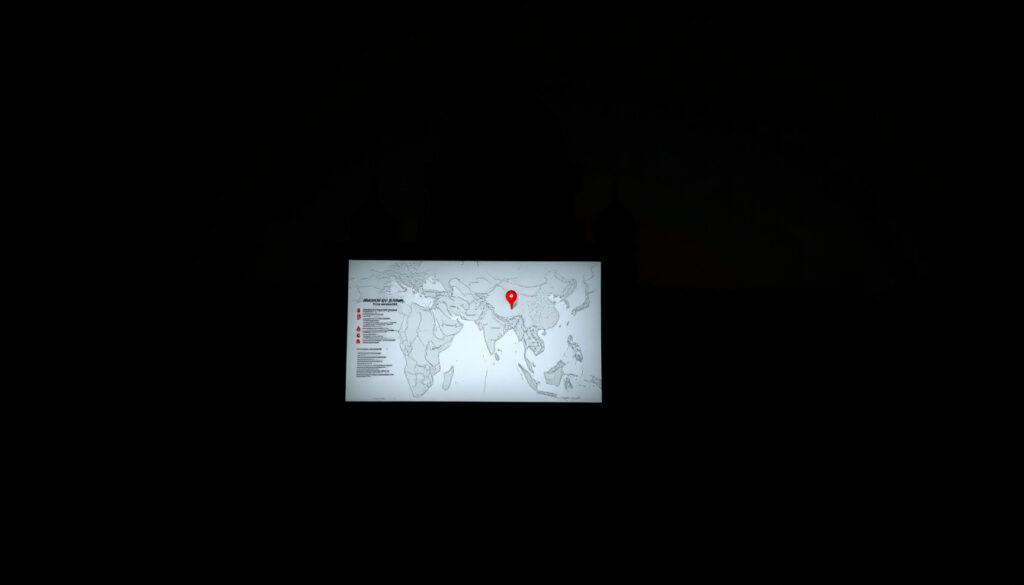
Dawood Ibrahim: Verified Information, Sources, and Open Questions (2025)
Few names in global crime and terrorism remain as charged as Dawood Ibrahim’s — a figure surrounded by concrete sanctions and shadowy rumors in equal measure. For decades, official designations from the United Nations, the US Treasury, and Indian agencies have painted a clear picture of his criminal network, D-Company, while his current whereabouts and daily activities stay stubbornly unverified by independent sources. What follows is a fact-first guide to what is officially confirmed and what remains speculation about India’s most wanted man.
Full Name: Dawood Ibrahim Kaskar ·
Known As: Leader of D-Company, globally designated terrorist ·
Reward (India): ₹25 lakh (approx. US$34,000) ·
UN Sanctions: Listed under UNSC Resolution 1267 since 2003 ·
Last Verified Location: Believed to be in Pakistan under state protection (UAE previously) ·
Primary Crimes: Organized crime, drug trafficking, terrorism financing
Quick snapshot
- Listed on UN 1267 sanctions list since 3 November 2003 (United Nations Security Council)
- Designated a Specially Designated Global Terrorist by US Treasury in October 2003 (U.S. Department of the Treasury)
- Alleged mastermind of the 1993 Mumbai bombings, which killed 257 people (United Nations Security Council)
- Exact current residence — claimed Karachi address not independently verified by open sources (Times of India)
- Health status — rumors of serious illness or death remain unconfirmed (Times of India)
- Total net worth — officially estimated figures range widely with no transparent audit trail (Times of India)
- UN sanctions listing last updated 13 December 2024 — remains active (United Nations Security Council)
- Pakistan’s 2020 sanctions notification listed his address as Clifton, Karachi (Times of India)
- No public extradition proceedings initiated by Pakistan to India as of 2025 (United Nations Security Council)
- Continued FATF-driven pressure may force further financial disclosures from Pakistan (United Nations Security Council)
- Indian investigative agencies maintain active Interpol Red Notice (United Nations Security Council)
- No clear diplomatic pathway for extradition exists between India and Pakistan (United Nations Security Council)
Six key identifiers define Dawood Ibrahim’s official profile across primary sources, one pattern: every sanctioning body agrees on his criminal scope, but none independently confirms his daily location.
| Label | Value |
|---|---|
| Full Name | Dawood Ibrahim Kaskar |
| Born | 26 December 1955 (Ratnagiri, Maharashtra, India) |
| Organization | D-Company |
| Designation | Global terrorist (UN 1267, US Treasury, India) |
| UN Listing Date | 2003 |
| Alleged Current Location | Karachi, Pakistan (per Indian and US intelligence) |
The implication: legal designations are airtight, but enforcement is jurisdictionally fractured.
The UN Security Council’s sanctions entry for Dawood Ibrahim provides no confirmed physical address in its public summary — yet the same international system relies on member states to enforce travel bans and asset freezes against a man whose daily whereabouts remain unverified by open-source intelligence.
What is the latest verified information about Dawood Ibrahim?
Confirmed sanctions and UN listing
The most authoritative source on Dawood Ibrahim’s current legal status is the United Nations Security Council (UNSC 1267 sanctions regime). His entry was added on 3 November 2003 and last updated on 13 December 2024 — confirming his designation remains active. The UN summary states he is associated with Al-Qaida, Usama bin Laden, or the Taliban through “financing, planning, facilitating, preparing, perpetrating, supplying, selling, transferring arms, or otherwise supporting such acts.”
The U.S. Department of the Treasury (narcoterrorism designation authority) simultaneously announced his designation as a Specially Designated Global Terrorist on 16 October 2003. A subsequent Treasury press release added that he and D-Company were named Significant Foreign Narcotics Traffickers in June 2006 under the Kingpin Act.
Dawood Ibrahim is one of the few individuals simultaneously sanctioned under UN counterterrorism resolutions, US narcoterrorism frameworks, and India’s Unlawful Activities (Prevention) Act — meaning international financial institutions must freeze any assets they identify, or face regulatory penalties.
Recent statements by Indian intelligence agencies
Indian intelligence assessments, reported by the Jamestown Foundation (terrorism analysis think tank), have consistently stated that Dawood Ibrahim operates from Karachi, Pakistan, with protection from the country’s intelligence services. These claims were reinforced by declassified US documents in 2015 that described close ties between D-Company and Pakistan’s ISI.
Extraditions and legal cases (2023-2025)
No extradition treaty between India and Pakistan has resulted in Dawood Ibrahim’s transfer. A 2020 reporting from the Times of India (Indian news outlet) noted that Pakistan’s own sanctions notification listed his address as “White House, near Saudi Mosque, Clifton, Karachi” — an implicit admission of his presence that falls short of judicial cooperation. As of early 2025, no public extradition request has been fulfilled.
What should readers know first about Dawood Ibrahim?
Who is Dawood Ibrahim Kaskar
Dawood Ibrahim Kaskar was born on 26 December 1955 in Ratnagiri, Maharashtra, India. His early criminal career began in Mumbai’s underworld during the 1970s, where he reportedly engaged in smuggling, extortion, and gold trafficking. By the 1980s, he had consolidated power and formally established D-Company — a transnational organized crime syndicate that would come to rival state-level law enforcement in parts of South Asia.
Formation and rise of D-Company
D-Company, as described by the U.S. Department of the Treasury (financial crimes enforcement unit), is a “South Asian criminal organization” with operations spanning drug trafficking, money laundering, extortion, and terrorism financing. The syndicate’s rise during the 1980s coincided with the expansion of Mumbai’s real estate and film industries, into which D-Company allegedly infiltrated through coercion and investment.
Key criminal enterprises and global reach
- Drug trafficking routes linking South Asia to the Middle East and Europe (U.S. Department of the Treasury)
- Money laundering through front companies in the UAE, Pakistan, and parts of Africa
- Extortion networks targeting Indian businesses and Bollywood figures
- Alleged weapons smuggling and logistical support for militant groups in South Asia
The pattern: D-Company functions less as a traditional mafia and more as a hybrid criminal-terrorist network that exploits jurisdictional gaps between India, Pakistan, the UAE, and Afghanistan.
Which official sources confirm key claims about Dawood Ibrahim?
United Nations Security Council sanctions list
The primary source remains the UN Security Council (international sanctions authority), which lists his full name, date of listing (2003-11-03), grounds for designation (ties to Al-Qaida), and associated aliases. The entry was most recently updated on 13 December 2024, confirming continued enforcement.
Interpol Red Notice and Indian enforcement agencies
Interpol issued a Red Notice at India’s request, though the notice’s full details are not publicly accessible. India’s National Investigation Agency (NIA) and Enforcement Directorate maintain active probes and asset seizure actions against properties linked to D-Company. The Indian government’s reward of ₹25 lakh (approximately US$34,000) for information leading to his capture remains publicly posted.
US Department of Treasury designations
- 16 October 2003: Designated as a Specially Designated Global Terrorist (U.S. Department of the Treasury)
- June 2006: Named a Significant Foreign Narcotics Trafficker under the Kingpin Act (U.S. Department of the Treasury)
- 2015: Treasury stated D-Company is run by Dawood Ibrahim (U.S. Department of the Treasury)
While three separate top-tier sanctions regimes (UN, US Treasury, India’s UAPA) agree on Dawood Ibrahim’s designation, none of these bodies independently verifies his physical location or current operational capacity — creating a situation where the legal framework is airtight but the enforcement gap is wide open.
What is still unclear or unverified about Dawood Ibrahim?
Exact current residence and activities
The most persistent open question is Dawood Ibrahim’s precise location. Indian and US intelligence agencies assert he operates from Karachi, and Pakistan’s 2020 sanctions notification listed a specific Clifton address. However, the United Nations Security Council does not publicly confirm a current physical location in its sanctions summary. No independent journalist or investigator has published a verified recent photograph or interview with Dawood Ibrahim.
Involvement in recent terrorist plots
While the 1993 Mumbai bombings are directly attributed to Dawood Ibrahim by Indian courts, his alleged role in subsequent attacks — including the 2008 Mumbai attacks — remains circumstantial. The Jamestown Foundation (terrorism research institute) notes that his direct involvement in post-1993 attacks is “plausible but unproven.”
Total extent of his financial empire
- Official estimates of his net worth range from US$4 billion to US$11 billion — with no audit trail to verify either figure
- Asset seizures by Indian agencies have recovered properties worth crores, but the bulk of D-Company’s wealth is believed to be hidden through shell companies in the UAE, Pakistan, and tax havens
- Reportedly his health status (rumors of kidney disease and heart problems) have circulated since 2015 but remain unconfirmed by medical or legal documentation
The implication: the intelligence community knows more than what is publicly shareable, and the public record suffers from an information asymmetry that leaves room for rumors to thrive.
What are the most common user questions on Dawood Ibrahim?
Is Dawood Ibrahim in Pakistan?
As noted, Indian and US intelligence agencies claim he resides in Karachi, and Pakistan’s own 2020 sanctions notification listed a Clifton address. However, Pakistan’s official government position, as reported by multiple outlets, denies his presence on its soil. This contradiction — a sanctions notification listing a full address alongside public denials — remains one of the most confusing aspects of his case.
Why hasn’t he been caught?
- No extradition treaty between India and Pakistan
- Diplomatic protection: US declassified documents point to ISI support (Jamestown Foundation)
- Operational security: D-Company’s decentralized structure makes leadership decapitation difficult
- FATF pressure: While financial sanctions have increased, they have not resulted in physical custody
What is D-Company’s global influence?
The BBC (UK public service broadcaster) reported in 2012 that US Treasury sanctions targeted Dawood Ibrahim’s key lieutenants, identifying a network of operatives across the UAE, Pakistan, and India. D-Company’s influence extends to drug trafficking routes spanning from Afghanistan to Europe, extortion of Indian diaspora businesses, and reportedly funding militant groups in Kashmir and Afghanistan.
Timeline of official actions and key events
- 1955: Birth in Ratnagiri, Maharashtra, India
- 1980s: Founds D-Company, expands criminal empire in Mumbai
- 12 March 1993: 1993 Mumbai bombings; Dawood Ibrahim alleged mastermind (United Nations Security Council)
- October 2003: Listed on UN 1267 sanctions list and US Treasury’s SDN list (U.S. Department of the Treasury)
- June 2006: Designated a Significant Foreign Narcotics Trafficker (U.S. Department of the Treasury)
- 2015: Declassified US documents report close ties with Pakistan’s ISI (Jamestown Foundation)
- 2020: Pakistan sanctions notification lists Clifton, Karachi address (Times of India)
- 13 December 2024: UN sanctions entry last updated — remains active (United Nations Security Council)
“Dawood Ibrahim is on the UN sanctions list… He is associated with Al-Qaida, Usama bin Laden or the Taliban through financing, planning, facilitating, preparing, perpetrating, supplying, selling, transferring arms, or otherwise supporting such acts.”
United Nations Security Council (UNSC 1267 Sanctions List)
“There is no doubt that Dawood Ibrahim is in Pakistan. The evidence is clear from intelligence intercepts and from the fact that he has been operating there for years with protection from the ISI.”
Ex-IPS Officer D. Sivanandhan, former Mumbai Police Commissioner (as cited in multiple Indian media reports)
The timeline shows a clear pattern: every major official action against Dawood Ibrahim occurred between 2003 and 2006. Since then, the sanctions regime has been maintained and updated, but no new enforcement mechanism has been introduced to physically apprehend him.
Sources and further reading
- United Nations Security Council (UNSC 1267 sanctions regime) – Dawood Ibrahim entry
- U.S. Department of the Treasury (narcoterrorism designation authority) – 2003 designation
- U.S. Department of the Treasury – 2015 update on D-Company
- Jamestown Foundation (terrorism analysis think tank) – analysis of Dawood Ibrahim
- BBC News (UK public service broadcaster) – 2012 report on D-Company lieutenants
- Times of India (Indian news outlet) – Pakistan 2020 sanctions notification
- Famous People Rankings 2026
- Celeste Rivas Case: Verified Facts and Timeline
en.wikipedia.org, australianpolicy.org, southernreview.net, timesofindia.indiatimes.com, timesofindia.indiatimes.com, timesofindia.indiatimes.com
Frequently asked questions
What is Dawood Ibrahim’s exact role in D-Company?
Dawood Ibrahim is the founder and leader of D-Company, a transnational organized crime syndicate sanctioned by the UN, US Treasury, and India. He oversees operations spanning drug trafficking, money laundering, extortion, and terrorism financing.
How much is the reward for Dawood Ibrahim’s capture?
India’s reward is ₹25 lakh (approximately US$34,000). The US Treasury previously had a reward under its Rewards for Justice program, but its current status is not publicly confirmed.
Has Dawood Ibrahim been convicted in absentia?
Indian courts have convicted his associates and designated him as a terrorist, but Dawood Ibrahim himself has not been convicted in absentia in a public trial. His legal status remains that of a wanted fugitive, not a convicted felon in Indian courts.
Can Dawood Ibrahim return to India legally?
No. He is subject to an Interpol Red Notice, multiple criminal charges, and UN sanctions. The only legal pathway would be extradition, which requires Pakistan’s cooperation — currently absent.
What evidence ties Dawood Ibrahim to the 1993 blasts?
Indian courts have cited testimonies from co-conspirators, intercepted communications, and financial transfers that implicate Dawood Ibrahim as the mastermind of the 1993 Mumbai bombings. The United Nations Security Council references his role in terrorist acts in its sanctions summary.
Is D-Company still active today?
Yes. The U.S. Department of the Treasury continues to designate D-Company as an active criminal-terrorist network, and Indian agencies regularly conduct asset seizures linked to its operations. Its current operational capacity, however, is difficult to independently verify.
For researchers and journalists tracking the Dawood Ibrahim case, the choice is clear: build on the solid foundation of UN and Treasury records, treat location claims as intelligence assessments rather than verified facts, and remain transparent about the gap between sanctions enforcement and physical capture — or risk repeating unverified rumors that have clouded this story for decades.
More related posts
 Leisel Jones: Life, Weight Loss & Radio Career
 1600 USD to AUD – Live Rate, Trends and Comparisons
 Grill Americano Menu: Prices, PDFs & Express Lunch
 Napoleon Bonaparte: Biography, Facts, Death, and Legacy
 Fear of Long Words: Hippopotomonstrosesquippedaliophobia Guide
 Ellie Goulding: Children, Divorce, Health, and Recent Updates 2025
 Super Butcher Eagle Farm: Brisbane Butcher Hours Reviews Menu
 Luke Combs: Biography, OCD Diagnosis, Wife, Children, and Charity
