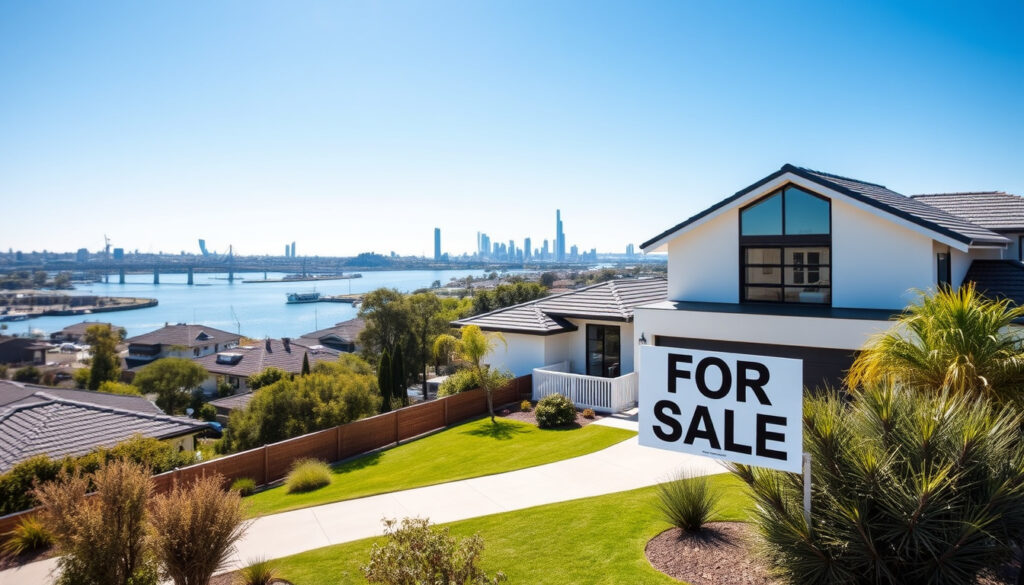
Real Estate Perth: Houses for Sale, Rent & Values Guide
Perth’s property market has quietly become one of the country’s most talked-about success stories. From a city where detached houses once seemed within reach for many buyers, it has surged past the $1 million median mark—faster than anyone predicted a few years ago. Whether you’re hunting for a house under $500,000, tracking what apartments are actually selling for, or keeping an eye on where weekly rents have landed, there’s a lot to unpack. This guide pulls together the numbers that matter: sale prices, rental rates, demand patterns, and what the key players are saying about what’s coming next.
Median sale price: $1,017,698 ·
Median weekly rent: $761 ·
Listings for sale (Apr 2026): 3,669 ·
Annual price growth: 24.3%
Quick snapshot
- Median dwelling price $1,017,698 (Mar 2026) (The West Australian)
- Median rent $761/week (Mar 2026) (PerthNow)
- 24.3% annual growth to Apr 2026 (Cotality Market Update)
- Exact sales volumes and auction clearance rates for recent months
- Precise impact of first-home buyer policy changes on market activity
- Updated vacancy rate data beyond January 2026 figures
- Record-low listings of 1,881 at end-2025
- Listings surged 20% to 3,669 by April 2026
- Median price milestone $1,012,000 crossed in March 2026
- Experts warn growth is slowing due to affordability pressures
- Lower-quartile values up 9.2% in Q1 2026—affordable stock remains competitive
- Perth forecasts outpace national trends despite cooling outlook
| Metric | Value | Source |
|---|---|---|
| Median dwelling price | $1,017,698 (Mar 2026) | The West Australian |
| Median house value | $1,003,804 (Jan 2026) | OpenAgent |
| Median unit value | $699,814 (Jan 2026) | OpenAgent |
| Median weekly rent | $761 (Mar 2026) | PerthNow |
| House rent (annual growth) | 6.5% to $740/week | The West Australian |
| Properties for sale | 3,669 (Apr 2026) | PerthNow |
| Vacancy rate | Below 1% (Jan 2026) | OpenAgent |
| Time on market | ~9 days (early 2026) | OpenAgent |
Real estate Perth house for sale
Perth’s housing market has gone through a dramatic transformation. The city now routinely appears in national headlines for the wrong reasons—at least from the perspective of first-home buyers who remember when $500,000 could buy a decent detached house in a reasonable suburb.
According to data from Cotality (formerly CoreLogic), Perth’s median dwelling price reached $1,017,698 after a 7.3% quarterly gain in March 2026, marking a milestone that seemed distant just two years ago. Annual growth of 24.3% added roughly $200,000 to the median home value over the 12 months to April 2026.
Houses under $500,000
Options at this price point exist, but they’re shrinking fast. The lower quartile of Perth values surged 9.2% in the March 2026 quarter as competition for affordable stock intensified. Properties priced below $500,000 typically mean older units, smaller blocks in outer suburbs, or properties requiring significant renovation. Buyers in this bracket face the tightest competition—homes sell in around nine days on average.
Popular suburbs
While the city center and established western suburbs command premiums, outer-ring suburbs like Armadale, Gosnells, and Kalgoorlie still offer entry points. City of Perth house prices grew at 7.7% annually over the five years to June 2025, compared to 12.2% for Greater Perth overall—showing that growth has been uneven across the metropolitan area.
The implication: the affordable segment isn’t just competitive—it’s moving faster than the broader market, which means waiting often costs more.
Real estate Perth rent
Renters in Perth face a market that has become acutely tight. The city’s vacancy rate sat below 1% in January 2026, indicating a shortage that renters feel directly in their search outcomes. Perth News Today tracks ongoing developments in the city’s housing and rental landscape.
Median rent trends
The median dwelling rent reached $761 per week in March 2026, according to Cotality research, making Perth the second-most expensive rental market in Australia behind Sydney’s $824. That figure represents a 3% quarterly rise—the fastest in the nation, outpacing the national average of 2.1%. Over the year, rents grew 6.7%.
Breaking it down: house rents hit $740 per week (up 6.5% annually), while unit rents reached $695 (up 6.9%). The gap between house and unit rents has narrowed as both segments see sustained pressure.
Rental demand
Rental listings numbered 1,870 at the end of March 2026, down 11.1% from the same period a year earlier. With fewer properties available and demand remaining elevated, competition among tenants is fierce. The shortage has kept pressure on rents despite some relief in sight.
Perth’s $761 median weekly rent puts it ahead of every capital except Sydney. For renters, this means budgeting needs to account for a market where $700–$800/week is now baseline, not outlier.
What this means: renters who can afford to lock in longer leases may find value in doing so now, as downward pressure on rents remains limited by the supply shortfall.
Real estate Perth sold
Sales data tells the story of a market that has cooled slightly from its fever pitch but remains active. Quarterly home sales were 1.9% lower than the previous year and 5.6% below the five-year average as of April 2026—suggesting that affordability constraints are beginning to filter demand.
Recent sales data
Despite the slight cooling, prices haven’t reversed. The lower quartile surged while premium segments grew more modestly, indicating that growth has rotated toward the accessible end of the market. Properties are moving quickly regardless: median time on market sits at roughly nine days.
Median sale prices
The median house value hit $1,003,804 in January 2026 (up 7.0% quarterly, 18.4% annually), while units reached $699,814 (up 7.2% quarterly, 20.1% annually). Both segments are growing, but units are outpacing houses on an annual basis—a shift from previous cycles where houses dominated returns.
The pattern: even with sales volumes slipping, prices haven’t capitulated. The market is absorbing fewer transactions but at higher price points—a sign that genuine demand, not speculation, is driving activity.
Domain real estate Perth
Domain (domain.com.au) operates as one of the two major listing platforms in Perth alongside realestate.com.au. For buyers and renters researching the market, it provides a searchable database of current listings across price points and property types.
Listings overview
Domain currently shows several hundred active listings across houses, apartments, and townhouses in the Perth metro area. While exact counts fluctuate, the platform offers filters for suburbs, price ranges, bedrooms, and property type—useful for narrowing search without visiting every agent’s website individually.
Suburb searches
The platform’s suburb-level data allows comparison between areas. Given that City of Perth house prices grew 7.7% annually over five years versus Greater Perth’s 12.2%, the data suggests meaningful variation across neighborhoods that buyers should factor into their searches.
The catch: domain-level listings represent a snapshot, not the full market. REIWA (Real Estate Institute of Western Australia) aggregates official transaction data and remains the authoritative source for sold prices and market statistics.
Real estate Perth property value
Understanding property values in Perth requires looking at both the headline number and the underlying drivers. The city’s growth story is compelling but carries nuances that pure price appreciation masks.
Value trends
Perth’s quarterly home value growth of 7.3% in March 2026 outpaced every other capital city. Melbourne and Sydney, by contrast, saw values decline—down 0.9% and 0.4% respectively since late 2025. Regional WA also underperformed metro Perth, with values up 3.3% quarterly versus the metro surge.
Tim Lawless, a Cotality economist, noted that Perth’s median price of $1,017,698 after 7.3% quarterly growth was unlikely to continue at the same rate. Affordability constraints, serviceability challenges, and rising costs are beginning to temper buyer capacity.
Market insights
The lower quartile’s 9.2% quarterly surge reflects a specific dynamic: competition among buyers for affordable stock has intensified disproportionately. First-home buyers and investors targeting entry-level properties face the tightest conditions.
Perth’s property values have been driven by a supply shortfall—listings were around 45% below the five-year average in early 2026. The recent uptick in listings (up 20% to 3,669 by April 2026) may ease pressure, but experts warn that growth is set to moderate rather than reverse.
Why this matters: for buyers who have delayed entry, the window of affordability is closing. For investors, the yield picture remains challenged but demand fundamentals (population growth, limited new supply) support continued tightness.
What drives property values in Perth?
Several interconnected factors explain Perth’s run. First, supply has been structurally constrained. Listings fell to record lows at the end of 2025 before recovering modestly. Second, demand has been supported by interstate migration, with Perth attracting families and workers from more expensive eastern-state markets. Third, the local economy has benefited from mining activity and related services, sustaining employment and buyer confidence. Leith van Onselen – MacroBusiness Chief Economist provides broader economic context for these patterns.
Against this, affordability is a growing constraint. Mortgage serviceability has tightened as interest rates remain elevated, and first-home buyers face larger deposit requirements relative to median prices than a decade ago.
Perth buyers face a difficult choice: pay today’s prices and bet on continued appreciation, or wait for a correction that analysts say is possible but not guaranteed. Renters face a starker version: rents are rising faster than wages, and vacancy remains below 1%.
The implication: there’s no painless entry point. Buyers who can secure financing now lock in current prices, while those waiting face either higher prices or the risk of rates remaining elevated longer than expected.
What experts say
“Perth’s median price for both houses and units, now at $1,017,698, after 7.3 per cent growth over the quarter, was unlikely to continue growing at the same rate.”
— Tim Lawless, Cotality economist (The West Australian)
“The market has shown remarkable resilience despite challenging conditions.”
— Dr Brendan Rynne, KPMG Chief Economist (Smart Mortgage Broking)
“Perth’s $761 weekly median rent is currently the second-most expensive in the country, behind Sydney’s $824 weekly rent.”
— Cotality research (PerthNow)
Perth’s property market has undergone one of the most significant transformations in the country. The median dwelling price has crossed $1 million, rents have hit $761 per week, and competition for affordable properties has driven lower-quartile growth to 9.2% in a single quarter. Yet experts caution that the pace of growth is unlikely to sustain. For first-home buyers in Perth, the decision is clear: waiting for a meaningful correction carries risk, as supply is slowly recovering but demand fundamentals remain firm. For renters, the picture is starker still—budgeting for $700–$800 per week is no longer unusual, and vacancy is unlikely to rise quickly enough to reverse that trend.
What is the median house price in Perth?
Perth’s median dwelling price reached $1,017,698 in March 2026 after 7.3% quarterly growth. For houses specifically, the median value was $1,003,804 in January 2026, while units sat at $699,814.
How has rental demand changed in Perth?
Rental demand remains elevated with vacancy rates below 1% in January 2026. Median rents hit $761 per week in March 2026—second only to Sydney nationally—with 6.7% annual growth. Rental listings fell 11.1% year-on-year to 1,870 by March 2026.
What agencies handle real estate in Perth?
The two dominant platforms are realestate.com.au and Domain. For official transaction data and market statistics, the Real Estate Institute of Western Australia (REIWA) is the authoritative industry body.
Is now a good time to buy in Perth?
The answer depends on your position. Affordability constraints are real, and experts warn growth is moderating. However, waiting for a significant correction carries risk given structural supply constraints and persistent demand. First-home buyers should weigh current prices against potential future costs.
What drives property values in Perth?
Perth’s growth stems from a supply shortfall (listings were 45% below the five-year average in early 2026), interstate migration from expensive east-coast markets, and mining-related economic activity. Affordability constraints and rising interest costs are beginning to temper buyer capacity.
How many properties are listed for sale?
Perth had 3,669 properties listed for sale in April 2026, representing a 20% increase from the record low of 1,881 at the end of 2025. However, this still falls short of the five-year average.
What are recent rental price changes?
Perth median rents rose 3% in the March 2026 quarter—the fastest nationally. House rents reached $740 per week (up 6.5% annually) and unit rents hit $695 (up 6.9% annually). Quarterly growth for houses was 2.8% and for units 3.7%.
youtube.com, openagent.com.au, propertyupdate.com.au, housing.id.com.au
Perth’s median house prices surpassing $1M and weekly rents at $761 reflect the tight market detailed in Perth houses rent trends, where demand continues to surge.
More related posts
 Qudos Bank Arena Parking – Complete Booking Guide
 12 Days of Christmas – Lyrics, Gifts, Meaning and History
 Leah Sava Jeffries: Age, Height, Parents & Percy Jackson
 Best Hiking Shoes for Ireland: Waterproof & Lightweight
 Jacob Kiraz: Age, Nationality, Injury & More – Bulldogs
 John Setka Charges 2025: What to Know
 Kouvr Annon: Biography, Nationality, and More
 Foghorn Leghorn: Origin, Catchphrases & Character Guide
