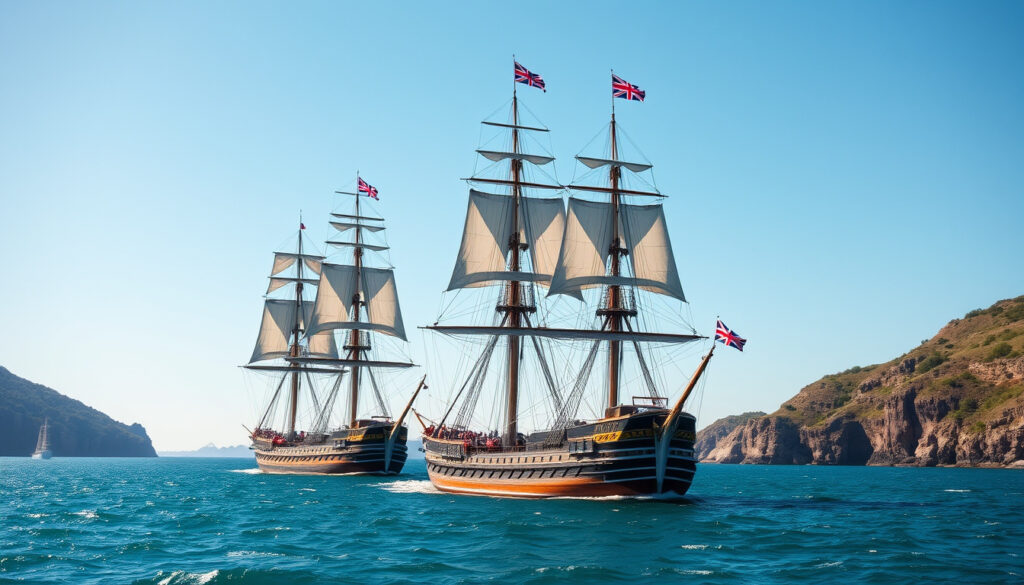
When Did the First Fleet Arrive in Australia? 26 Jan 1788 Facts
January 26 has been observed as Australia Day since 1940, but the date marks something far older: the day in 1788 when Captain Arthur Phillip anchored his fleet at Sydney Cove and planted the British flag, establishing the first permanent European settlement on the continent. The journey that led to that moment took more than eight months at sea and covered over 24,000 nautical miles before Phillip could declare the territory a colony.
Arrival Date: 26 January 1788 · Number of Ships: 11 · Total People Onboard: Over 1,400 · Commander: Captain Arthur Phillip · Landing Site: Sydney Cove
Quick snapshot
- 11 ships anchored at Sydney Cove on 26 January 1788 (History Hit)
- Captain Phillip raised the flag and proclaimed the colony (History Hit)
- Convicts began disembarking the following day (Wikipedia)
- Precise number of initial Aboriginal interactions
- Exact death toll variations across different records
- Settlement expanded to Rose Hill by 1791 (My Place for Teachers)
- Norfolk Island settlement established 1788 (My Place for Teachers)
Five dates tell the full arc of the First Fleet’s journey, with each stop revealing the navigational challenges that shaped the colony’s ultimate location.
The table below maps the fleet’s key waypoints from departure to landing.
| Date | Event |
|---|---|
| 13 May 1787 | Fleet departs Portsmouth (Wikipedia) |
| 4 January 1788 | Sights Van Diemen’s Land (History Hit) |
| 18 January 1788 | First ships reach Botany Bay (Wikipedia) |
| 21 January 1788 | Phillip explores Port Jackson, goes ashore at Camp Cove |
| 26 January 1788 | Arrival and settlement at Sydney Cove (History Hit) |
The pattern shows how Phillip’s willingness to reject Botany Bay after just two days prevented a settlement that would have lacked reliable water and safe anchorage.
What actually happened on 26 January 1788?
On 26 January 1788, the First Fleet anchored at Sydney Cove after having first arrived at Botany Bay eight days earlier. Captain Arthur Phillip and officers from the ship Supply went ashore and planted the British flag, formally proclaiming New South Wales a British colony (History Hit). The event marked the beginning of continuous British occupation of the Australian continent.
Fleet entry into Port Jackson
The fleet had first sighted Van Diemen’s Land on 4 January 1788, having spent over 250 days at sea since departing Portsmouth on 13 May 1787. The 11 ships—comprising 6 convict transports, 3 store ships, and 2 Navy vessels—sailed into Port Jackson after rejecting Botany Bay as unsuitable (Wikipedia). Phillip had personally explored the harbour on 21 January 1788, going ashore at Camp Cove before selecting the final settlement site.
Establishment of camp at Sydney Cove
Sydney Cove offered what Botany Bay lacked: deep water close to shore, natural shelter from prevailing winds, and a small freshwater stream later known as the Tank Stream (Wikipedia). Phillip named the cove after Lord Sydney, the British Home Secretary who had authorised the colony. Convicts began disembarking the day after arrival to establish the first permanent settlement.
The landing site was not accidental—Phillip spent five days surveying Port Jackson before committing to Sydney Cove, making it one of the most deliberately chosen colonial sites in British expansion history.
The implication: Sydney Cove succeeded where Botany Bay would have failed because Phillip prioritised practical survivability over speed.
What happened when the First Fleet arrived in Australia?
The First Fleet’s arrival followed a sequence of decisions that shaped the colony’s precise location. After reaching Botany Bay on 18 January 1788, Phillip immediately rejected it as unsuitable due to poor soil, limited fresh water, and an insecure anchorage for the ships (SBS). He then led a party north to search for a better harbour.
Move from Botany Bay
Phillip sailed into Port Jackson on 21 January 1788 and reportedly described it as “without exception the finest harbour in the world” (History Hit). He selected Sydney Cove over other candidates because of its combination of deep-water access and freshwater supply. The formal proclamation followed five days later.
Selection of Sydney Cove
Sydney Cove was chosen for practical colonial needs: the deep water allowed ships to moor close to shore, the cove provided shelter from storms, and the Tank Stream offered reliable fresh water within walking distance of the beach (Wikipedia). The settlement at Sydney Cove had fresh water from this stream, which later became central to the colony’s early survival.
Had Phillip accepted Botany Bay, Australia’s largest city might today sit on vastly different geography—and face different water security challenges than it did in those first desperate years.
The catch: Phillip’s two-day survey saved the colony from a location that would have hampered its growth from the very start.
What happened to Aboriginal people on January 26th?
The Eora people, whose traditional lands included the harbour area Phillip named Port Jackson, observed the First Fleet’s arrival from the shore. Records indicate no immediate violent conflict occurred on 26 January 1788, though the implications of British occupation would unfold over generations.
Initial encounters
The Eora people had encountered European vessels before—the area had been surveyed by Cook in 1770—but nothing comparable to an 11-ship fleet establishing a permanent settlement. Sydney Cove was known to the Eora people as Warrane (Harris Fam History). Initial contact was cautious on both sides, with Phillip instructing his people to treat Indigenous inhabitants fairly.
Long-term effects
The First Fleet established a penal colony that initiated European colonisation of Australia (History Hit). From this initial settlement at Sydney Cove, British authority expanded to Rose Hill and Norfolk Island between 1788 and 1792 (My Place for Teachers). The arrival marked the beginning of profound and lasting changes for Aboriginal and Torres Strait Islander peoples.
The implication: the absence of immediate conflict on 26 January masked the displacement that would accelerate over the following decades.
How long did it take to travel to Australia by boat in the 1700s?
The First Fleet’s voyage from England to Australia lasted over 250 days, covering more than 24,000 nautical miles. The fleet departed Portsmouth, England, on 13 May 1787 and did not reach Sydney Cove until 26 January 1788 (Wikipedia). This eight-month journey tested the limits of late-18th century maritime capability.
Departure from Portsmouth
The fleet of 11 ships left Portsmouth on 13 May 1787 carrying over 1,400 people, including convicts, marines, sailors, officials, and a small number of free settlers (Wikipedia). Of approximately 1,500 people who departed, 48 died during the voyage (History Hit). The journey tested both crew morale and supplies.
Key stops en route
The route included stops at Tenerife, Rio de Janeiro, and Cape Town, where the fleet resupplied before continuing into the southern hemisphere. These stops were necessary for fresh water, food, and repairs to vessels stressed by the long crossing. The fleet sighted Van Diemen’s Land on 4 January 1788, finally approaching the Australian coast after nearly eight months at sea.
Eight months of ocean travel meant convicts arriving in Australia had already spent longer in transit than many would later spend establishing the colony itself—which makes the decision to reject Botany Bay after just two days particularly striking.
The implication: the gruelling crossing made Phillip’s careful site selection even more consequential—he could not afford to settle on marginal ground after such an ordeal.
How many ships were in the First Fleet?
The First Fleet consisted of exactly 11 ships: 6 convict transports, 3 store ships, and 2 Navy vessels. The fleet carried over 1,400 people across these vessels, making it the largest single fleet of ships to that point in British colonial history (History Hit).
Types of vessels
The convict transports—ships designed to carry prisoners in cramped, disease-prone conditions—formed the core of the fleet. Store ships carried supplies, tools, and provisions needed to establish a colony from scratch. The two Navy vessels, including HMS Sirius and the brig Supply, provided naval authority and served as Phillip’s command platform for surveying the harbour.
Crew and passenger breakdown
Beyond the convicts, the fleet carried marines to maintain order, naval crew to operate the ships, government officials to administer the colony, and a handful of free settlers who chose to join the venture. The supply ships alone brought enough provisions to sustain the settlement through its first year—though early accounts suggest those supplies ran short faster than anticipated.
French ships under Jean-François de La Pérouse appeared offshore on 25 January 1788, one day before the British flag was raised—Phillip was racing against a foreign naval presence he could not have anticipated.
The implication: the fleet’s composition was purpose-built for punishment and supply, not comfort, which shaped every decision Phillip made upon arrival.
Upsides
- Exact arrival date confirmed across multiple sources: 26 January 1788
- 11 ships documented with specific roles
- Sydney Cove landing site precisely recorded
- Phillip’s proclamation verified in primary records
- Voyage duration verified: over 250 days
Downsides
- Precise number of Aboriginal interactions on arrival day unclear
- Exact death toll varies between records
- Aboriginal oral histories from that day incomplete in archives
- Weather conditions on key dates not fully documented
First-hand accounts from the landing
Contemporary observers left records that illuminate the landing beyond official dispatches. Captain Phillip’s own journal entries provide the clearest picture of the decision-making process that led to Sydney Cove, while accounts from convicts and marines offer glimpses of the experience from below deck.
“Without exception the finest harbour in the world.”
— Governor Arthur Phillip, journal entry describing Port Jackson (History Hit)
“January 26 marks the day in 1788 when Captain Arthur Phillip raised the British flag at Sydney Cove, formally establishing the colony of New South Wales.”
— SBS English podcast narrator (SBS)
The implication: these dual perspectives—one from the commander calculating harbour suitability, another framing the same event as foundational history—show how the landing could be both a practical colonial decision and the start of a continent’s transformation.
Related reading: Early Settler Furniture · Car Hire Sydney
youtube.com, en.wikipedia.org, historyservicesnswblog.blogspot.com, agsa.sa.gov.au
Frequently asked questions
Why was Botany Bay rejected?
Governor Arthur Phillip rejected Botany Bay on 18 January 1788 due to poor soil, limited fresh water, and an unsuitable anchorage that could not safely hold the fleet. He then explored Port Jackson and chose Sydney Cove instead.
What supplies did the First Fleet carry?
The fleet carried enough food, tools, seeds, livestock, and building materials to establish a self-sustaining colony for at least two years. Three dedicated store ships handled most of the cargo, including farming implements and marine stores.
How did the First Fleet change Australia?
The First Fleet established the first permanent European settlement, initiating British colonisation that would eventually span the continent. This transformed Indigenous lands and began the displacement of Aboriginal and Torres Strait Islander peoples.
What happened after the First Fleet arrived?
After establishing Sydney Cove, the colony expanded to Rose Hill (later Parramatta) by 1791 and to Norfolk Island in 1788. The settlement struggled with food shortages in its early years before agricultural production stabilised.
Were there free settlers on the First Fleet?
The First Fleet primarily carried convicts, marines, and officials, with a small number of free settlers and their families. Most passengers were not free citizens—the colony was designed as a penal settlement, not a voluntary migration programme.
For anyone researching Australian history or planning Australia Day commemorations, the 26 January 1788 arrival at Sydney Cove remains the definitive starting point—one that still sparks debate over how that legacy should be marked today.
More related posts
 Talulah Riley: Biography, Marriages, and Westworld Career
 2024 Ni an Navara: Price, Spec , Reliability, and Compari on
 Jack Dylan Grazer – Age, Height, Movies, Net Worth
 4000km Heatwave Australia – Records Impacts Safety Tips
 Cialis vs Viagra: Key Differences and Comparison
 Joel Osteen: Pastor, Net Worth, and Criticism in 2025
 Kmart Yoga Mat Guide: Anko Fitness Mat Pros, Thickness & Value
 Monty Python: Members, Movies, Origins, and Controversies
